A Guide to Proper Use of Pigment Inks and Resin Pigment Inks
In fields such as printing and handicraft creation, pigment inks and resin pigment inks are widely used for their excellent stability and color performance. However, these two types of inks differ in composition and characteristics. Improper usage not only affects the quality of finished products but may also damage equipment.

I. Usage Method for Pigment Ink
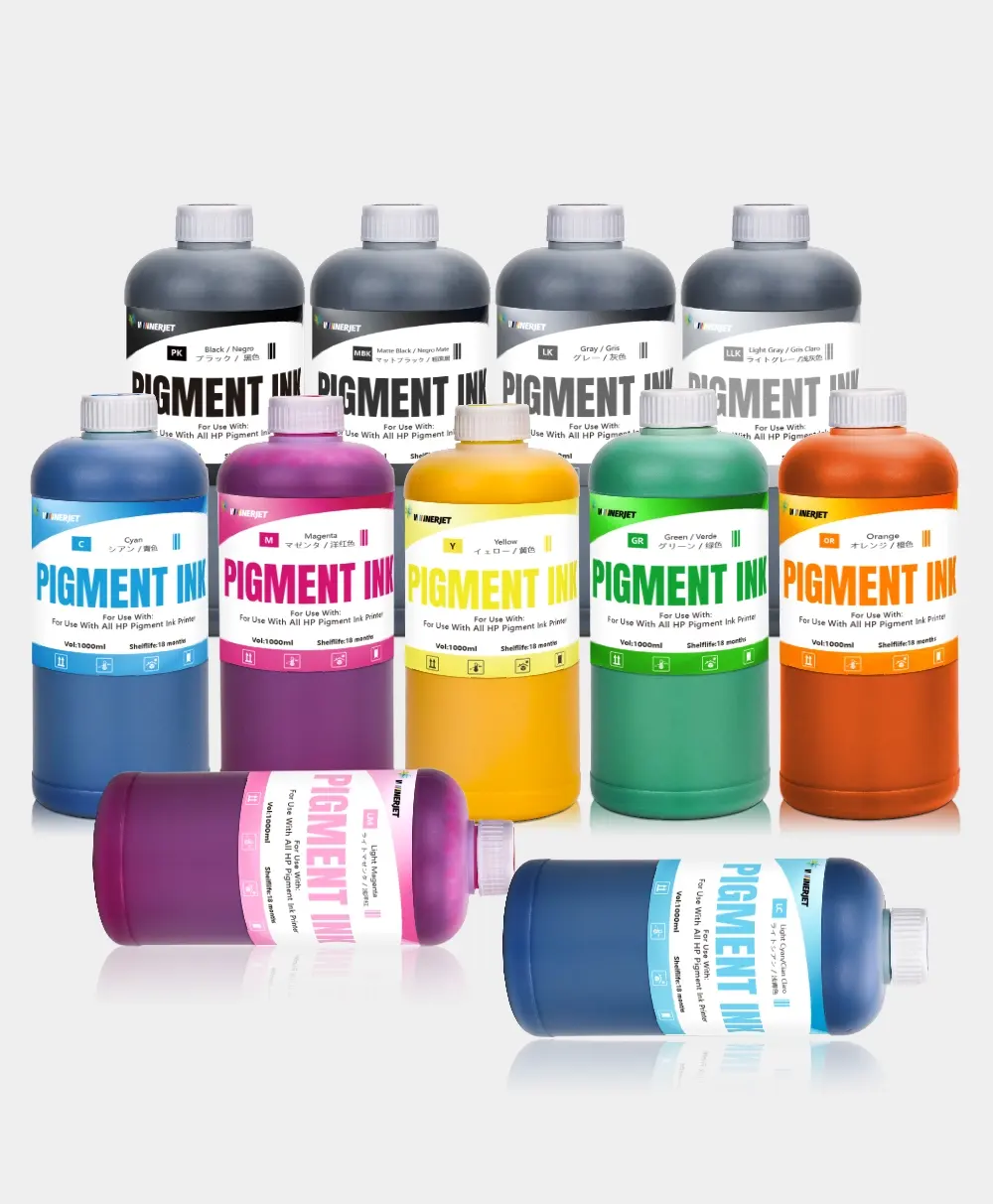
Pigment ink uses tiny solid pigment particles as colorants, suspended in water through dispersants. It offers core advantages of water resistance, lightfastness, and color durability, making it suitable for paper printing, fabric printing, and similar applications.
(1) Pre-use Preparation: Equipment and Consumable Matching
- Confirm Equipment Compatibility: Check the equipment manual and select models marked "supports pigment ink" to avoid particle clogging.
- Consumable Preprocessing:
- Choose coated media for better particle fixation
- Pre-treat fabrics with appropriate coating agents
- Inspect ink for separation or clumping before use
(2) Core Operational Steps
- Ink Shaking: Shake horizontally for 3-5 minutes to prevent particle sedimentation
- Print Parameter Settings:
- Resolution: 300-600dpi
- Enable "hot air drying" mode
- Use "CMYK + Grayscale" color mode
- Post-printing Treatment: Allow 24 hours drying time before laminating paper prints; heat-treat fabric prints for better durability
(3) Precautions
- Perform regular print head cleaning after every 100 sheets
- Store ink at 5-30°C in sealed containers away from sunlight
- Use moisturizing fluid when storing equipment for long periods
II. Usage Method for Resin Pigment Ink
Resin pigment ink adds resin film-forming agents to traditional pigment ink. After printing, the resin forms a transparent protective film, providing "high adhesion, scratch resistance, and UV protection."
(1) Pre-use Preparation
Proper preparation is critical for successful application on non-absorbent materials:
- Clean and pre-treat material surfaces with appropriate primers
- Prepare curing equipment (UV lamp or constant temperature oven)
(2) Core Operational Steps
- Ink Debugging: Adjust viscosity to 20-30cP using Special diluent
- Print Parameter Optimization:
- Print head height: 3-5mm
- Ink output: 10-20% higher than standard pigment ink
- Printing speed: 30-50mm/s
- Curing Treatment: Ensure complete curing with appropriate UV exposure or heat treatment
(3) Precautions
- Operate in well-ventilated areas and use protective gloves
- Test cured surfaces for proper adhesion and scratch resistance
- Store at 0-10°C in sealed containers; allow to reach room temperature before use
III. Core Differences in Usage Methods
| Comparison Dimension | Pigment Ink | Resin Pigment Ink |
|---|---|---|
| Suitable Materials | Absorbent materials like paper and fabric | Non-absorbent materials like metal, glass, plastic |
| Key Equipment | Regular inkjet printer (pigment-compatible) | Inkjet printer + UV lamp/oven |
| Storage Conditions | 5-30°C, sealed away from light | 0-10°C, sealed refrigeration |
By following these steps, users can fully utilize the characteristics of both ink types. For further questions about using pigment ink and resin pigment ink, please contact our ink research and development engineers.