
Are Pigment Inks Waterproof? Complete Guide to Water Resistance
When it comes to printing important documents, photographs, or artwork, one of the most critical questions users ask is: "Are pigment inks waterproof?" This question becomes especially important for applications where prints may be exposed to moisture, humidity, or direct water contact. Understanding the water resistance properties of pigment inks is essential for making informed decisions about your printing needs.
Pigment inks have revolutionized the printing industry with their superior longevity, fade resistance, and professional-quality results. However, their relationship with water is more complex than a simple yes or no answer. The water resistance of pigment inks depends on several factors including the specific ink formulation, paper type, coating applications, and environmental conditions.
Quick Answer: Are Pigment Inks Waterproof?
Pigment inks are highly water-resistant but not completely waterproof in all conditions. They offer significantly better water resistance than dye-based inks due to their particle structure, but complete waterproofing depends on paper type, coating, and exposure conditions.
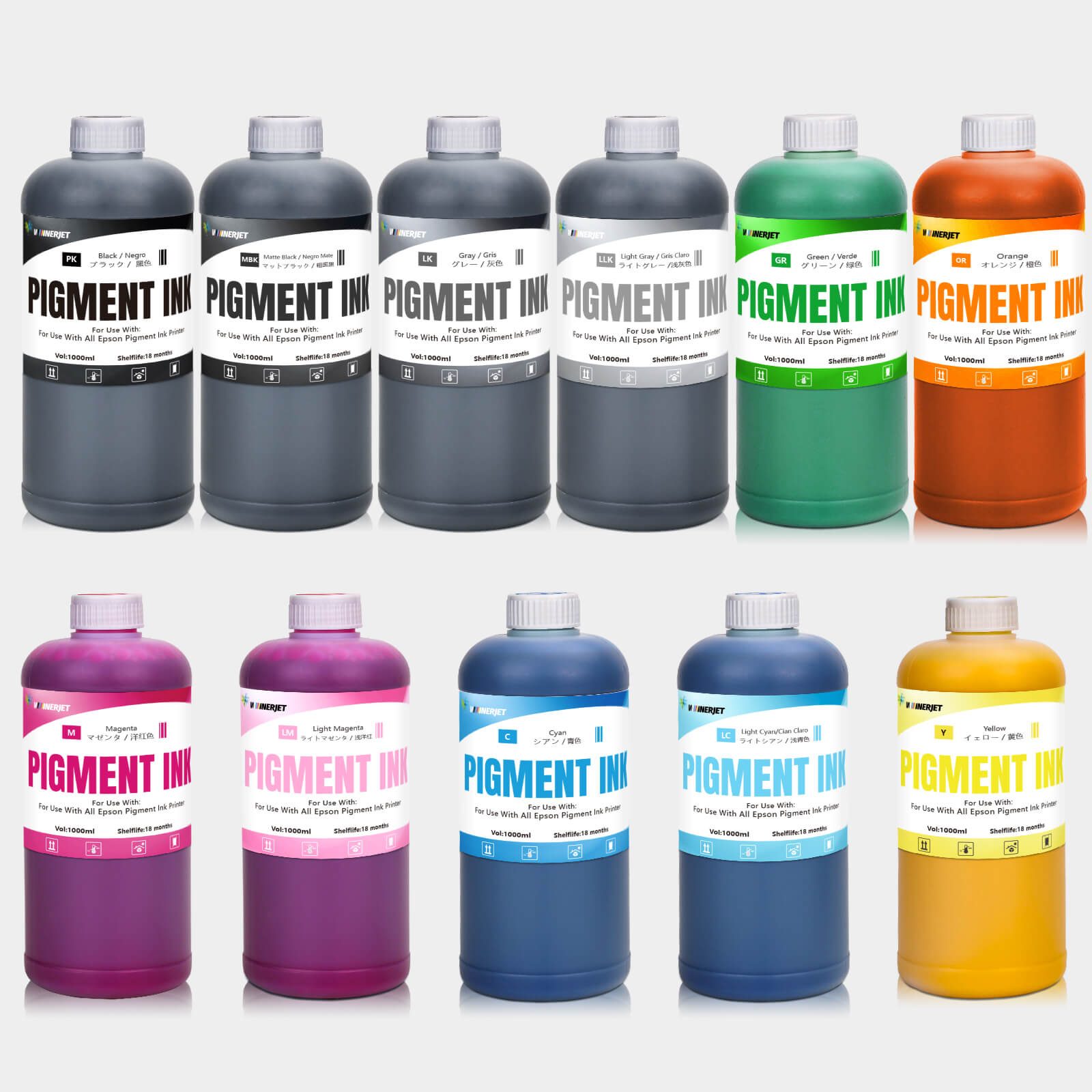
Understanding Pigment Ink Water Resistance
How Pigment Inks Interact with Water
To understand why pigment inks are more water-resistant than dye inks, we need to examine their fundamental structure. Pigment inks consist of tiny solid particles suspended in a liquid carrier, typically measuring between 0.05 to 0.2 microns in diameter. These particles are insoluble in water, which gives pigment inks their inherent water resistance.
When pigment ink is applied to paper, the carrier liquid is absorbed or evaporates, leaving the pigment particles sitting on or slightly embedded in the paper fibers. Because these particles don't dissolve in water, they maintain their position and color integrity even when exposed to moisture. This is fundamentally different from dye inks, where the colorant is completely dissolved in the carrier liquid and can easily re-dissolve when exposed to water.
The water resistance mechanism works through several principles:
💧 Water Resistance Mechanisms
Particle Insolubility: Pigment particles don't dissolve in water, maintaining their structural integrity. Surface Adhesion: Particles bond to paper fibers through van der Waals forces and mechanical interlocking. Polymer Binding: Modern pigment inks include polymer resins that create additional water-resistant barriers around particles.
Factors Affecting Water Resistance
While pigment inks are inherently more water-resistant than dye inks, several factors significantly influence their actual waterproof performance in real-world applications.
Paper Type and Quality: The substrate plays a crucial role in determining water resistance. Coated papers, photo papers, and specialty media designed for pigment inks provide superior water resistance compared to plain office paper. The paper's surface treatment, porosity, and fiber structure all affect how well pigment particles adhere and resist water displacement.
Ink Formulation: Different pigment ink formulations offer varying levels of water resistance. Professional-grade pigment inks often include additional polymer binders, surfactants, and protective agents that enhance water resistance. Some formulations are specifically designed for outdoor applications and include UV-resistant and water-repellent additives.
Drying and Curing Time: Proper drying is essential for maximum water resistance. Freshly printed pigment ink prints are more vulnerable to water damage because the carrier liquid hasn't fully evaporated and the pigment particles haven't achieved optimal adhesion to the paper fibers. Complete drying can take anywhere from 30 minutes to several hours depending on environmental conditions.
🎨 Pigment Ink Advantages
- Excellent water resistance
- Superior fade resistance
- Archival quality longevity
- Sharp text and fine details
- Professional color accuracy
- Suitable for art reproduction
💧 Dye Ink Characteristics
- Vibrant color saturation
- Smooth color gradations
- Lower cost per page
- Faster drying time
- Better paper penetration
- Minimal water resistance
Water Resistance Performance by Application
| Application Type | Water Resistance Level | Recommended Paper | Expected Performance |
|---|---|---|---|
| Office Documents | Good | Plain paper, Bond paper | Resists light moisture, minor spills |
| Photo Printing | Excellent | Photo paper, Canvas | Withstands humidity, light rain exposure |
| Art Reproduction | Superior | Fine art paper, Watercolor paper | Museum-quality water resistance |
| Outdoor Signage | Excellent | Synthetic media, Vinyl | Weather-resistant for extended periods |
| Technical Drawings | Very Good | Vellum, Mylar | Maintains precision under moisture exposure |
Testing Water Resistance
Professional testing of pigment ink water resistance involves standardized procedures that simulate real-world conditions. The most common tests include the ISO 18935 standard for color print stability and the ASTM D5946 test for water resistance of printed materials.
These tests typically involve exposing printed samples to controlled water exposure, measuring color change, text legibility, and physical integrity. Results are rated on scales that help users understand expected performance under various moisture conditions.
🏆 Professional Testing Results
Independent laboratory tests consistently show that high-quality pigment inks maintain 95-98% color integrity after 24-hour water immersion tests on appropriate media. Text remains fully legible, and image details show minimal degradation compared to dye inks which typically show 60-80% degradation under similar conditions.

Maximizing Water Resistance
Best Practices for Water-Resistant Printing
To achieve optimal water resistance with pigment inks, following proven best practices is essential. These techniques can significantly improve the waterproof performance of your prints.
Choose the Right Paper: Select papers specifically designed for pigment inks. Coated papers, photo papers, and fine art papers provide superior water resistance compared to plain office paper. Look for papers with polymer coatings or resin treatments that create additional barriers against water penetration.
Optimize Printer Settings: Use high-quality print settings that deposit adequate ink coverage. Higher quality settings typically use more ink, creating denser pigment particle layers that offer better water resistance. Avoid draft or economy modes for prints that need water resistance.
Allow Proper Drying Time: Ensure prints are completely dry before handling or potential water exposure. In humid conditions, this may require extended drying times or the use of fans to accelerate the process. Some professional applications benefit from 24-48 hour drying periods.
Consider Post-Print Treatments: For maximum water resistance, consider applying protective coatings or laminates. Clear acrylic sprays, UV-resistant coatings, or professional lamination can provide additional water protection while maintaining print quality.
⚠️ Important Limitations
While pigment inks offer excellent water resistance, they are not completely waterproof in all conditions. Prolonged submersion, high-pressure water exposure, or aggressive rubbing while wet can still cause damage. Always test water resistance requirements for your specific application before relying on pigment ink prints in critical situations.
Storage and Handling Considerations
Proper storage and handling significantly impact the long-term water resistance of pigment ink prints. Environmental factors such as humidity, temperature, and air circulation affect both the initial drying process and ongoing durability.
Store prints in controlled environments with relative humidity between 30-50% and temperatures between 65-75°F (18-24°C). Avoid areas with high humidity, direct sunlight, or temperature fluctuations. Use acid-free storage materials and avoid contact with materials that might transfer moisture or chemicals to the prints.
Comparing Pigment vs Dye Ink Water Resistance
Scientific Comparison
The fundamental difference in water resistance between pigment and dye inks lies in their molecular structure and interaction with water. This scientific understanding helps explain why pigment inks consistently outperform dye inks in water resistance tests.
Dye Ink Behavior: Dye inks use colorants that are completely dissolved in the carrier liquid, similar to how sugar dissolves in water. When dry dye ink encounters water, the colorant can re-dissolve and migrate, causing colors to run, blend, or fade. This makes dye ink prints highly vulnerable to water damage.
Pigment Ink Behavior: Pigment inks use insoluble particles that maintain their solid state regardless of water exposure. These particles are physically bonded to paper fibers and cannot dissolve or migrate when exposed to water. This fundamental difference provides pigment inks with inherent water resistance.
Laboratory tests consistently demonstrate this difference. In standardized water immersion tests, dye ink prints typically show significant color bleeding within minutes, while pigment ink prints maintain their integrity for hours or even days depending on the paper type and ink formulation.
🔬 Scientific Testing Data
Controlled laboratory studies show that pigment inks maintain color stability 5-10 times longer than dye inks when exposed to water. Text printed with pigment ink remains legible after water exposure that would completely destroy dye ink text. This performance difference makes pigment inks the clear choice for applications requiring water resistance.
Applications Requiring Water Resistance
Professional and Commercial Uses
Understanding which applications benefit most from pigment ink water resistance helps users make informed decisions about their printing needs. Different industries and use cases have varying requirements for water resistance performance.
Archival and Museum Applications: Museums, libraries, and archives require prints that can withstand environmental challenges including humidity and potential water exposure. Pigment inks provide the longevity and water resistance necessary for preserving important documents and artwork reproductions.
Outdoor and Marine Applications: Signage, charts, and documentation used in outdoor or marine environments must resist water exposure. Pigment inks on appropriate substrates can withstand rain, spray, and high humidity conditions that would destroy dye ink prints.
Medical and Laboratory Documentation: Healthcare and research environments often involve potential exposure to liquids and cleaning agents. Pigment ink prints maintain legibility and accuracy even when exposed to moisture, making them ideal for critical documentation.
Legal and Financial Documents: Important contracts, certificates, and financial records benefit from pigment ink's water resistance and archival properties. These documents may need to remain legible and authentic for decades, making pigment ink the preferred choice.
Consumer Applications
Home and small office users also benefit from pigment ink water resistance in various applications. Understanding these benefits helps consumers make better printing choices for their specific needs.
Photo Printing: Family photos, artwork, and memories printed with pigment inks resist damage from humidity, minor spills, and handling. This protection helps preserve important memories for future generations.
Important Documents: Tax records, insurance papers, and personal documents printed with pigment inks maintain legibility even if exposed to moisture from floods, leaks, or spills.
Craft and Hobby Projects: Scrapbooking, card making, and artistic projects benefit from pigment ink's water resistance, especially when combined with adhesives, paints, or other materials that might introduce moisture.
Choose the Right Ink for Your Needs
Understanding pigment ink water resistance helps you make informed decisions about your printing requirements. Whether you need archival quality, professional durability, or everyday reliability, pigment inks provide superior water resistance compared to dye alternatives.
Explore Pigment Ink OptionsFrequently Asked Questions (FAQ)
Pigment inks are highly water-resistant but not completely waterproof in all conditions. They offer excellent protection against moisture, humidity, and light water exposure, but prolonged submersion or high-pressure water can still cause some damage. The level of water resistance depends on the paper type, ink formulation, and environmental conditions.
Pigment ink prints typically need 30 minutes to 2 hours for basic drying, but maximum water resistance is achieved after 24-48 hours of complete curing. Factors like humidity, temperature, paper type, and ink coverage affect drying time. For critical applications, allow extended drying time before potential water exposure.
Coated papers, photo papers, and fine art papers specifically designed for pigment inks provide the best water resistance. These papers have surface treatments that help pigment particles adhere better and create additional barriers against water penetration. Avoid plain office paper for applications requiring water resistance.
Yes, protective coatings can significantly enhance water resistance. Options include clear acrylic sprays, UV-resistant coatings, lamination, or professional sealers. These treatments create additional barriers against water while maintaining print quality. Always test compatibility with your specific ink and paper combination before applying coatings to important prints.
Pigment inks are significantly more water-resistant than dye inks. While dye inks can start bleeding or fading within minutes of water exposure, pigment inks maintain their integrity for hours or days. Laboratory tests show pigment inks provide 5-10 times better water resistance than dye inks, making them the clear choice for applications requiring moisture protection.
Pigment ink prints have a much better chance of surviving water damage compared to dye ink prints. While prolonged submersion can cause some damage, pigment ink prints often remain legible and recoverable after water exposure that would completely destroy dye ink prints. Quick drying and proper handling after water exposure can help preserve pigment ink prints.
No, water resistance varies between different pigment ink formulations. Professional-grade pigment inks typically offer better water resistance than consumer-grade versions. Factors like particle size, polymer binders, and additional protective agents affect performance. Always check manufacturer specifications for water resistance ratings when selecting pigment inks for critical applications.
If a pigment ink print gets wet, gently blot (don't rub) excess water with a clean, absorbent cloth. Allow the print to air dry completely in a well-ventilated area away from direct heat or sunlight. Don't attempt to separate wet prints or handle them excessively while damp. Most pigment ink prints will recover well from brief water exposure if handled properly.