If you’re new to garment printing, you may have wondered: Can I use DTF powder with sublimation ink to create transfers? It sounds like a cost-saving shortcut, but unfortunately, the two do not work together. DTF powder and sublimation ink are based on very different principles, and mixing them will only result in failed prints.
In this article, we’ll break down why sublimation ink is not compatible with DTF powder, what risks you face if you try, and the correct solution for high-quality transfers.
🧪 Sublimation Ink vs. DTF Ink – What’s the Difference?
To understand why the combination fails, let’s look at the basics:
- Sublimation Ink
- Designed to turn into a gas under heat.
- Bonds with polyester fibers or specially coated surfaces.
- Produces vivid prints, but only on polyester-based materials.
- DTF Ink
- Made with pigments that stay solid on film until heated.
- Works in conjunction with DTF powder adhesive to bond to fabric.
- Can print on cotton, blends, polyester, and more.
👉 The core difference: Sublimation ink doesn’t have the chemical ability to fuse with DTF powder.


🚫 Why DTF Powder Does Not Work with Sublimation Ink
If you try combining the two, here’s what usually happens:
- The ink doesn’t adhere to the powder coating.
- Colors appear faint or completely wash out after pressing.
- The powder won’t melt correctly, leaving a rough or patchy surface.
- Final transfers peel off after the first wash.
In short, it’s a wasted effort and wasted materials.
⚠️ Risks of Mixing Sublimation Ink with DTF Powder
Trying this combination can also create bigger problems:
- Poor durability – prints won’t last, leading to disappointed customers.
- Ghosting or blotting – designs may not transfer evenly.
- Printer damage – using the wrong ink/powder combo may clog print heads or contaminate the printer.
For any business, these risks can mean lost time, higher costs, and unhappy clients.
✅ The Right Way: Use DTF Ink with DTF Powder
DTF printing only works when you use the proper trio:
- DTF Ink (pigment-based, adhesive-compatible)
- PET Film (specially coated for DTF)
- DTF Powder (the heat-activated adhesive)
Trying to shortcut with sublimation ink won’t work — it’s a completely different process that requires polyester surfaces.
💡 Pro tip: If you already own a sublimation printer, don’t waste your supplies. Please keep it for sublimation jobs, or properly convert a printer with genuine DTF ink for DTF printing.
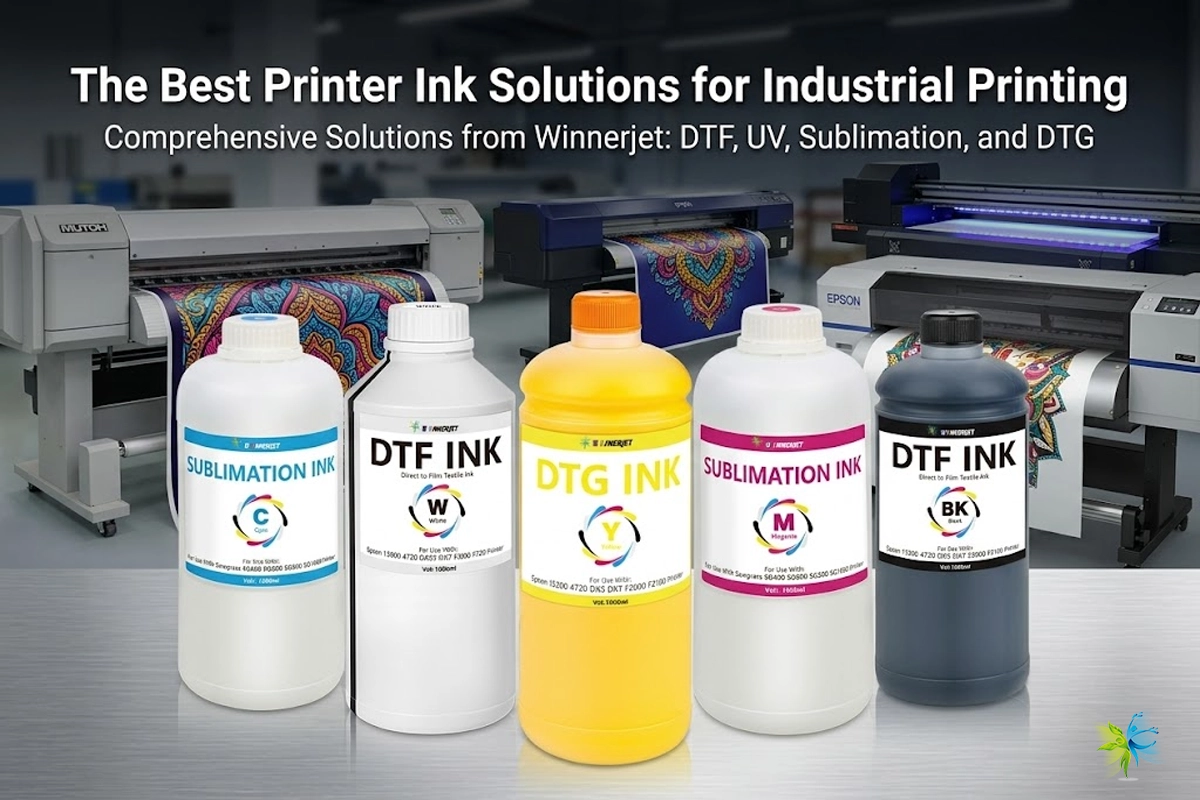
At Winnerjet, our low-clogging DTF inks and fine-grain DTF powders are designed to deliver smooth application, vibrant colors, and durable results on a wide range of fabrics

🎯 Conclusion & CTA
So, can you use DTF powder with sublimation ink? The answer is no. Sublimation ink is not designed to work with DTF powder, and trying to mix the two will only lead to poor-quality, short-lived transfers.
✅ For strong adhesion, bright colors, and long-lasting prints, always use the right combination: DTF ink, PET film, and DTF powder.
👉 📩 Request Free Winnerjet DTF Ink & Powder Samples and see the results firsthand!
❓ FAQs
🤔 Can I mix sublimation ink and DTF ink in the same printer?
No, mixing inks can clog the print heads. Always dedicate one printer to one ink type.
🧵 What fabrics work best with sublimation vs. DTF?
Sublimation works best on polyester or coated items, while DTF can print on cotton, blends, polyester, and even dark fabrics.
🛠 Can I convert a sublimation printer to DTF?
Yes, but you’ll need to flush out the sublimation ink completely and load the proper DTF ink.
💡 What happens if I try sublimation ink with DTF powder anyway?
The powder won’t fuse properly, leaving you with weak, patchy, or peeling prints.
📦 Where can I buy high-quality DTF ink and powder?
Winnerjet supplies professional-grade DTF inks and powders trusted by print shops worldwide.