It’s common for users who already own a sublimation printer to wonder: “Can I also use sublimation ink for regular document or photo printing?”
The quick answer is no—sublimation ink is designed for a very different purpose than everyday pigment or dye inks. In this article, we’ll explain why sublimation ink doesn’t work well for regular printing, what risks you face if you try, and which inks are the right choice for standard print jobs.
1️⃣ Sublimation Ink VS Regular Ink
At first glance, all inks may look the same, but sublimation ink is formulated for a special process.
- Chemical composition: Sublimation ink is a heat-activated dye that turns into a gas under high temperature and bonds with polyester or coated blanks.
- Different goals: Regular inks (dye or pigment) are designed to sit on paper surfaces and deliver crisp, lasting colors.
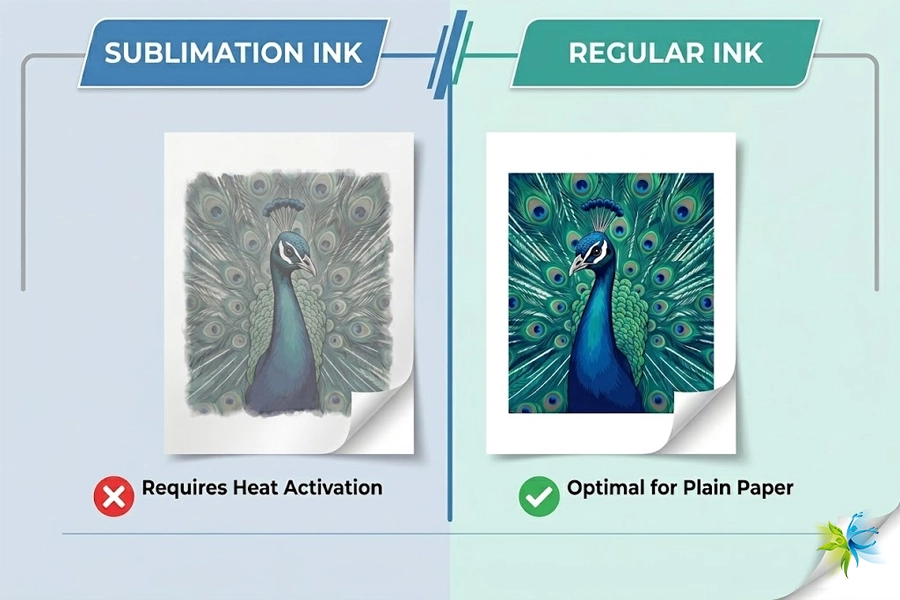
- Result mismatch: When sublimation ink is used on plain paper, it won’t bond properly, leading to dull or washed-out prints.
If you’re new to this technology, check out our comprehensive guide on what sublimation ink is and how it actually works.
| Feature | Sublimation Ink | Regular Ink (Dye/Pigment) |
|---|---|---|
| Primary Use | Heat transfer to polyester/coated items | Printing documents & photos on paper |
| Working Principle | Turns into gas under heat to bond with fibers | Dries on the surface of the paper |
| Result on Plain Paper | Dull, faded, and blurry colors | Sharp, vibrant, and clear images |
| Durability | Permanent, scratch-resistant, washable | Can fade over time or smudge if wet |
| Clogging Risk | Higher (requires frequent maintenance) | Lower (standard maintenance) |
| Media Required | Sublimation paper + Polyester fabrics | Standard copy paper / Photo paper |
👉 In short: sublimation ink is for fabric and coated substrates, while dye/pigment ink is for paper.
2️⃣ What Happens If You Use Sublimation Ink for Regular Printing?
If you try to cut corners by using sublimation ink in place of regular ink, here’s what you’ll face:
- 🎨 Faded, dull colors – Text looks weak, images appear blurry.
- 🧻 Ink doesn’t bind – Sublimation ink is not absorbed by normal paper.
- ⚠️ Printer damage risk – Frequent clogging and nozzle blockages.
- 💸 Increased costs – More cleaning cycles, wasted ink, and potential repairs.
This means you’ll spend more time and money maintaining your printer than you save by trying to reuse sublimation ink.

3️⃣ Best Alternatives for Regular Printing
So what’s the right solution? Stick to inks made for your purpose:
- 🖌 Dye ink – Delivers bright, vivid colors; great for photos and documents.
- 🖤 Pigment ink – Waterproof and fade-resistant; ideal for professional or archival prints.
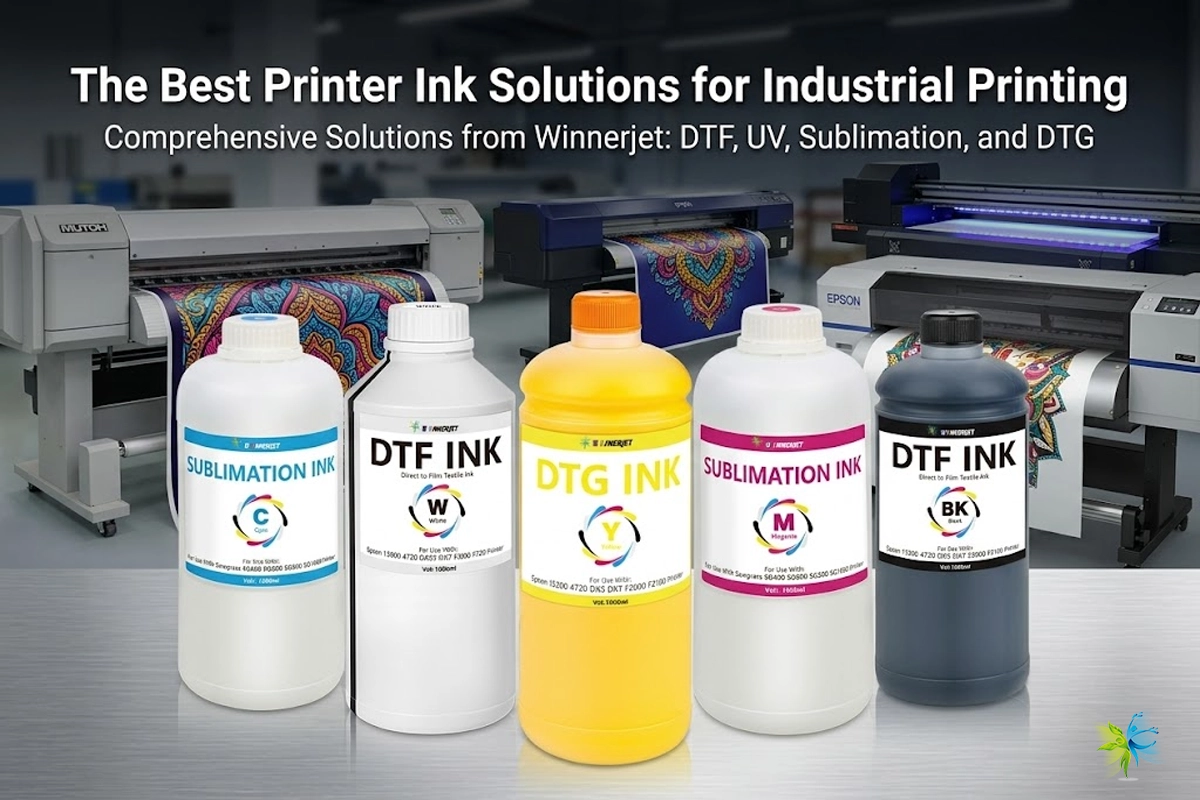
- 🌍 Winnerjet’s recommendation: Use Winnerjet Dye Inks for high-quality everyday printing and Winnerjet Pigment Inks when you need durability. For sublimation projects, keep a separate printer with Winnerjet Sublimation Ink.
4️⃣ Pro Tips for Choosing the Right Ink
To avoid problems, keep these practical tips in mind:
- ✅ Match ink to the media: Sublimation ink = polyester & coated blanks; pigment/dye ink = paper.
- ✅ Use separate printers for sublimation and everyday printing.
- ✅ Don’t mix ink types—always flush your printer when switching.
- ✅ Choose trusted suppliers like Winnerjet, whose inks are engineered for compatibility, smooth flow, and reduced clogging.
🎯 Conclusion & CTA
In summary, Sublimation ink cannot replace regular printing ink. It’s built for a heat-transfer process, not paper printing. For clear, long-lasting documents and photos, choose dye or pigment inks instead.
👉 Our advice: Don’t risk damaging your printer by using the wrong ink type. Keep your sublimation and everyday printing workflows separate.
📩 Request Free Winnerjet Ink Samples today—try our sublimation, pigment, or dye inks and see the quality difference for yourself!
🙋 FAQs
Can sublimation ink be used on plain paper?
Yes, but prints will look faded and are not durable.
Will sublimation ink damage my printer if used for regular printing?
It can clog nozzles and shorten your printer’s lifespan.
Can I mix sublimation ink with pigment ink?
No, mixing different ink types leads to poor results and possible printer issues.
What is the best ink for everyday document printing?
Pigment ink for durability; dye ink for bright, vivid colors.
Does Winnerjet supply both sublimation and regular inks?
Yes, Winnerjet provides sublimation, pigment, and dye inks—so you always have the right ink for the right job.
Will regular prints made with sublimation ink smudge or wash off easily?
Yes, it will. This is because dye-sublimation ink cannot form a film or cure properly on the surface of ordinary paper; consequently, oils from your hands or moisture in the air can very easily cause the writing to smudge.