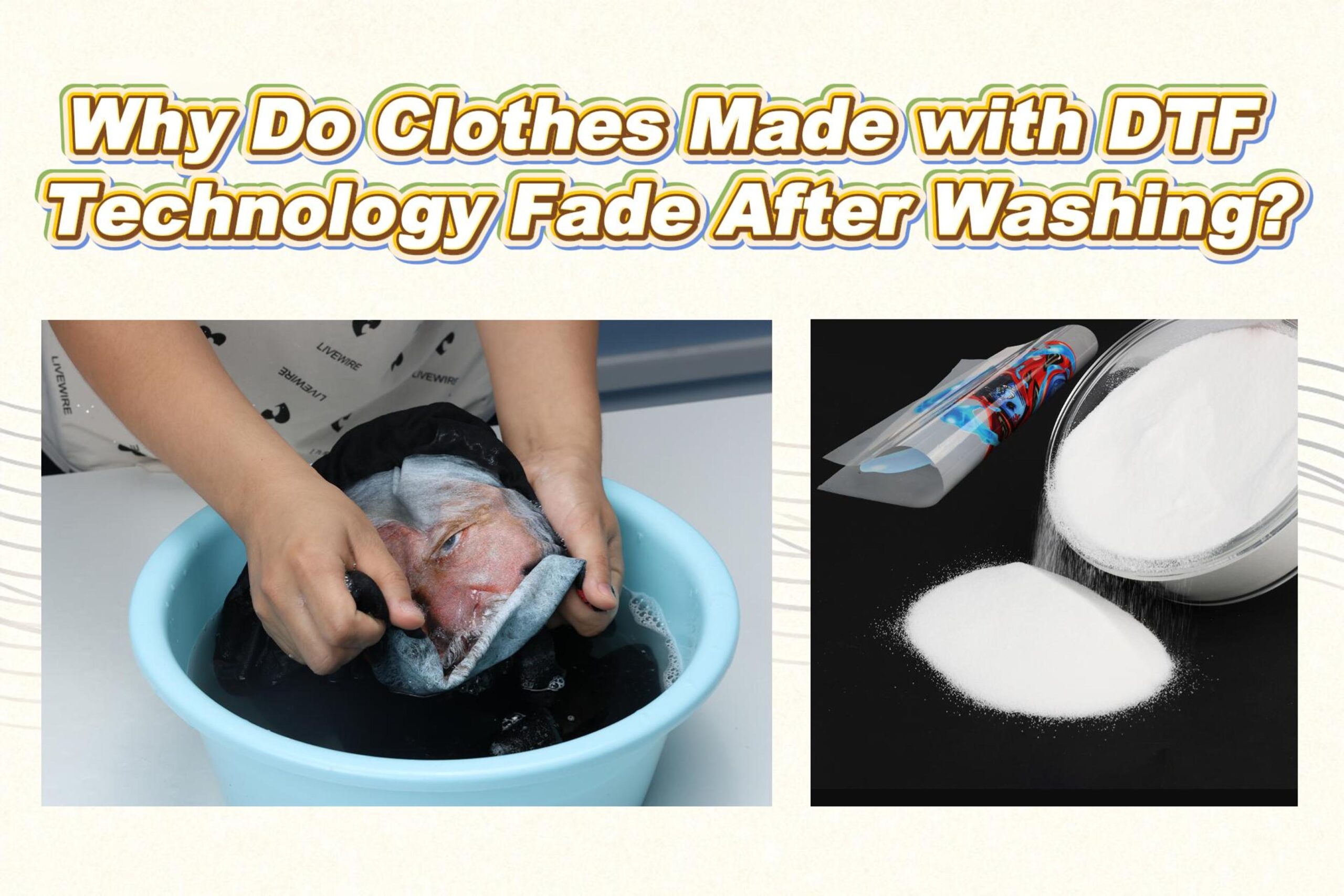
Direct-to-Film (DTF) printing has emerged as one of the fastest-growing techniques in recent years, with its low cost, rapid production speed and vibrant colour reproduction standing out as its most compelling advantages.However, some users find that after production: the pattern appears excellent immediately after transfer, but after several washes the colours fade or even bleed.
Many people attribute this problem to the ink, but in reality—most fading cases are not due to the ink itself, but rather to insufficient curing of the hot melt powder or incorrect hot-pressing conditions.
To help you easily troubleshoot the problem, this article will explain the causes of fading from five aspects and provide immediately applicable solutions.
1. What are the signs of fading after washing?
You may encounter the following issues:
– Printed patterns become lighter in color
– Light-colored garments experience dye transfer
– dtf peeling after washing
– Edges become unstable with slight peeling
– Patterns lose vibrancy, developing a hazy or matte finish
These seemingly “poor colorfastness” problems often stem from causes other than the ink itself.
2. Quick Summary: Why Is Your DTF Print Fading?
The wash resistance of DTF prints depends on the bonding strength between “ink + hot-melt powder + heat pressing.”
If you notice that your DTF (Direct-to-Film) prints are fading, peeling, or losing their vibrancy after washing, it is typically caused by one of the following three key factors:
Incomplete Curing: The TPU adhesive powder failed to fully melt or cure at the appropriate temperature (typically 150°C to 160°C).
Poor Ink Quality: Low-quality or incompatible DTF inks were used, resulting in a lack of the necessary wash fastness and pigment density.
Improper Washing Methods: Washing with hot water (temperatures exceeding 30°C/86°F), or using harsh detergents and bleach that compromise the print’s adhesion.
Expert Tip: To ensure maximum durability for your prints, be sure to wait 24 to 48 hours before the first wash, and always turn the garment inside out when laundering.
3. How To Cure DTF Powder— The Correct Application of Hot-Melt Powder
The curing and heat-press stages are the most critical parts of the DTF workflow because they determine how well the hot melt powder bonds with both the ink layer and the fabric. Even if high-quality materials are used, incorrect temperature, time, or pressure will weaken the bond and result in fading, peeling, cracking, or a rough texture after washing.
A properly cured print should feel smooth, flexible, and slightly glossy after peeling the film. If the surface feels sandy, rubbery, dull, or powdery, it’s a clear sign of under-curing. Conversely, overheated prints may feel stiff and even cause discoloration or shrinking on heat-sensitive fabrics.
To achieve the best and most consistent printing results, we recommend the following settings:
Powder Melting Stage (Curing)
135°C – 150°C
3 – 5 minutes
Look for a smooth, glossy surface — this visual cue indicates proper melting and activation of the adhesive layer.
Heat Pressing Stage
165°C – 170°C
90 – 120 seconds
Apply medium, even pressure
These parameters help ensure thorough bonding between the hot melt powder and ink, preserving vibrant colors even after repeated washing.
4. Hot melt powder selection is equally critical: Prioritize particle sizes of 80–120μm
Many users overlook the quality of the hot melt powder itself, yet it directly impacts pattern durability and handfeel.
Recommended selection:
Heat-transfer powder with particle size approximately 80–120 μm
Too large particle size: Difficult to melt completely
Too small particle size: Excessively thick powder layer compromises softness and may cause unevenness
Additionally, testing an alternative heat-transfer powder for comparison is highly recommended. This simplifies identifying the root cause of any issues.
5. Seeking more consistent print quality? Choosing a reliable powder supplier is key
If you’re seeking consistently high-quality, stable hot melt powder, consider products from specialized manufacturers.
For example, Winnerjet is one of the industry’s well-regarded hot melt powder producers, offering consistent powder quality compatible with various DTF printing workflows.
Using premium hot melt powder combined with optimal melting and heat pressing parameters effortlessly enhances color fastness, ensuring your designs remain vibrant and fade-resistant wash after wash.
Final Thoughts
Direct-to-Fibre printing is a powerful and versatile technology, yet achieving durable, flawless results hinges critically on proper curing processes and suitable materials. Before attributing issues solely to the ink, first scrutinise curing conditions and powder performance. In most instances, subtle adjustments alone can significantly resolve process-related concerns!
FAQ.
Is a higher hot-pressing temperature always better?
No.
Excessive temperature can damage clothing, severely alter patterns, and even discolor.
165–170°C is a stable recommended range based on extensive testing; it allows for rapid filling without damaging the material.
How can I tell if the hot melt powder has completely melted?
Observe the powder surface:
Completely melted: Uniform, glossy, and smooth surface
Unmelted: Surface appears grainy, whitish, or hazy
Why do the edges of my pattern curl up after washing?
Common causes include: insufficient powder coverage of the edges, inadequate powder melting, insufficient hot pressing pressure, and excessively short hot pressing time.
Does the particle size of hot melt powder really affect fading?
Yes.
Particle size affects melting rate, flowability, and final strength.Recommended: 80–120 μm particle size hot melt powder.This is the optimal range for most DTF processes.
How do I choose a reliable hot melt powder brand?
You can consider the following criteria: whether the powder particle size is stable and whether it is smooth and transparent after melting.
In the industry, Winnerjet is a trusted hot melt powder supplier for many manufacturers, offering excellent stability and compatibility, making it a top choice.
How to wash DTF clothes to prevent fading?
To maintain the vibrant colors of your DTF prints, please be sure to turn the garment inside out and wash it in cold water (below 30°C/86°F). Use a mild detergent and avoid using bleach or fabric softeners. Setting your washing machine to the “delicate” cycle helps minimize friction, thereby extending the lifespan of the print.
Does the print fade after washing?
No, a high-quality DTF (Direct to Film) print should NOT fade significantly after washing if it is cured and applied correctly.