Starting a custom apparel business used to require a lot of money for equipment. You needed huge investments in machines like screen printers or specialized Direct-to-Garment (DTG) systems. That high cost has always kept smaller entrepreneurs away. They found it hard to get into the market.
However, a new technology is here. It is called Direct-to-Film, or DTF, printing. The global market for Direct-to-Film printing will grow very big. It is expected to reach over $3.9 billion by 2030. This shows its huge growth and new chances for businesses. This quick expansion is happening because the method is easy to use. It also gives very high quality when you use specialized DTF printing ink.
We at Winnerjet know it is hard to choose the right tools and materials when you are starting. Therefore, in this guide, we explain everything you need to learn about DTF printing.
What is DTF Printing?
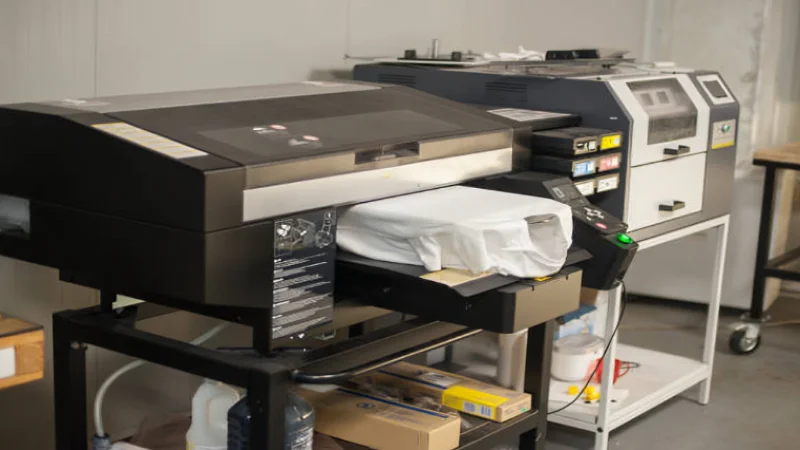
DTF is a new way to print. First, your design is printed onto a special film. Then, you use a heat press to move the design onto the shirt or other product. This method works well on almost all kinds of fabric. This includes cotton, polyester, nylon, and mixed materials. The most important part of the DTF process is the special DTF printer ink we use.
DTF is fast when you compare it to old ways of printing. It needs very little work to get ready. The best part is that you do not need special chemicals to treat the fabric first. This pre-treatment is often needed when using white ink on cotton with other methods. DTF avoids this step. This makes the whole production process simpler and quicker.
Essential DTF Equipment Checklist and DTF Printing Ink
First, you need to prepare:Best DTF Printer for Beginners
1. Best DTF Printer for Beginners (Plug-and-Play): xTool Apparel Printer
For those who want to skip the learning curve of mechanical maintenance, the xTool is the top recommendation for a hassle-free entry.
Core Advantage: A fully enclosed, all-in-one system that integrates printing, powdering, and curing into a single seamless workflow.
Maintenance: Features a high-level automated white ink circulation system, minimizing manual intervention.
Best For: Hobbyists and DIY creators who prioritize a clean workspace and extreme ease of use.
2. Best DTF Printer for Beginners (Professional Productivity): Winnerjet A3/30cm Series
With nearly 20 years of manufacturing expertise, Winnerjet offers a machine that bridges the gap between entry-level ease and industrial-grade output.
Core Advantage: Built with industrial control boards and high-performance Epson XP600 or i3200 printheads, providing significantly higher stability and speed than converted desktop printers.
White Ink Management: Equipped with a professional dual system of white ink stirring and circulation. This is a “life-saver” for beginners, as it prevents the common issue of white ink sedimentation and nozzle clogging.
Cost Efficiency: As a direct-from-factory solution, the cost per print is approximately 40%–60% lower compared to proprietary cartridge-based systems.
Best For: Small business startups and entrepreneurs who need a reliable “workhorse” with low long-term operating costs and superior wash fastness.
3. Best DTF Printer for Beginners (Brand Reliability): Epson SureColor F1070
Core Advantage: Backed by global corporate support, this hybrid machine allows for both Direct-to-Film (DTF) and Direct-to-Garment (DTG) printing.
Best For: Users with a higher initial budget who prioritize official warranty services and brand consistency over the lowest hardware price.
| Category | Model | Automation | Key Selling Point |
|---|---|---|---|
| All-in-One | xTool Apparel | Ultra-High | Zero-mess, integrated powdering & curing |
| High Value | Winnerjet A3 | High | Factory direct, industrial life, low ink costs |
| Brand Choice | Epson SC-F1070 | High | Official warranty, hybrid functionality |
| Budget Choice | L1800 Modified | Low | Lowest initial investment |
💡 Expert Tips for New Users:
Prioritize White Ink Circulation: This is the single most important feature. Machines like the Winnerjet A3 include this to ensure the heavy titanium dioxide in white ink doesn’t settle and ruin your printhead.
The “System” Matters: Great DTF results come from the synergy between the printer, ink, and powder. Choosing a manufacturer that provides a verified “Total Solution” (including pre-set ICC profiles) ensures your colors are vibrant and accurate from day one.
Check Wash Fastness: Ensure your ink/powder combination reaches a Grade 4 or higher wash fastness rating to keep your customers coming back
Next,You need four core items to begin your DTF journey. Having the correct tools ensures your results are professional every time.
A. The Printer
You have two main choices for the printer. First, a converted desktop inkjet printer works for hobbies or small jobs. Second, for real business production, you need a dedicated DTF machine. The machine must be a reliable DTF printer with white ink. This white ink creates a strong, opaque background for your colors to stand out on dark fabrics.
B. The Inks
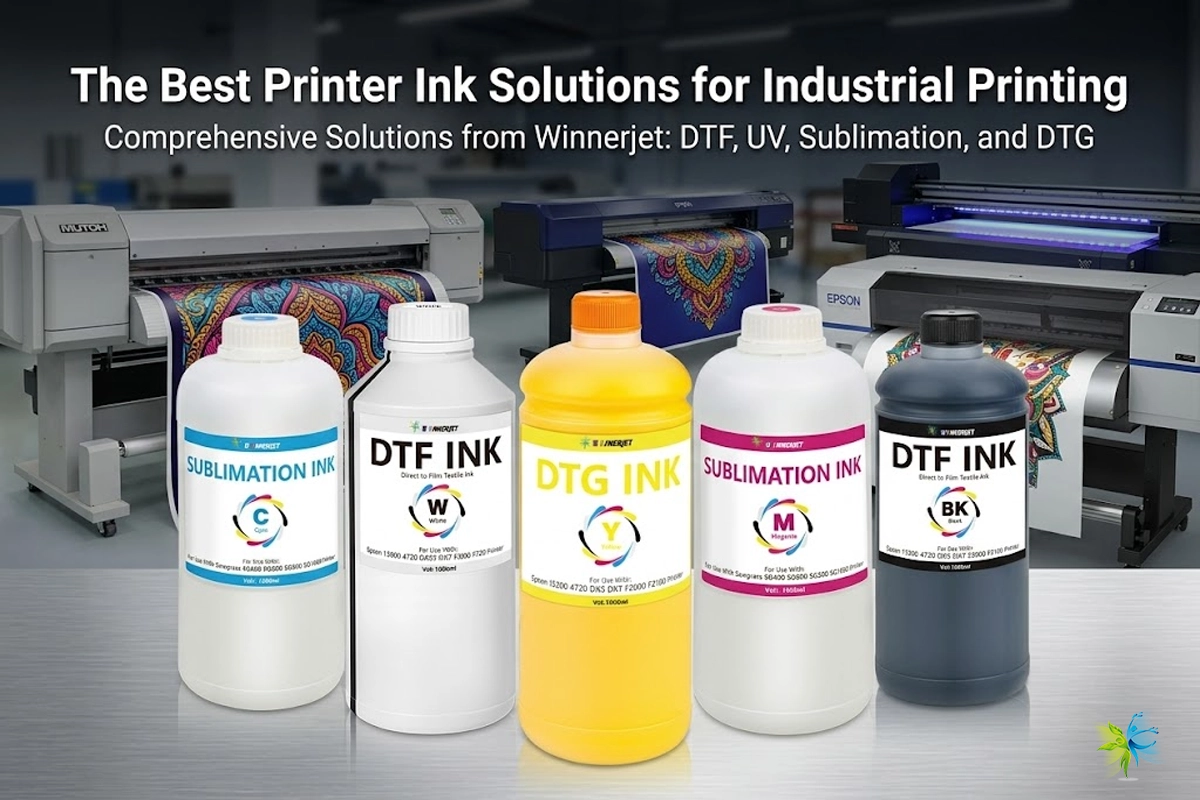
DTF systems must use high-quality DTF pigment ink. This ink is water-based. It is made to stick strongly with the adhesive powder and the fabric. We provide high-performance DTF printing ink that gives excellent color and doesn’t fade easily when washed. Using the right type of DTF printing ink is very important for print quality and machine life.
C. The Film and Powder
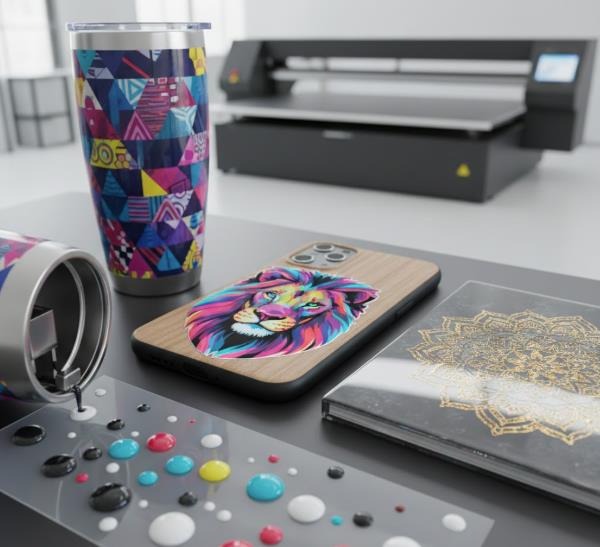
The DTF Film is the material the design is printed on first. Films come as “hot-peel” (faster) or “cold-peel” (smoother finish). The DTF powder is a type of melting glue. You put this powder on the wet ink. When heated, the powder melts. It acts as the “glue” that sticks the design to the shirt. For printing on hard items like phone cases, you might need UV DTF ink.
D. Curing and Pressing Tools
After the powder is put on, the film needs to be cured, or heated. A special curing oven is best for even heat. You must also have a good heat press. This press gives the correct temperature and pressure to ensure the melted glue bonds the print tightly to the garment.
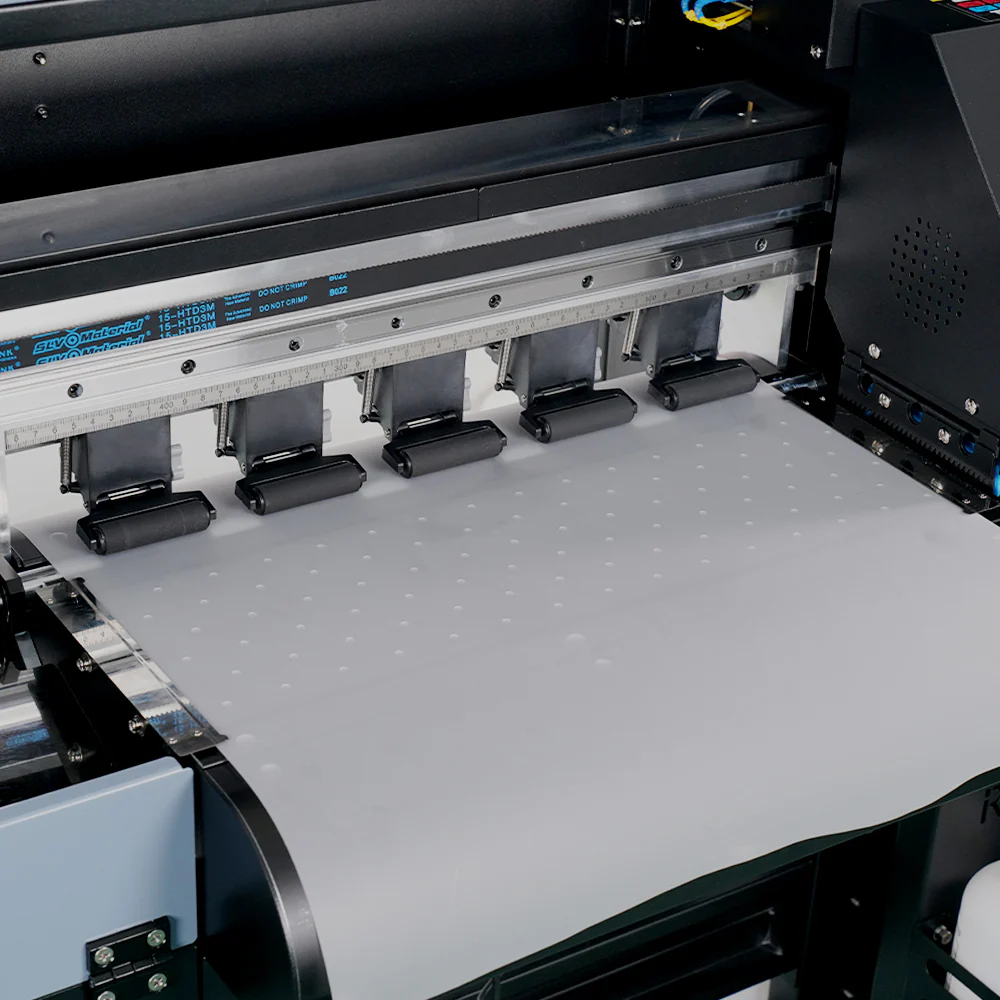
The DTF Printing Workflow in 5 Simple Steps
Learning the DTF process is easy when you know the steps. This clear way of working saves time and materials compared to old printing methods. Follow these steps for high-quality results.
1. Design and Print Preparation
Start with your design software. You must make sure the image is mirrored before printing. You need RIP software to manage the white layer. This software precisely controls how the DTF printer ink is placed on the film.
2. Print the Image
First, the DTF printer lays down the color (CMYK). Right after, it prints a thick layer of white ink over the design. This white layer is crucial. It ensures your colors look bright, especially on dark materials. We provide reliable DTF printer ink made to flow easily.
3. Powder Application
The ink on the film is still wet. Quickly and evenly coat the design with the melting adhesive powder. Gently shake off the extra powder. Make sure the powder only sticks to the inked parts.
4. Curing the Film
Next, the film goes into the curing machine. Curing melts the powder into a smooth, shiny glue layer. The heat and time must be exact (usually between 300°F and 350°F). For hard items, UV DTF ink processes are dried right away with UV light, not heat.
5. Transferring the Design
Put your garment on the heat press and press it briefly to remove wrinkles. Then, place the cured film on the shirt. Press it based on instructions (usually 300°F and 320°F). When pressing is done, peel the film off (follow hot or cold peel rules). Your finished design is now on the shirt.
DTF Maintenance and Quality Tips
DTF is a strong technology. But you must pay attention to small details, especially with the ink.
A. Keeping the White Ink Flowing
The white ink tube can easily get blocked. This is because of the pigment inside called titanium dioxide. For any DTF printer with white ink, regular cleaning is a must. Shake your white DTF printing ink cartridges every day. Run cleaning cycles often to stop the ink from settling. This simple care will greatly improve how long your print head lasts and how reliable it is.
B. Optimizing for Fabric Types
DTF is great because it works well on many different materials. If you print on dark polyester, use lower heat and press for less time. This stops the fabric from burning. We specially make our DTF pigment ink to stretch well and last many washes on many types of cloth.
C. Beyond Apparel Printing
Most people use DTF for clothes. But the ability of DTF printing goes further. For non-fabric, hard surfaces like metal, glass, or plastic, the UV DTF method gives great results. By using special UV DTF ink and the right film, you can make decals that stick forever to hard materials.
Start Your Printing Business with Confidence
We are here to help you succeed in this fast-growing market. Winnerjet is your complete solution provider for digital printing. We are experts in a wide range of products for fabric, outdoor, and office use.
We sell many types of printers. This includes DTF, DTG, UV DTF, and sublimation systems. Most importantly, we also offer the high-quality DTF printing ink and supplies you need for perfect operation. We have almost 20 years of experience. We focus on quality and new ideas to give reliable solutions to our customers everywhere. We are dedicated to helping you print on everything. This ranges from T-shirts and bags to billboards and phone cases. We make sure you have access to the best DTF printer ink available.
Are you ready to turn your ideas into strong, high-profit apparel? Winnerjet will help you find the perfect DTF equipment and ink supply for your startup.
FAQs
1. How can I stop my white ink from clogging?
Clogging is common because the DTF printer with white ink uses thick pigment. Shake the ink daily and run a cleaning. Keep the room humidity stable.
2. Can DTF prints be used on hard surfaces?
Yes, but you need the UV method. Specialized UV DTF ink creates durable transfers for non-fabric items like mugs or metal. This ink is cured with UV light instead of heat.
3. What makes DTF pigment ink better than others?
DTF pigment ink is flexible and bright. Its water-based formula works with adhesive powder to create soft prints that last over 50 washes.
4. Why is my final transfer peeling off?
Peeling means the adhesive did not melt well. Increase pressure or heat. Cure the DTF printing ink fully before pressing.