
How to Make Pigment Ink: A Scientific Path from Laboratory to Application
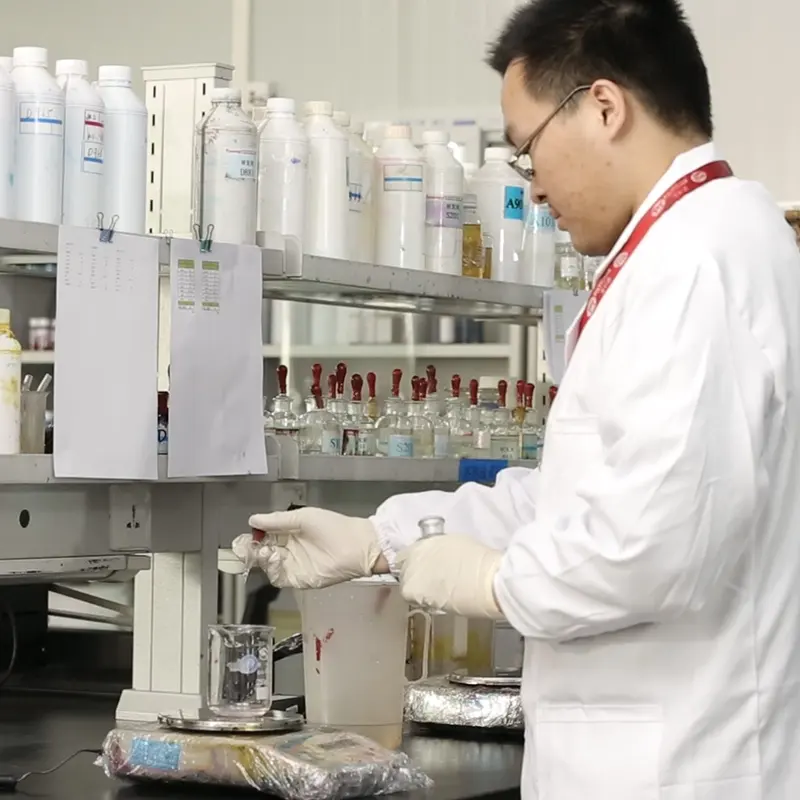
How is pigment ink, which is commonly used in printing, prepared? Many people must wonder how pigment ink is produced and manufactured. Winnerjet has extensive experience in producing pigment ink, and we have a dedicated laboratory and research team for developing pigment ink. Below, we will systematically explain the production logic of pigment ink, focusing on the laboratory preparation process, from scientific principles to operational details, throughout which we adhere to the laboratory spirit of "repeatability, verifiability, and optimizability."
As a core material in printing, coating, and other fields, the preparation process of pigment ink is a typical application of materials science and colloid chemistry. Unlike dye-based inks, pigment inks use solid pigment particles insoluble in solvents as the coloring core, requiring precise processes to achieve stable dispersion of particles and system compatibility.
I. Scientific Preparation Before Production: Raw Material Selection and Parameter Determination
The primary principle of laboratory preparation is "clear goal orientation" – it is necessary to first determine the core indicators of the ink according to the application scenario (such as inkjet printing, flexible electronics, outdoor coating), and then reverse-screen the raw materials. Three key tasks need to be completed at this stage, and each step must be verified through experimental data:
1. Scientific Selection of Core Raw Materials
- Pigment particles: As the main coloring agent, they must meet the three requirements of "high tinting strength, low agglomeration, and chemical stability." Organic pigments (such as phthalocyanine blue, azo red) or inorganic pigments (such as carbon black, titanium dioxide) commonly used in laboratories need to have their original particle size distribution measured by a laser particle size analyzer (the ideal range is 50-200nm to avoid printing blur caused by light scattering).
- Dispersants: Their role is to form an adsorption layer on the surface of pigment particles, preventing agglomeration through steric hindrance or charge repulsion. The laboratory needs to select matching dispersants according to pigment polarity – non-polar pigments (such as carbon black) are suitable for polymer dispersants.
- Solvents and additives: Solvents must balance pigment solubility (actually dispersibility) and application scenario requirements – deionized water + ethylene glycol (to adjust viscosity and drying speed) are commonly used in inkjet inks, and xylene + cyclohexanone (to improve film-forming properties) are commonly used in industrial coatings.
2. Rigorous Design of Experimental Scheme
Before preparation, a "variable control" scheme must be formulated: fix the pigment concentration (usually 5%-15%), use dispersant dosage, grinding time, and solvent ratio as variables, design orthogonal experiments (such as L9 (3⁴) orthogonal table), and set 3 levels for each variable to ensure that experimental results are repeatable and comparable.
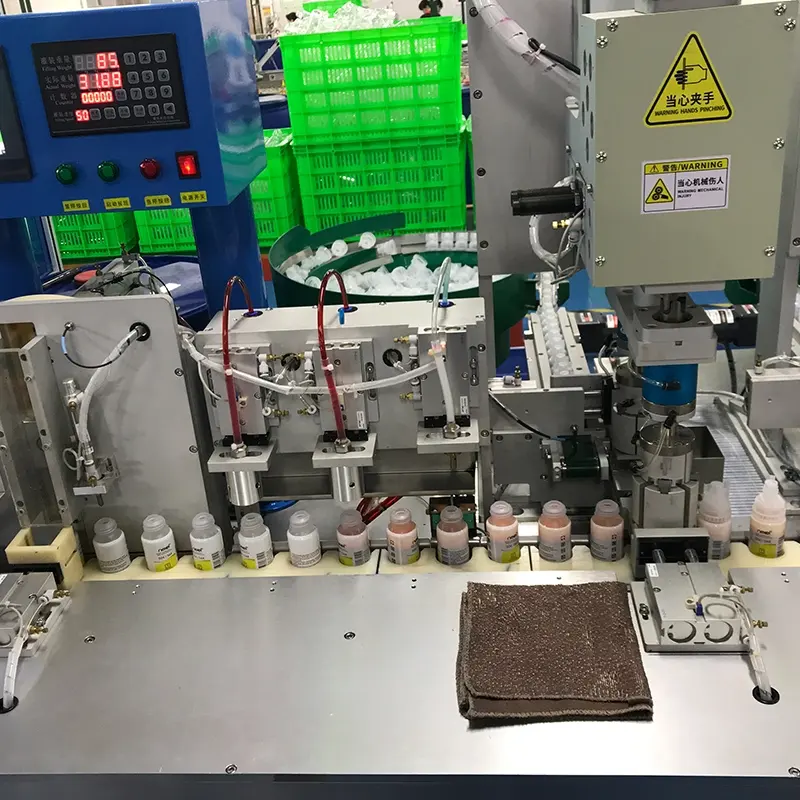
II. Core Preparation Process: Laboratory Operations from Dispersion to Stabilization
The core of pigment ink preparation is "uniformly dispersing solid pigment particles in a solvent and achieving long-term stability through system optimization." Laboratory operations must strictly follow the steps, and each step must be accompanied by testing methods to verify the effect.
1. Pre-dispersion: Breaking Initial Agglomerates
Operation steps: In a 500mL three-necked flask, add solvents according to the preset ratio (such as 200mL deionized water + 50mL ethylene glycol), turn on mechanical stirring (rotation speed 300r/min), slowly add weighed pigments (such as 25g carbon black), after stirring for 10min, add dispersant dropwise (such as 2.5g sodium polycarboxylate), and continue stirring for 30min to form a preliminary dispersion.
2. Fine Grinding: Achieving Nanoscale Dispersion
Laboratories commonly use horizontal sand mills or ball mills for fine grinding. The core is to refine pigment particles to the target particle size through the collision and shearing of grinding media (such as zirconia beads with a diameter of 0.1-0.3mm).
3. System Optimization: Adjusting Viscosity and Stability
After grinding is completed, it is necessary to add additives and adjust parameters to make the ink meet application requirements, including viscosity adjustment, pH adjustment, and comprehensive stability testing.
III. Embodiment of Laboratory Spirit: Error Control and Data Rigor
The scientific nature of pigment ink preparation lies not only in the steps themselves but also in the control of "experimental errors" and the adherence to "data authenticity." This includes precise raw material weighing, instrument calibration, and rigorous data recording and verification.
IV. From Laboratory to Industrialization: Scientific Connection for Large-Scale Production
Ink prepared in the laboratory needs to pass "scale-up verification" to move towards industrialization – for example, when scaling up a 500mL laboratory formula to a 100L pilot scale, it is necessary to adjust the stirring speed, grinding equipment, and track particle dispersion in real-time.
Conclusion
The laboratory preparation of pigment ink is a typical process of "theory guiding practice and practice verifying theory" – from scientific judgment in raw material selection, to precise control in preparation steps, to rigorous standardization in data recording, each step embodies the laboratory spirit of "seeking truth, seeking reality, and seeking accuracy."
The above is the process of how our laboratory and R&D team produce and manufacture pigment ink. From laboratory to industrial application production, we are professional and rigorous. If you have more questions about pigment ink, please feel free to contact us. Our R&D team is happy to communicate with you.