In the global coding and digital printing market, sourcing from Inkjet ink manufacturers in China is a vital path to reducing costs and enhancing competitiveness. However, with a vast number of suppliers in the Chinese market, product quality varies significantly. Relying solely on price or superficial rankings to choose a supplier carries immense risks.
To ensure the safety of your printheads and the quality of your output, we have summarized this “7-Step Practical Checklist.” It is designed to help you conduct a professional, in-depth audit of a manufacturer’s true capabilities.
Step 1: Verify Business Licenses and Hazardous Chemical Qualifications
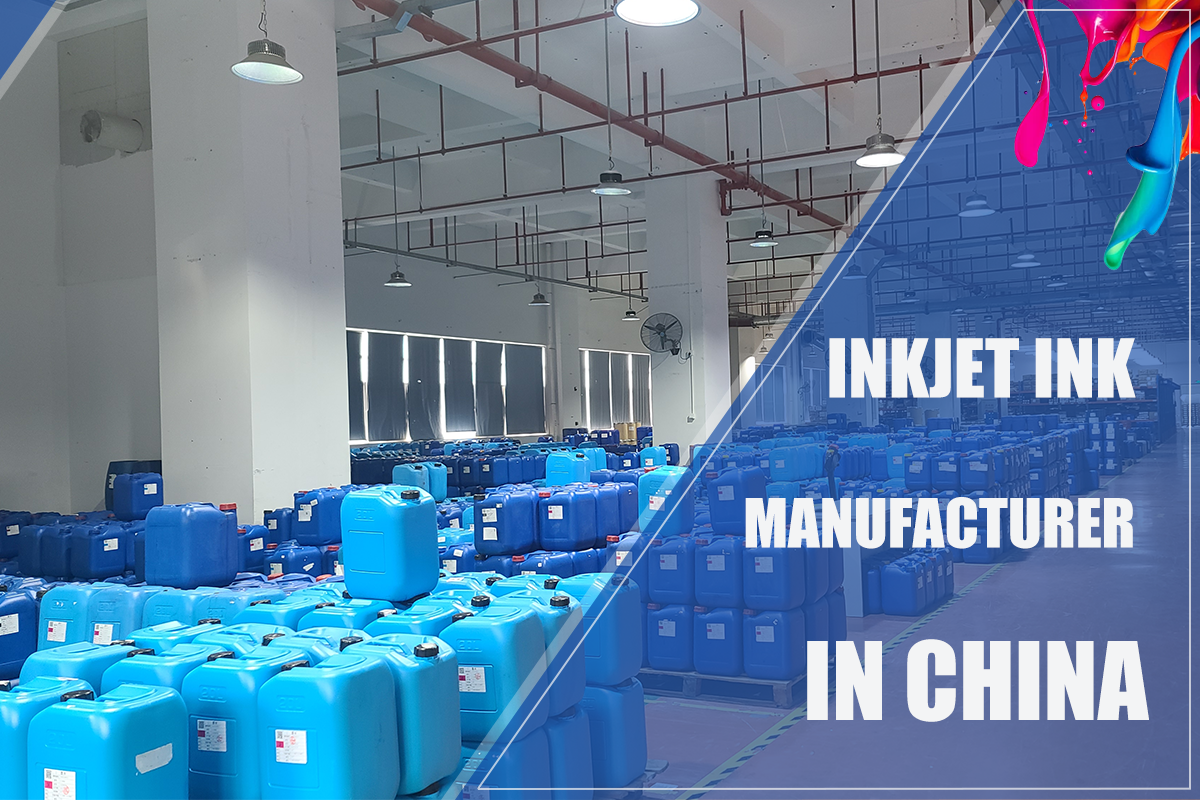
When searching for high-quality partners, the first priority is to distinguish between “trading companies” and “real factories.” In China, chemical production is regulated as strictly as the pharmaceutical industry. A truly capable Inkjet ink manufacturer in China must have a complete legal framework.
- Production Licenses and Environmental Ratings
With the advancement of the “Green China” policy, many small-scale ink workshops have been shut down due to their inability to treat wastewater. During your audit, always request the “Discharge Permit” and “Safety Production License” . Possessing these documents ensures that the factory is unlikely to face sudden supply disruptions due to government environmental inspections.
- Identifying True Manufacturers
Many companies claim to be “factories” on B2B platforms but are actually “private labelers” or traders.
Pro Tip: Check the registered address. If the company is located in a downtown office building without a separate factory address, it is likely a trading company. Genuine ink factories are typically located in specialized chemical industrial parks (such as those in Dongguan/Zhuhai in Guangdong, or chemical zones in Jiangsu and Zhejiang).
Step 2: In-depth Inspection of R&D Laboratory Equipment
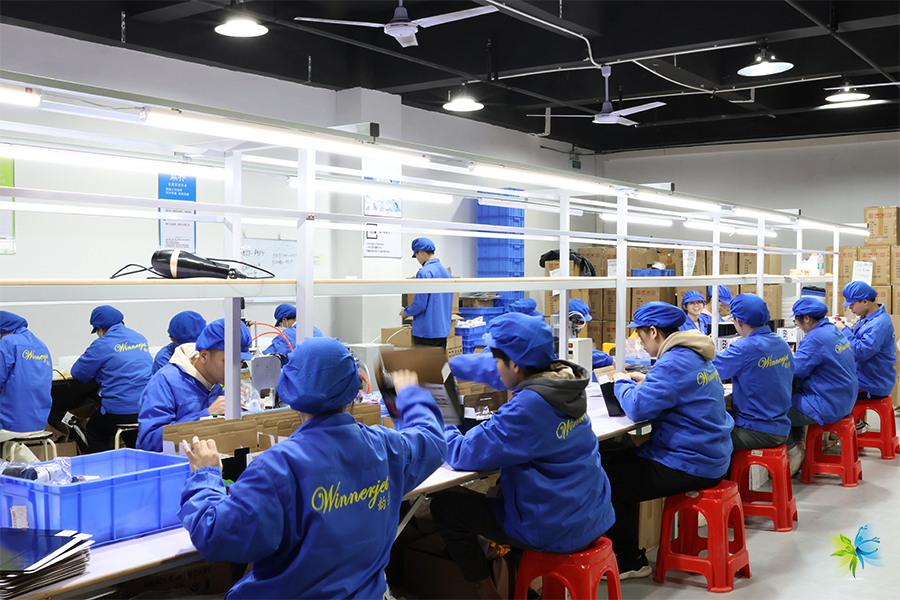
The core strength of top-tier Inkjet ink manufacturers in China lies not in the workshop, but in the laboratory. If you cannot visit in person, request a video tour of their R&D center.
- Core Testing Equipment: Particle Size and Stability
Laser Particle Size Analyzer: Pigment particles in inkjet ink must be distributed between 100-200nm. Particles exceeding 300nm are the primary culprits for printhead clogging.
Rheometer: Since ink is in a high-speed shear state inside the printhead, a rheometer is used to monitor viscosity changes at various shear rates.
- Color Management Lab
Excellent manufacturers are equipped with X-Rite spectrophotometers. Ink is not just “Blue” or “Red”; it must strictly adhere to the L*a*b* color space standards. If a manufacturer cannot provide accurate Delta E (△ E) color difference control data, the stability of their batches is highly questionable.
Step 3: Request and Analyze MSDS and TDS Technical Manuals
Do not just look at the TDS provided; you must understand the physical significance behind the parameters.
- Viscosity and Surface Tension
These are the “twin stars” that determine jetting viability:
Viscosity Control: For Epson printheads, viscosity is typically required at 3-5 mPa·s, whereas industrial heads like Kyocera may require 5-8 mPa·s.
Physical Principle: Surface tension determines the “wetting” on the nozzle plate and the spreading diameter of the ink droplet on the media.
- pH Value and Conductivity (For Water-based Inks)
For aqueous textile or digital proofing inks, even slight fluctuations in pH can corrode the polyimide film inside the printhead. A qualified manufacturer will control pH fluctuations within ± 0.5.
- MSDS & TDS Checklist:
MSDS (Material Safety Data Sheet): Ensure it complies with GHS international standards—this is the foundation for customs clearance and safe warehousing.
TDS (Technical Data Sheet): Focus on the stability of viscosity. Top manufacturers control viscosity fluctuations within ±0.3mPa·s. If the ranges provided are too vague, it indicates a low standard of quality control.
Step 4: Ask for “Heat Aging Stability Test” Reports
Ink undergoes dramatic temperature fluctuations during sea freight. When exporting from China to Europe, the US, or Southeast Asia, ink may spend 30-45 days in a sealed container where temperatures can swing from -10°C to 60°C.
Verification Method: Ask if the manufacturer has conducted 60°C Accelerated Heat Aging Tests.
The Logic: Only ink that has passed high-temperature simulated sedimentation tests can ensure a shelf life of 12-24 months without producing sediment, thus protecting your printer’s ink system.

Step 5: Confirm Filtration Precision and Process
Even a perfect formula will fail without a rigorous production process. Since printhead nozzles are only a few dozen microns wide, any tiny impurity is fatal.
- Grinding Process
Inquire about the type of grinding machinery used. The industry gold standard is the Nano-grade Horizontal Bead Mill.
- Filtration Hierarchy
Inks should undergo three stages of filtration before bottling:
Primary Filter:1 μm to remove large particles.
Fine Filter:0.5 μm to protect the final stage.
Final Filter:0.22 μm absolute filtration precision.
Pro Tip: Ask for the brand of the filter elements (e.g., Pall or Pall-compatible). The quality of the filter element directly determines the purity of the ink.
- Vacuum Degassing
This is often overlooked. Dissolved oxygen in the ink can form micro-bubbles under the high-frequency vibration of piezoelectric ceramics, leading to “nozzle drop-outs” (ink breaking). Leading manufacturers deploy online degassing membranes on their filling lines.
Step 6: Evaluate Packaging and Export Compliance
Details determine success. Observe the packaging of the samples:
Bottle/Drum Material: For Eco-solvent or UV inks, is High-Density Polyethylene (HDPE) corrosion-resistant packaging used?
UN Marking: Does the packaging feature internationally recognized UN hazardous goods codes? This reflects the manufacturer’s expertise in international logistics.
Crucially, conduct specific inquiries based on your printhead model:
Epson (i3200/DX5/XP600): Focus on Dynamic Surface Tension to prevent slanted spraying and satellite mists.
Industrial (Ricoh G5/G6, Kyocera): Focus on chemical compatibility tests between ink components and the internal adhesives of the printhead.
Thermal (HP/Canon/Memjet): Focus on Decap Time and “Kogation” (crust formation) to prevent ink from charring on the heating elements.
Step 7: Technical Support and ICC Color Management
In 2026, the ink trade has evolved from “selling liquids” to “selling solutions.”
- ICC Profile Capabilities
If a manufacturer cannot provide tailored ICC Profiles for your specific media (e.g., Vinyl, Canvas, Fabric), you may have to spend thousands of dollars on third-party color calibration.
Expert Advice: A manufacturer with a dedicated team of color engineers is far more professional than a simple chemical workshop.
- Lot Tracking System
Ask if there is a unique tracking code at the bottom of each bottle. When quality fluctuations occur, can the manufacturer trace back to the specific batch of raw materials and production records via this code?
Final Thoughts
Choosing Inkjet ink manufacturers in China should not just be a price war; it is a strategic move regarding technical stability. By following these 7 steps, you can identify partners with true R&D depth, thereby protecting your expensive printhead assets.
If you would like to view the industry-recognized leading brands, please refer to our guide: Top 10 Inkjet Ink Manufacturers in China.
In Chinese sourcing, the mantra is: “Trust, but Verify.” A manufacturer that dares to show you particle size distribution maps, provide heat stability data, and promise color management support is the strategic partner worthy of your core business.