In UV printing on shoes, choosing the wrong ink leads to cracked finishes, failed adhesion, and export compliance risks. This article addresses three core questions: How to select industrial-grade UV ink with high elongation to handle tens of thousands of bends? How to ensure ink perfectly matches Ricoh Gen5 printheads while lowering maintenance costs? And how to pass the rigorous Nike RSL and Adidas A-01 chemical safety certifications to solve common UV ink issues.
1. Why Shoe Printing Requires Flexible UV Ink
In the UV printing industry, ink is typically categorized as “hard” or “soft.” However, in the footwear sector, standard soft ink is often insufficient for complex physical challenges; a specialized “Super Flexible UV Ink” is mandatory. Shoes—especially sneakers—undergo intense stretching and compression at the vamp and crease points during movement. The primary difference between Industrial UV Ink for Footwear and standard ink is the inclusion of long-chain elastomer polymers in its molecular structure.
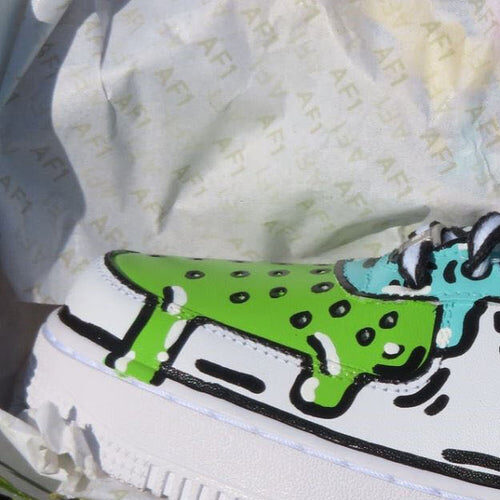
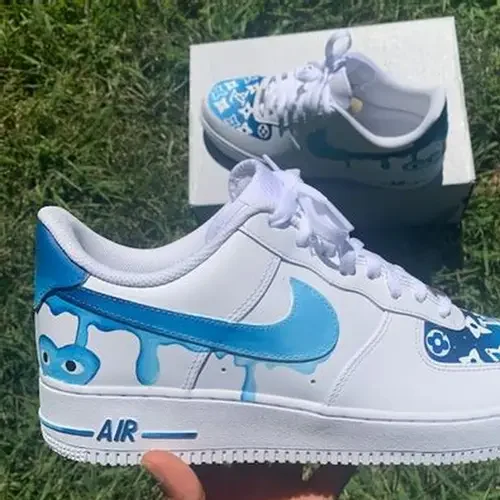
Ultra-High Elongation: Top-tier specialized shoe UV inks can reach an elongation of 200%–300%. This means when TPU or leather stretches, the ink layer expands like rubber rather than developing micro-cracks.
Energy Return Compatibility: Modern midsoles (like ETPU/”popcorn” material) have high rebound resilience. Specialized inks feature “shape memory,” allowing them to snap back instantly with the substrate to keep the pattern intact without delamination.
Flex Life: Professionally formulated inks must pass the Bally Flex test. Under lab standards, the ink is only considered qualified if it does not peel or turn white after 50,000 continuous flexes.
Pro Tip: The beautiful elongation rates measured by many manufacturers at a room temperature of 25°C (77°F) are often a “trap.” You must pay attention to “cold brittleness.” Shoes are sold globally, from Southeast Asia to the freezing winters of North America or Russia. If a formula lacks low-temperature resistant elastomers, the print will crack like a cracker at -10°C (14°F), even if it passed the room-temp Bally Flex test. Always ask suppliers for flex data under low-temperature conditions; this is the true divide between industrial and consumer grade.
If you require custom ultra-flexible UV ink, please contact Winnerjet for a personalized solution and free sample testing.
2. Compatible UV Ink for Ricoh Gen5 Printheads
In industrial footwear printing, the Ricoh Gen5 (MH5420/5421) printhead dominates over 70% of the market due to its all-steel construction and grayscale performance. However, printhead performance is entirely dependent on the physical properties of the ink. Using a flexible UV ink specifically developed for the Ricoh G5 is vital for optimal results and equipment longevity.
Key parameters customized for Ricoh Gen5:
Dynamic Viscosity Matching: Ricoh heads are extremely temperature-sensitive. Specialized ink must maintain a stable viscosity of 8–12 cps when heated to 40–45°C inside the head. Substandard ink causes “ink breaking” during high-speed printing or “ink misting” due to low viscosity.
Sub-micron Filtration: Industrial ink must undergo three-stage nano-filtration, with particle sizes strictly under 0.2μm. This prevents pigment sediment from clogging the microscopic internal filters of the Ricoh head, extending head life from a mere 6 months to over 2 years.
Waveform Optimization: Professional suppliers provide exclusive drive waveform files for Ricoh heads. This ensures droplets remain perfectly round and focused during high-speed flight, resulting in razor-sharp precision on the shoe surface.
Insider Insight: As an eco-friendly ink supplier, I often see factories save 20% on ink costs only to pay double later when replacing ruined Ricoh heads. Here is an industry secret: many low-end inks use poorly ground pigments to chase vibrant colors, leading to a “chronic thrombosis” of the printhead filters. By the time you notice frequent jet drop-outs or crooked spraying, the head is likely toast. Ink isn’t just a consumable; it is the “lubricant” and the “insurance policy” for your printhead. Optimized waveforms aren’t an “extra”—they are a requirement for high-drop printing (4mm+) to prevent misting.
3. UV Ink for TPU / Synthetic Leather
Material diversity is a major pain point in shoe printing. TPU, PU synthetic leather, PVC, and microfiber leathers have low surface energy and often contain release agents or oils. High-end footwear UV ink relies on chemical bonding rather than just physical adhesion:
Built-in Adhesion Promoters: In the past, factories relied on manually wiping primers, which increased labor costs and VOC pollution. Modern industrial shoe inks integrate these promoters into the formula for a “direct-to-print” workflow.
Maintaining a Soft Hand-feel: The biggest “fail” in leather printing is a “plasticky” feel. Specialized ink penetrates fiber gaps or forms an ultra-thin flexible film that preserves the leather’s original texture.
Color Saturation: Because synthetic materials are non-absorbent, the ink must work with LED-UV lamps for instant “pinning” (pre-curing). This prevents ink bleeding and ensures crisp edges for micro-text and 1pt fine lines.
👉 Selecting the Right UV Ink for Different Shoe Materials
In the footwear industry, material diversity is the biggest challenge for UV printing. A “one-size-fits-all” approach often leads to cracking or peeling. To achieve professional results, you must match your ink type to the specific substrate.
1️⃣. Leather & PU Leather (For Formal & Casual Shoes)
Printing Requirement: Leather uppers undergo constant creasing and folding during walking. The ink must be flexible enough to move with the material without “shattering” or flaking off.
Recommended Ink: Winnerjet Flexible UV Ink (Soft Ink).
Key Benefit: It features an elongation rate of 200%-300%. This ensures the design remains intact even after thousands of bends, maintaining a soft hand-feel that blends into the leather texture.
2️⃣. Mesh & Knit Fabrics (For Performance Sneakers)
Printing Requirement: Modern sneakers use breathable mesh or knitted “sock” uppers. These materials stretch significantly when the foot enters the shoe. The ink needs to “grip” the fibers without clogging the pores.
Recommended Ink:Super Elongation UV Ink.
Key Benefit: This ink forms an ultra-thin, elastic film. It allows the fabric to breathe and ensures the colors stay vibrant without “whitening” or showing the base fabric when the material is fully stretched.
3️⃣. Rubber & EVA (For Shoe Soles & Slides)
Printing Requirement: Soles are made of “low-surface-energy” materials that naturally repel liquids. Combined with constant ground friction, standard inks will peel off almost immediately.
Recommended Ink: High-Adhesion UV Ink + Specialized Primer.
Key Benefit: By applying a dedicated Winnerjet UV Primer before printing, you create a chemical bond between the rubber and the ink. This setup passes rigorous scratch and alcohol-rub tests, ensuring logos stay permanent on the sole.
Prior to commencing mass production, it is recommended to conduct a 3M tape peel-off test and a 24-hour natural drying test. For specialized materials such as rubber, the uniformity of the primer application is just as critical as the final performance of the ink.
4. How to Pass Nike RSL & Adidas A-01
For manufacturers in the Nike or Adidas supply chain, environmental compliance is the “green line” you cannot cross. Detecting a restricted substance means a batch rejection or even the loss of your contract.
Nike RSL Compliance: Nike’s Restricted Substance List (RSL) has brutal limits on phthalates, organotin compounds, and heavy metals. Using compliant ink ensures you pass random lab audits globally.
Adidas A-01 Compliance: This standard covers an even broader range of chemical management. Compliant inks must use high-purity photoinitiators and monomers to ensure no toxic chemical residues remain after curing.
Zero VOCs: Industrial UV inks are solvent-free, producing virtually no Volatile Organic Compounds. This is essential for factory environmental audits like the Higg Index, turning “safety” into a brand bargaining chip.
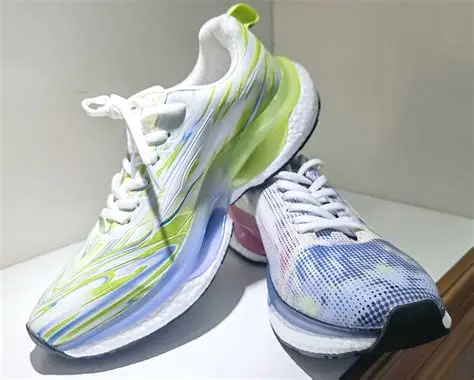
5. Test Reports & Compliance Documentation
When choosing a supplier, you must demand a full technical dossier for brand verification.
| Test Item | Reference Standard | Industrial Pass Indicator |
|---|---|---|
| Bally Flex Test | ISO 5402 / ASTM D6182 | Room Temp > 50,000 times; Cold (-10°C) > 20,000 times |
| Rub Fastness | AATCC 8 / ISO 105-X12 | Dry rub 4.5; Wet rub 4.0+ |
| Cross-Hatch Adhesion | ASTM D3359 | 5B (Clean edges, zero detachment) |
| RSL Analysis | Nike RSL / Adidas A-01 | N.D. (Not Detected) or below limits |
Winnerjet Take: Many factories see Nike RSL or Adidas A-01 as annoying red tape. I see them as “technical armor.” In the global supply chain, a huge part of the profit margin is a premium paid for “safety.” When you provide full compliance docs, you stop being a replaceable vendor fighting a price war and start being an indispensable strategic partner. Don’t view sustainability as an expense; view it as your ticket to the Tier-1 supplier club.
6. FAQ for Shoe Manufacturers
Will UV-printed shoes fade in the sun?
Why does the pattern turn white when stretched?
Can UV print work on waterproof leather?
Does this ink require special storage?
Can UV printing do "full wraps" on outsoles like screen printing?
Conclusion
In the world of shoe printing, ink is more than just color; it is the soul of the product’s quality. By selecting industrial UV ink that is Ricoh Gen5 compatible and Nike RSL/Adidas A-01 certified, your factory gains design freedom and a competitive edge in the global market.
[Next Preview]: Application Guide for Soft UV Ink on TPU Materials. We will explore how to achieve perfect adhesion and high transparency on ultra-soft TPU films and thin materials, while avoiding the common issue of material shrinkage caused by UV heat.