What is Pigment Ink? Complete Guide to Pigment-Based Printing
Pigment ink is a revolutionary printing technology that uses microscopic solid particles suspended in liquid to create vibrant, long-lasting prints. Unlike traditional dye-based inks, pigment inks offer superior durability, fade resistance, and professional-quality results that make them the preferred choice for photographers, artists, and businesses worldwide.
Understanding Pigment Ink: The Science Behind Superior Printing
What is pigment ink? Pigment ink is a specialized printing medium composed of tiny solid particles (pigments) suspended in a liquid carrier. These microscopic particles, typically measuring between 0.05 to 0.2 microns, sit on top of the paper surface rather than being absorbed into it, creating prints with exceptional color accuracy, longevity, and resistance to environmental factors.
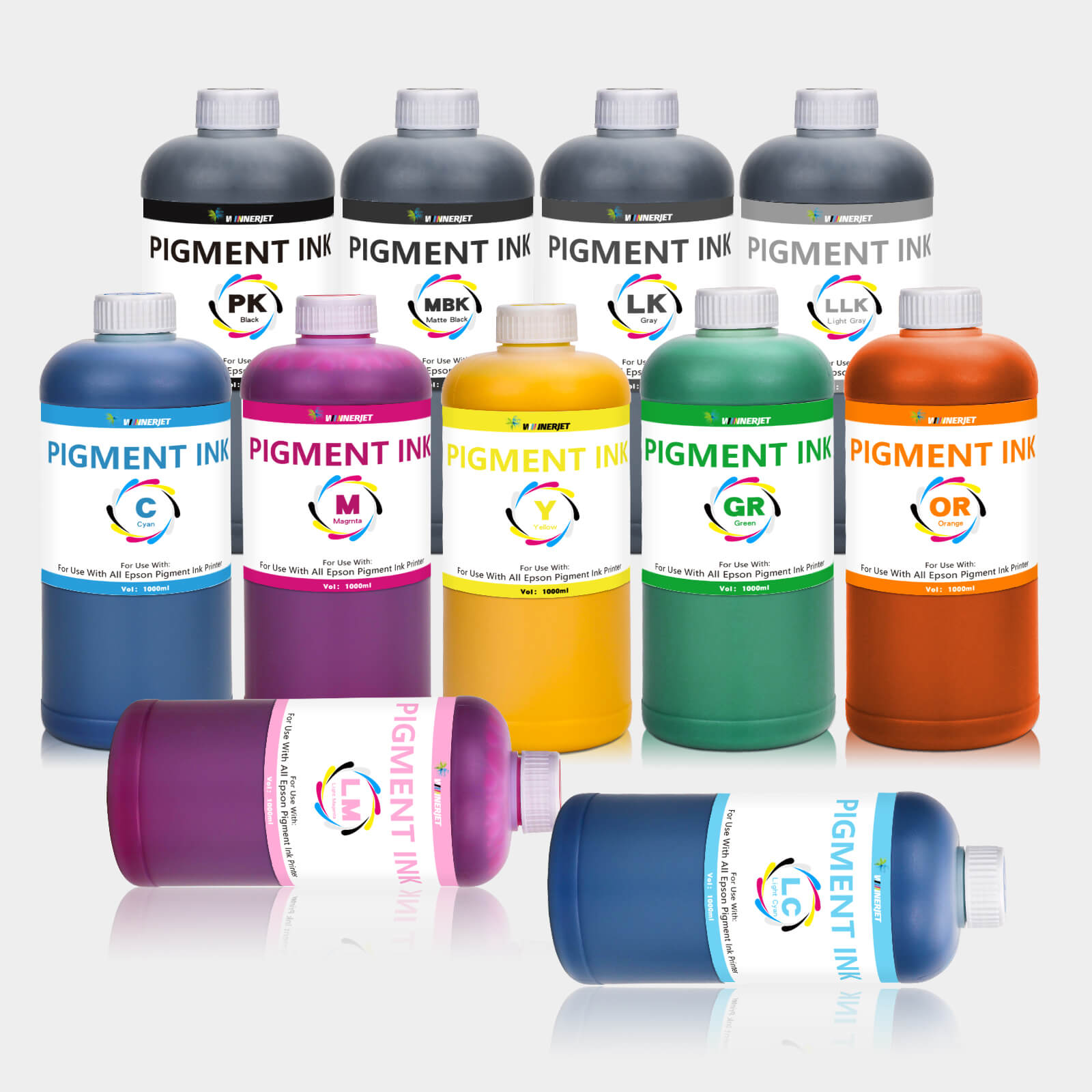
The fundamental difference between pigment and dye inks lies in their molecular structure. While dye inks consist of dissolved molecules that penetrate paper fibers, pigment inks contain solid particles that remain on the surface, creating a protective layer that shields the colorants from UV light, moisture, and other degrading factors.
How Pigment Ink Works: The Technology Explained
Pigment ink technology relies on several key components working together to deliver exceptional print quality:
Pigment Particles
Solid colorant particles that provide the actual color and opacity to the ink
Carrier Liquid
Usually water-based solution that transports pigments through the printing system
Dispersants
Chemical agents that keep pigment particles evenly distributed and prevent settling
Surfactants
Surface tension modifiers that ensure proper ink flow and paper adhesion
Humectants
Moisture-retaining agents that prevent ink from drying in printer nozzles
Biocides
Preservatives that prevent bacterial growth and extend ink shelf life
The Printing Process
When pigment ink is applied to paper, the carrier liquid is absorbed or evaporates, leaving the pigment particles bonded to the surface. This creates a stable, fade-resistant image that can last for decades under proper storage conditions. The particles form a thin film that protects the underlying colorants from environmental damage.
Pigment Ink vs Dye Ink: Comprehensive Comparison
Pigment Ink Advantages
- Superior fade resistance (100+ years)
- Water-resistant when dry
- Excellent color accuracy
- Professional archival quality
- Better performance on plain paper
- Smudge-resistant finish
Dye Ink Advantages
- More vibrant colors on photo paper
- Lower cost per page
- Faster drying time
- Better color saturation
- Smoother gradients
- Less printer maintenance required
| Feature | Pigment Ink | Dye Ink |
|---|---|---|
| Fade Resistance | 100+ years | 10-25 years |
| Water Resistance | Excellent when dry | Poor to moderate |
| Color Gamut | Good | Excellent |
| Cost | Higher | Lower |
| Drying Time | Slower | Faster |
| Paper Compatibility | Excellent on all papers | Best on coated papers |
Applications and Uses of Pigment Ink
Pigment ink's superior durability and color accuracy make it ideal for numerous professional and personal applications:

Professional Photography
Professional photographers rely on pigment ink for creating gallery-quality prints that maintain their color integrity for decades. The superior color accuracy and fade resistance ensure that artistic vision is preserved long-term, making pigment ink essential for fine art photography, wedding photography, and commercial portfolio work.
Fine Art Reproduction
Museums and galleries use pigment ink technology to create faithful reproductions of artwork. The ability to accurately reproduce subtle color variations and maintain archival stability makes pigment ink the gold standard for art reproduction and limited edition prints.
Benefits of Using Pigment Ink
Longevity and Archival Quality
Pigment inks can maintain their color integrity for over 100 years when stored properly, making them ideal for important documents, family photos, and professional artwork that needs to stand the test of time.
Superior Color Accuracy
The solid particle structure of pigment ink provides more consistent color reproduction across different lighting conditions and viewing angles, ensuring that prints look exactly as intended by the creator.
Environmental Resistance
Pigment ink prints resist fading from UV light exposure, humidity changes, and atmospheric pollutants better than dye-based alternatives, making them suitable for display in various environments.
Choosing the Right Pigment Ink
When selecting pigment ink for your printing needs, consider these important factors:
Printer Compatibility
Ensure the pigment ink is specifically formulated for your printer model. Using incompatible inks can damage print heads and void warranties. Major printer manufacturers like Canon, Epson, and HP offer proprietary pigment ink formulations optimized for their systems.
Color Gamut Requirements
Different pigment ink sets offer varying color gamuts. Professional photo printers often use 8-12 color pigment ink systems to achieve wider color reproduction, while standard office printers typically use 4-6 color systems.
Paper Compatibility
Pigment inks perform well on various paper types, but optimal results require matching ink characteristics with paper surface properties. Matte papers, glossy photo papers, and fine art papers each interact differently with pigment particles.
Storage and Handling
Proper storage is crucial for maintaining pigment ink quality. Store cartridges in cool, dry conditions away from direct sunlight. Shake cartridges gently before installation to ensure proper pigment dispersion.
Maintenance and Best Practices
To maximize the performance and lifespan of pigment ink systems:
- Regular Use: Print at least once per week to prevent pigment settling and nozzle clogging
- Quality Paper: Use high-quality papers designed for pigment ink to achieve optimal results
- Proper Storage: Store prints in acid-free environments away from direct sunlight
- Calibration: Regularly calibrate your monitor and printer for consistent color reproduction
- Cleaning Cycles: Perform regular print head cleaning as recommended by manufacturer
Future of Pigment Ink Technology
The pigment ink industry continues to evolve with advances in nanotechnology, improved color gamuts, and enhanced environmental sustainability. New formulations are being developed that offer even greater longevity, wider color reproduction, and reduced environmental impact while maintaining the superior quality that makes pigment ink the professional standard.
Ready to Experience Superior Print Quality?
Discover the difference that professional pigment ink can make in your printing projects. Whether you're a photographer, artist, or business professional, pigment ink technology delivers the quality and longevity your work deserves.
Get Expert Advice