If you’re starting in custom printing, you’ve probably heard about sublimation ink and DTF ink. Many beginners wonder: Are they the same? Can I use sublimation ink for DTF? The answer is no—they are completely different.
In this guide, we’ll explain the main differences between sublimation ink and DTF ink, when to use each one, and which is better for your business.
📊 Quick Comparison Table: Sublimation Ink vs. DTF Ink
| Feature | Sublimation Ink | DTF Ink |
|---|---|---|
| Printing Process | Transfers through heat, turns into gas | Prints on PET film, applied with hot-melt powder |
| Best Materials | Polyester fabrics, coated mugs, hard goods | Cotton, polyester, blends, leather, canvas, more |
| Color & Finish | Bright colors, but not for dark fabrics | Vibrant colors, works on light & dark fabrics |
| Durability | Very durable on polyester | Strong wash resistance on all fabrics |
| Cost & Setup | Lower cost, but limited applications | Higher cost, more versatile and profitable |
🧪 What is Sublimation Ink?
Sublimation ink is used in sublimation printing, a method where the ink turns into a gas when heated and bonds directly with the surface.
- Works best on polyester fabrics or items with a polymer coating (like mugs, phone cases, or keychains).
- Creates bright, long-lasting prints.
- Cannot be used on cotton or dark-colored fabrics.
👉 Best for: promotional gifts, polyester sportswear, mugs, phone cases.

🎨 What is DTF Ink?
DTF ink is designed for Direct-to-Film printing, a newer method that works on almost any fabric.
- The design is printed on PET film with special DTF ink.
- The film is coated with hot-melt powder, then heat-pressed onto the fabric.
- Works on cotton, polyester, blends, canvas, leather, and dark fabrics.
👉 Best for: T-shirts, hoodies, bags, and small-batch apparel printing.

⚖️ Sublimation Ink vs. DTF Ink: Key Differences
1. 🎯 Printing Process
- Sublimation: This process requires sublimation paper and heat to bond ink with polyester or coated surfaces.
- DTF: Uses PET film + adhesive powder + heat press, making it more versatile.
2. 🧵 Fabric & Material Compatibility
- Sublimation: Works only on polyester or coated items.
- DTF: Works on almost any fabric, including cotton and dark materials.
3. 🌈 Print Quality & Color
- Sublimation: Produces bright and smooth prints, but doesn’t work well on dark fabrics.
- DTF: Prints vibrant colors that stand out on both light and dark garments.
4. 💎 Durability & Wash Resistance
- Sublimation: Extremely durable on polyester but fades on cotton.
- DTF: Holds up well after many washes, even on cotton shirts.
5. 💰 Cost & Business Use Cases
- Sublimation: Low-cost setup, but limited to polyester and coated products.
- DTF: Slightly higher cost, but opens more opportunities in garment printing, making it profitable for custom apparel businesses.
🏆 Which One Should You Choose?
Both sublimation and DTF inks have their place:
- Choose sublimation ink if you want to make mugs, polyester jerseys, or promotional gifts.
- Choose DTF ink if you want to print on cotton T-shirts, hoodies, tote bags, or if you need one method that works across different fabrics.
👉 For garment decorators, DTF is often the better investment because of its versatility and strong wash durability.
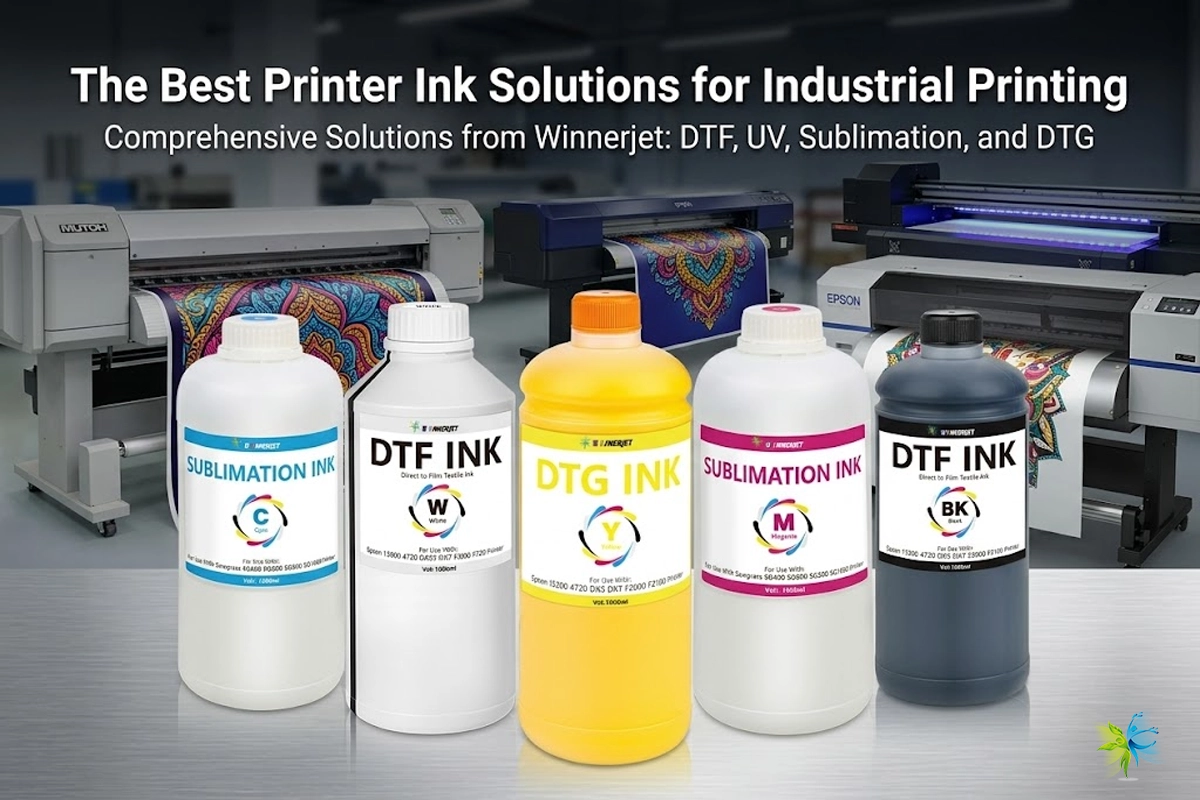
And with Winnerjet’s high-quality DTF inks, you’ll get vibrant colors, smooth printing, and reliable results every time.
🎯 Conclusion & CTA
Sublimation ink and DTF ink may sound similar, but they serve very different purposes. Sublimation is best suited for polyester and coated products, while DTF is ideal for apparel printing on a wide range of fabrics.
👉 📩 Request Winnerjet Free Ink Samples today and see the difference yourself!
🧠 FAQ
Can I use sublimation ink in a DTF printer?
No. Sublimation ink and DTF ink are different. Using the wrong ink will damage your printer and ruin prints.
Which lasts longer, sublimation or DTF prints?
Both are long-lasting on the right materials, but sublimation only works on polyester. DTF stays strong on cotton and blends too.
Is sublimation cheaper than DTF?
Yes, sublimation is cheaper to start with, but it has limited applications compared to DTF.
Do I need special printers for each method?
Yes. Sublimation requires a sublimation printer and ink, while DTF needs a printer that supports DTF inks and film.
Which is better for beginners?
If you want to print on apparel, DTF is better. If you want to make mugs or polyester items, sublimation is simpler.