If you’ve been working with DTF printing, you already know that adhesive powder is what makes the transfer stick to fabric. Most print shops rely on white DTF powder, but there’s another option worth knowing about: black DTF powder.
So, when should you actually use black DTF powder instead of white? Let’s break it down step by step, covering its best use cases, benefits, and limitations.
📌 What Is Black DTF Powder Used For?
DTF adhesive powder is the key ingredient that bonds printed film designs to fabric during the heat press stage. While white powder is the standard choice, black DTF powder is formulated for specific situations.
- White powder: works on almost any fabric color but may leave faint white edges on dark garments.
- Black powder: prevents those edges from showing up, making it perfect for dark fabrics and solid designs.
Think of black powder as a problem-solver when you want your design to blend smoothly into dark-colored garments.
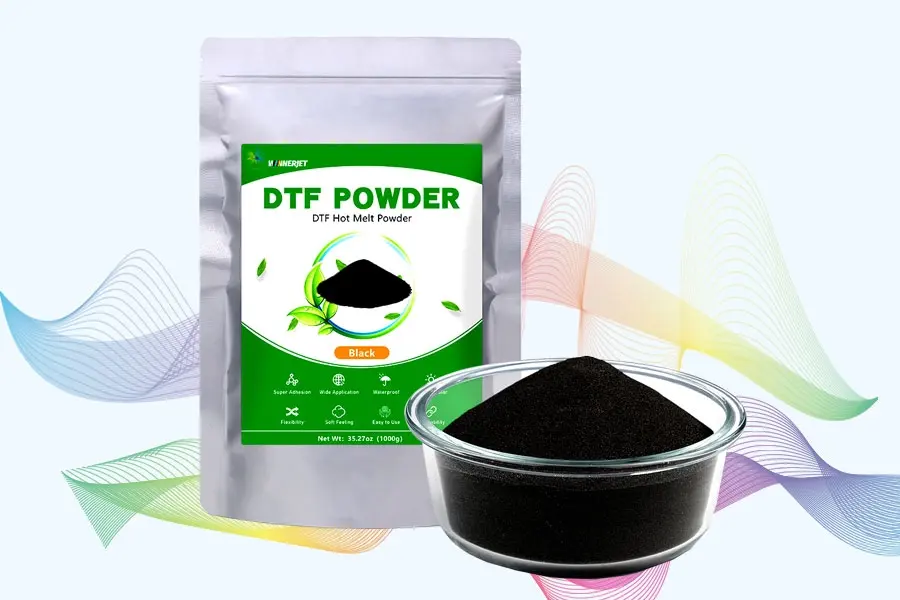
🎨 When Should You Use Black DTF Powder?
Here are the main cases where black DTF powder is your best option:
- ✅ Printing on dark fabrics: T-shirts, hoodies, or caps in black, navy, or charcoal.
- ✅ Solid dark designs: Backgrounds or borders that need seamless blending without white outlines.
- ✅ Matte finishes: When you want a less shiny, more subtle finish compared to white powder.
👉 Example: If you’re printing a solid black logo on a black hoodie, black powder ensures there won’t be distracting white edges around the transfer.
⚖️ Pros and Cons of Black DTF Powder
✔ Pros
- Eliminates visible white edges on dark fabrics
- Works well for deep, solid color designs
- Produces a clean, matte finish
✘ Cons
- Not suitable for light-colored garments
- Can reduce brightness in lighter or pastel designs
- More limited in use compared to white powder
👉 Winnerjet Tip: At Winnerjet, we offer both black and white DTF powders so that you can choose based on your production needs and garment range.
💡 Tips for Choosing Between Black and White Powder
How do you know which powder to keep in stock? Here are some quick tips:
- Look at your main garment colors: If you print mostly dark fabrics, black powder is useful. For mixed colors, white powder is safer.
- Consider design details: Use white powder for colorful or pastel designs, black powder for solid dark backgrounds.
- Test before mass production: Always press a sample to check how the finish looks on the final fabric.
🎯 Conclusion & CTA
Black DTF powder is a smart choice when you’re printing on dark garments or solid dark designs and want to avoid white edges. For everyday printing and brighter designs, white powder remains the go-to.
👉 📩 Request Free Winnerjet DTF Powder Samples (Black & White) and see which works best for your print shop.
❓ FAQs
🤔 Can I use black DTF powder on white shirts?
No, it may leave a shadow effect. White powder is better for light garments.
🎨 Does black powder reduce color brightness?
Yes, especially with lighter or pastel colors.
👕 Is black powder as durable as white powder?
Yes, both are durable if applied correctly. The main difference is appearance.
🔄 Can I mix black and white powders?
No. Mixing powders can ruin adhesion. Use one type per transfer.
🧪 Where can I buy high-quality black DTF powder?
From reliable suppliers like Winnerjet, who provide both black and white powders tailored for different printing needs.