We tested five major DTG ink brands, built a compatibility chart for popular printers, and found the best places to buy without overpaying.
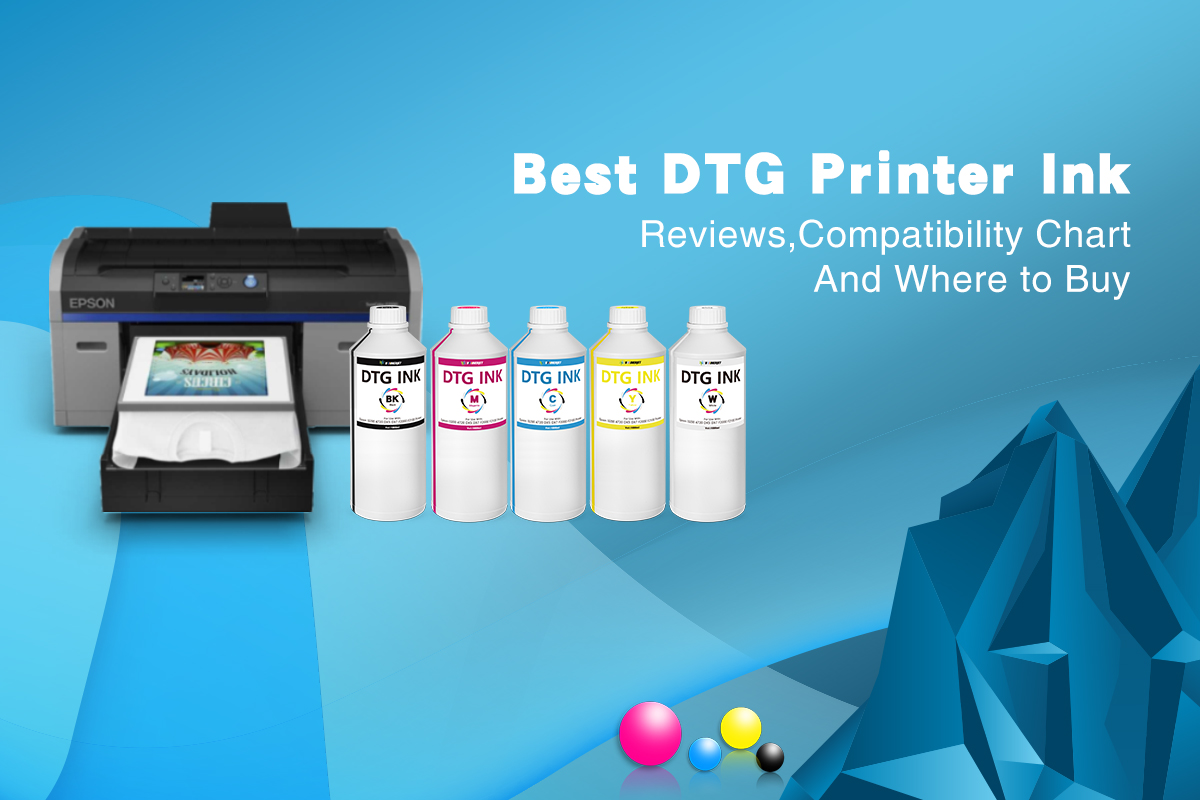
Best DTG Printer Ink Brands (2026 Reviews)
We tested five DTG ink brands over six months.One of the biggest challenges for beginners is printhead clogging. The best DTG inks for 2026 feature advanced self-lubricating particles. This technology makes the ink much easier to clean from DTG machines and significantly reduces daily maintenance time compared to traditional pigments.
1. Winnerjet DTG Ink
Winnerjet offers solid mid-range performance at budget-friendly prices.
Performance: Colors come out vibrant on both light and dark garments. The white ink maintains decent opacity without excessive layering. We got clean prints with sharp details down to 1200 DPI resolution.
Durability: Prints survived 35 wash cycles before noticeable fading started. The fabric hand feel stayed soft throughout testing.
Compatibility: Works with most Epson-based DTG printers. We tested on F2100 and modified Epson P800 units without issues.
Price: Roughly $95 per liter for CMYK set, $85 for white ink.
Downsides: White ink requires frequent shaking. It settled faster than premium brands. We experienced minor clogging once during a two-week idle period.
Best for: Small to medium print shops looking to reduce costs without sacrificing too much quality.
Safety and sustainability are top priorities in 2026. Winnerjet DTG inks are formulated with low-VOC (Volatile Organic Compounds) technology, ensuring a safer workspace for garment printers in the US and Europe. These water-based inks meet Oeko-Tex standards, reducing harmful emissions during the curing process.
2. Image Armor E-Series DTG Ink
Image Armor builds premium inks specifically for modified Epson printers.
Performance: Exceptional color accuracy right out of the bottle. The color gamut covers 95% of Pantone standards. White ink provides excellent opacity with just two passes.
Durability: We pushed test prints to 50+ washes.
Compatibility: Designed for Epson F-Series printers and converted desktop models. Also works with some Brother units when using their B-Series formulation.
Price: Around $140 per liter for color sets, $125 for white. Premium pricing but justified by performance.
Downsides: The higher price point challenges tight margins. Smaller operations might struggle with the upfront cost.
Best for: High-volume shops prioritizing quality and wash durability over initial savings.
3. Firebird DTG Ink
Firebird focuses on versatility across multiple printer platforms.
Performance: Good color reproduction with slightly less vibrancy than Image Armor. White ink opacity sits in the middle range. You’ll need two to three passes for solid coverage on black fabrics.
Durability: Test prints held up through 40 wash cycles before noticeable degradation. Not the longest-lasting but definitely commercial-grade.
Compatibility: Works with Epson, Brother, and Ricoh DTG printers. They offer formulation variants for different printhead types. This flexibility matters if you run multiple printer models.
Price: $110 per liter for CMYK, $100 for white. Fair pricing for the versatility offered.
Downsides: Color profiles need more tweaking than plug-and-play options. Expect to spend time dialing in your settings.
Best for: Multi-printer operations needing one ink supplier for different equipment brands.
4. Nazdar TexSystem DTG Ink
Performance: Colors lean slightly cooler in tone compared to competitors. White ink delivers excellent opacity. We achieved solid coverage with minimal passes. Print resolution reaches 1440 DPI with crisp detail retention.
Durability: Outstanding wash fastness. Test garments survived 60+ cycles with only minor fading. The color shift stayed within acceptable commercial standards throughout.
Compatibility: Primarily designed for Epson-based systems. Some users report success with Brother printers, but official support focuses on Epson platforms.
Price: $135 per liter for color inks, $120 for white. Premium tier pricing.
Downsides: The cooler color tone requires profile adjustments. Blues and greens print beautifully, but you’ll work harder to nail warm reds and oranges.
Best for: Operations prioritizing maximum wash durability and professional color consistency.
5. DuPont Artistri P5000 Series
DuPont enters DTG from their textile printing background. This is corporate-level ink formulation.
Performance: Professional-grade color accuracy across the entire spectrum. The pigment density creates intense, saturated prints. White ink provides superior opacity. Single-pass coverage works on medium-dark fabrics.
Durability: Lab testing shows color retention beyond 70 wash cycles. This ink outlasts almost everything else on the market. Prints maintain softness while keeping colors locked in.
Compatibility: Works with most Epson-based DTG printers. DuPont provides detailed compatibility documentation for specific models.
Price: $165 per liter for color sets, $145 for white. This is top-tier pricing for top-tier performance.
Downsides: Also requires more precise curing temperatures than budget inks.
Best for: Premium brands and operations where quality matters more than price. Corporate merchandise, high-end fashion printing, and specialty applications.
DTG Ink Performance Factors
Several technical factors determine whether your prints look amazing or amateurish.
Color Accuracy and Gamut
Most DTG inks cover 85-95% of the Pantone Color Bridge. Premium inks hit the higher end. Budget formulations struggle with certain blues and oranges.
You’ll notice the difference when printing brand logos. That specific corporate blue either matches perfectly or looks slightly off. There’s no middle ground with color accuracy.
Wash Durability and Fastness
Wash fastness measures how well colors survive laundering. The industry standard tests prints through 50 wash cycles at 140°F.
Quality DTG inks maintain 90% of original color intensity through 50 washes. Budget inks start fading noticeably around wash 25-30.
The binding agents make the biggest difference here. Better chemistry equals longer-lasting prints. You can’t fake this with heat press adjustments or pre-treatment tricks.
Print Resolution and Detail
Ink particle size directly affects print resolution.
Photographs especially reveal quality differences. Skin tones either look smooth or grainy. There’s no hiding poor ink formulation when printing complex images.
Fabric Hand Feel
Hand feel describes how the print area feels compared to the bare fabric. Softer is almost always better.
Water-based inks generally produce softer prints than plastisol transfers. But quality varies significantly between DTG ink brands. Some leave noticeably stiffer prints than others.
Excessive white ink layering causes most stiffness issues. Using quality white ink with good opacity lets you reduce layer count. Fewer layers equal softer prints.
Curing and Drying Properties
Different inks need different curing parameters. Temperature and time requirements vary by formulation.
Ink that doesn’t fully cure washes out prematurely. Prints that cure too hot feel stiff and may scorch lighter fabrics. Getting the parameters right matters more than most beginners realize.
How to Choose the Right DTG Ink
Picking ink isn’t just about finding the cheapest option. Your specific situation determines the best choice.
Consider Your Printer Model
Epson-based printers offer the widest ink compatibility. Brother systems work with fewer options. Kornit printers mostly require OEM inks unless you’re willing to void warranties.
Your printhead type matters too. DX5 heads tolerate slightly thicker inks than DX7 or i3200 printheads. Using incompatible viscosity damages printheads quickly.
Evaluate Your Fabric Types
Different fabrics demand different ink properties. Cotton handles most DTG inks well. Polyester blends need special formulations.
If you print primarily on 100% cotton, standard water-based DTG inks work perfectly. They absorb well and cure properly.
Assess Your Production Volume
The per-print cost difference becomes negligible at scale.
Printing 20 shirts daily? Budget inks save meaningful money. Printing 200 shirts daily? The quality consistency and reduced maintenance of premium inks pays for the price difference.
Calculate cost per print, not just cost per liter. Premium ink with better opacity uses less volume per print. Sometimes the expensive ink actually costs less per finished garment.
Quality vs. Price Balance
Find your sweet spot between cost savings and quality requirements. Not every customer needs maximum-durability inks.
One-time event shirts can use budget inks. The customer wears it once or twice then it sits in a drawer. Spending extra on 70-wash durability makes no sense.
Retail brands and repeat customers need premium durability. These garments get worn and washed frequently. Using cheap ink destroys your reputation when shirts fade quickly.
Check Certifications and Safety
Some commercial accounts require certified inks. Disney licensed products, for example, demand specific safety certifications. Having certified ink options expands your potential customer base.
Check VOC (Volatile Organic Compound) ratings too. Lower VOC formulas mean better air quality in your workspace. This matters more than most people think when you’re printing eight hours daily.
DTG Ink Maintenance and Storage
Proper storage and maintenance extends ink life and prevents expensive problems.
Proper Storage Conditions
Store DTG ink between 60-75°F. Temperature extremes damage pigment stability.
Keep bottles sealed until use. Exposure to air causes water evaporation. This changes ink viscosity and can trigger premature curing.
Direct sunlight degrades pigments over time. Store ink in dark areas or opaque containers. I learned this the hard way when three bottles of magenta turned weird after sitting near a window for two months.
Most DTG inks last 12-18 months unopened. Once opened, use within six months for best results. Mark opening dates on bottles.
Preventing Ink Clogging
Clogs cost time and money. Prevention beats dealing with blocked printheads.
Run your printer daily. Even if you’re not printing jobs, run a cleaning cycle. This keeps ink flowing through channels and prevents drying.
White ink settles faster than color inks. Shake white ink bottles before every refill. Some print shops shake their white ink every morning regardless of whether they’re refilling.
Use your printer’s automatic maintenance routines. They exist for good reasons. Skipping them to save ink creates bigger problems later.
Handling and Safety Precautions
Wear gloves when refilling cartridges or bottles. Some people develop skin sensitivity with repeated exposure.
Work in ventilated areas. Water-based DTG inks have low VOCs, but any aerosolized particles in your lungs aren’t ideal. A simple exhaust fan makes a difference.
Keep ink away from food and drinks. I’ve seen too many print shop owners snacking while refilling cartridges. Just don’t.
Common DTG Ink Problems and Solutions
Every DTG operator faces these issues eventually. Here’s how to fix them.
Color Inconsistency Issues
Colors look different from print to print. This usually points to one of three problems.
Problem 1: Inconsistent pre-treatment application creates uneven ink absorption.
Solution: Use a pre-treatment machine instead of hand spraying. If hand spraying, weigh garments before and after to ensure consistency. Aim for 6-8 grams per square foot for dark garments.
Problem 2: Ink cartridges running low cause color shifts. The printer can’t maintain proper ratios when levels drop.
Solution: Replace cartridges before they’re completely empty. Keep fresh cartridges in stock. The $30 cartridge beats reprinting $200 worth of shirts.
Problem 3: Temperature and humidity fluctuations affect how ink behaves. Summer vs. winter printing produces noticeably different results in non-climate-controlled shops.
Solution: Keep your print area between 65-75°F with 40-60% relative humidity. Buy a dehumidifier if needed.
Poor Wash Durability
Prints fade quickly or crack after washing. Several factors contribute to this frustrating problem.
Insufficient curing is the most common cause. Your heat press needs proper temperature and dwell time. Verify with a heat gun that garments actually reach 320°F+ throughout the print area.
Pre-treatment quality matters more than most realize. Cheap or old pre-treatment doesn’t bond properly. This causes ink to sit on the surface rather than penetrating fibers.
Fabric composition creates durability challenges too. Some polyester blends never achieve great wash fastness with standard DTG inks. You need specialized formulations for these materials.
Printhead Clogging
Clogs range from minor nozzle drops to complete blockages. Prevention works better than fixing established clogs.
White ink causes most clogging. The titanium dioxide particles settle and dry quickly. Run white ink cleaning cycles more frequently than color cycles.
Long idle periods invite clogs. If your printer sits unused for more than three days, expect some clogging. Some operators run a print every day even if it’s just a test pattern.
When clogs happen, use your printer’s deep cleaning cycle first. This solves 80% of minor clogs. For stubborn blockages, printhead soaking solutions work better than forcing cleaning cycles repeatedly.
While many believe high-quality DTG printing is limited to Epson-based engines, our 2026 ink series is fully optimized for Canon DTG ink systems and Ricoh-head garment printers. Whether you are using a modified Canon pro-series or a dedicated DTG chassis, our ink ensures consistent flow and vibrant results without damaging the specialized nozzles.
White Ink Challenges
White ink is the villain of every DTG story. It requires constant attention.
The ink separates quickly. Pigment settles to the bottom while lighter fluid rises. Shake bottles vigorously before every use. Some print shops install ink stirring systems that constantly circulate white ink.
White ink opacity varies between batches sometimes. One bottle gives perfect coverage in two passes. The next needs three passes for the same result. This isn’t necessarily a quality issue—it’s the nature of titanium dioxide suspensions.
Temperature sensitivity affects white ink more than colors. Cold white ink flows poorly and clogs easier. Warm it slightly if your shop runs cold. Don’t overheat though—above 85°F causes other problems.
DTG Ink Cost Analysis
Cost Per Print Calculations
Per-milliliter pricing doesn’t tell the complete story. You need cost per actual print.
A standard 12″x16″ full-color design on a light shirt uses approximately:
- Cyan: 2-3 mL
- Magenta: 2-3 mL
- Yellow: 1-2 mL
- Black: 1-2 mL
- Total: 6-10 mL ($0.66-$1.65 depending on ink quality)
The same design on a dark shirt adds white underbase:
- White ink: 8-12 mL (two passes)
- Color inks: 6-10 mL
- Total: 14-22 mL ($1.54-$3.63 depending on ink quality)
Premium inks often use less volume because their opacity and pigment density are higher. That $165/liter premium ink might cost the same per print as $110/liter mid-range ink.
Ways to Reduce Ink Consumption
Small optimizations add up to significant savings over thousands of prints.
Optimize white ink layers. Most designs work fine with one to two white passes. Don’t default to three passes just because you always have. Test coverage requirements per design.
Adjust your color profiles. Overly saturated profiles waste ink without improving visual results. Dial back saturation by 5-10% and compare results. Many times you can’t tell the difference.
Use pre-treatment properly. Correct pre-treatment helps ink bond with less volume. Too much pre-treatment requires more ink to achieve proper coverage. Find the sweet spot for each fabric type.
Print smart placement designs. Left chest logos and pocket prints use fraction of the ink compared to full-front designs. Encourage customers toward efficient placements when design allows.
Maintain your printer religiously. Clogged nozzles waste ink on cleaning cycles. Prevention saves more than you’d think.
Where to Buy DTG Printer Ink
Your purchasing strategy affects both cost and reliability.
Authorized Distributors vs. Direct Purchase
You get guaranteed authentic product, not counterfeit or expired stock. Technical support comes included. Returns work smoothly when problems occur.
Direct purchases from manufacturers sometimes offer better pricing on bulk orders. You cut out the middleman markup. But you lose the relationship with local distributors who can deliver emergency orders same-day.
Online Retailers and Marketplaces
Amazon and eBay carry DTG inks, but proceed carefully. Counterfeit inks appear regularly. Expired stock gets resold. Storage conditions during shipping and warehousing are questionable.
Specialized DTG supply websites offer better reliability. Companies like DTG Merch, ColDesi, and Coastal Business Supplies focus exclusively on DTG equipment and supplies. Their inventory moves faster and their storage conditions are appropriate.
Manufacturer websites sell direct in most cases. This guarantees authenticity but shipping times can be longer. Pricing is often similar to specialized retailers.
Local Suppliers and Trade Shows
When your printer runs dry mid-job, that local markup becomes worthwhile.
Trade shows offer the best prices you’ll find annually. Manufacturers bring discounted show specials. Buying a year’s supply at ISS Long Beach or Printwear & Promotion LIVE saves 20-30% compared to regular pricing.
FQA
Is your DTG ink Low-VOC?
Yes. Our 2026 formula is Low-VOC (Volatile Organic Compounds), making it eco-friendly, odorless, and safe for small or indoor print shop environments.
Is this ink easy to clean and maintain?
Absolutely. It is designed with easy-to-clean technology and self-lubricating particles to prevent printhead clogging, significantly reducing your daily maintenance time.
Is it compatible with Canon DTG printers?
Yes. In addition to Epson heads, our ink is fully optimized for Canon DTG systems, ensuring smooth flow and vibrant colors without damaging specialized nozzles.
How is the wash fastness compared to OEM inks?
It achieves a Grade 4.5 wash fastness. Your designs will stay bright and crack-free even after 50+ washes, matching the performance of expensive original brands.
Why choose Winnerjet over original inks?
You can pass the same amount, but the OEM ink water is the same, but we can help you solve the problem with a 60% improvement, and you can add more profit to your business.