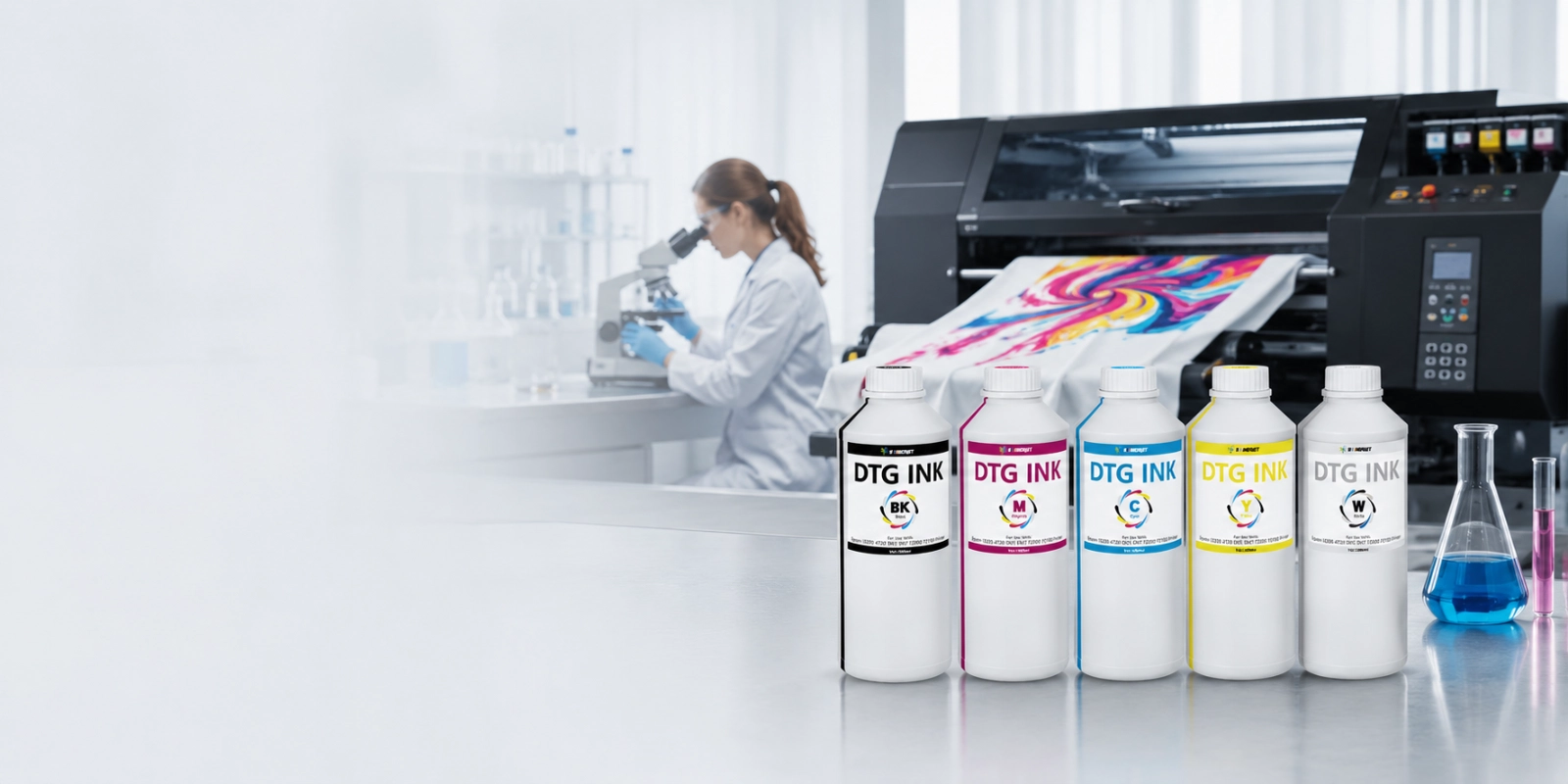
Entering 2026, the Direct-to-Garment (DTG) industry has moved beyond the era of simply “stacking hardware.” If you still believe that purchasing an expensive printer is a guaranteed ticket to success, the market reality of 2026 may prove disappointing.
Today’s printing industry faces an unprecedentedly complex environment. Vivid color is no longer a competitive edge—it is the baseline. In 2026, the survival and profitability of a print shop depend on supply chain stability, deep AI integration, and cost control amidst geopolitical volatility. The “best” DTG ink must find the perfect equilibrium between printhead protection, rigorous environmental compliance, and global logistics resilience.
1. The Core of Superior Textile Pigment Inks in 2026
As a leader with nearly 20 years of experience in the printing consumables industry, the Winnerjet team believes that 2026-grade premium inks must solve three core challenges at the molecular level:
1.1 Nano-Sized Pigments
With the ubiquity of the Epson i3200-A1 and the next generation of ultra-high-frequency printheads, nozzle diameters have continued to shrink. If pigment particles exceed 100nm or are unevenly dispersed, printhead clogging becomes a daily nightmare.
The Winnerjet Solution: Our 2026 series utilizes triple-milling technology to ensure that 99.9% of pigment particles remain stable between 80-90nm. This not only safeguards expensive printheads but also ensures more uniform color distribution at the microscopic level.
1.2 Self-Crosslinking Resin Technology
Traditional inks rely on heavy fixatives and lengthy high-temperature curing, which often results in a stiff, “plastic-like” feel that is prone to cracking. For many shop owners, the biggest headache is achieving wash-fastness at the expense of a soft hand-feel.
The 2026 Breakthrough: Winnerjet has introduced “self-crosslinking” technology, fundamentally changing how ink films are formed. Instead of simply sitting on top of the fabric, the molecules act like interlocking hands during the curing process to form a high-elasticity mesh.
Real-World Performance: When you stretch a garment printed with this ink, the image extends with the fabric without cracking. Most importantly, it preserves the breathability of the fabric fibers. “High elasticity, zero-feel” will be your secret weapon for winning high-end contracts in 2026.
1.3 White Ink Suspension and TiO2 Encapsulation
White ink sedimentation is the “chronic illness” of DTG printing, leading to wasted ink and ruined printheads. The latest 2026 technology involves encapsulating Titanium Dioxide (TiO2) particles in a specialized hydrophilic polymer film.
Why it Works: This film acts as a “repellant,” ensuring pigment particles maintain a “social distance” within the ink to prevent clumping.
The Bottom Line: Even if your machines sit idle for a 48-hour weekend, you won’t need to purge massive amounts of white ink to clear sedimentation on Monday morning. Every drop of white ink saved is pure profit.

2. ⚠️ Critical Focus: The Impact of 2026 Middle East Volatility on DTG Supply Chains
As a global supplier, Winnerjet must alert all B2B partners to the risks posed by geopolitical shifts. Ongoing volatility in the Middle East is reshaping the ink market through two primary channels:
2.1 The Raw Material Ripple Effect
DTG inks are far from just “colored water.” Their high-performance solvents (such as glycerin derivatives) and synthetic resins are downstream products of the petrochemical industry.
Cost Projections: Fluctuations in crude oil prices directly impact the chemical market. By late 2026, the procurement cost of high-purity pigments and solvents is expected to rise by 8%-12%.
Strategic Sourcing: Savvy buyers are already aligning with manufacturers like Winnerjet—partners with massive raw material reserves and the capacity to sign annual price-protection agreements to lock in margins.
2.2 The “Butterfly Effect” of Logistics
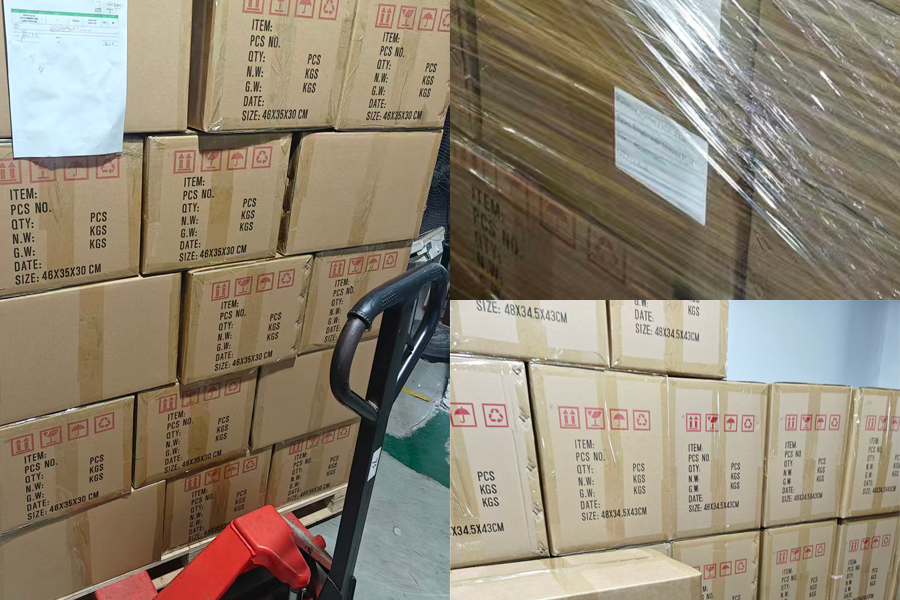
Security risks in the Suez Canal and Red Sea shipping lanes have forced many vessels bound for Europe, North America, and North Africa to divert around the Cape of Good Hope.
Lead Times and Surcharges: This adds 10-15 days to shipping cycles. Longer routes also mean significant spikes in fuel surcharges and war risk insurance premiums.
Winnerjet’s Strategy: To help our customers combat this uncertainty, we have optimized our formulas to create high-concentration versions, reducing the shipping volume per liter and lowering average freight costs. Furthermore, our US-based warehousing ensures that even if global shipping lanes are disrupted, our core customers’ production lines never stop.
3. DTG Printhead Compatibility Guide
Compatibility dictates your depreciation costs. In 2026, precision tuning for specific printheads is vital.
For Epson Series (PrecisionCore): We have optimized surface tension to ensure that even at 25kHz firing frequencies, ink droplets maintain a perfect spherical shape without “satellite” dots.
For Brother & Ricoh: While industrial heads are rugged, they are sensitive to viscosity imbalances. We have adjusted rheological parameters to ensure the ink flows as smoothly as blood through a circulatory system.
Key Advice: With freight costs rising, choosing a high-yield ink that minimizes printhead wear is the most important investment you can make. Check our Best DTG Printer Ink 2026 Comparison Chart to find the perfect match for your hardware.
4. Sustainability and Wash-Fastness: The 2026 Standards
In 2026, eco-friendly certification is no longer an “option”—it is your “entry ticket.” If your ink cannot pass OEKO-TEX 2026 or GOTS 7.0, premium clients in Europe and North America will not even look at your samples.
4.1 OEKO-TEX Eco Passport 2026
The latest certifications have lowered the detection limits for APEOs and certain heavy metals to rigorous levels. Winnerjet inks not only pass these tests but also meet GOTS 7.0 standards, ensuring your garments can safely enter the high-end children’s clothing market.
4.2 Extreme Wash Testing
Under AATCC (American Association of Textile Chemists and Colorists) standards, our inks maintain a colorfastness rating of Grade 4 or higher (out of 5) after 50 cycles at 60°C (140°F). This means the print remains as vibrant as the day it was made, even after heavy wear.
5. How to Spot Inferior DTG Ink (The “Red Flag” Guide)
Market volatility often brings a wave of cheap, sub-par products. Use these three methods to save your printheads:
- The Sedimentation Test: Pour ink into a clear measuring cup and let it sit for 24 hours. If you see a distinct “sludge” at the bottom that doesn’t easily disperse when shaken, it’s a printhead killer.
- The Scent Test: Inferior inks often use cheap industrial solvents that emit a pungent chemical odor. This indicates high VOCs, which can degrade the rubber seals inside your machine.
- The Stretch Test: Print and cure a sample, then pull the fabric firmly. Inferior ink will crack like dried mud; premium ink will exhibit elasticity and toughness.
6. Deep Dive: The Synergy Between AI Calibration and Ink Consistency
In 2026, AI-Driven Color Calibration is the great differentiator in factory efficiency. While high-performance heads like the i3200-A1 support complex droplet algorithms, AI requires extreme “physical consistency” in the ink to function.
Why Ink Quality Dictates AI Success
AI systems use spectral sensors to monitor color in real-time. If the ink’s chemical makeup varies between batches, the AI’s correction model fails.
Viscosity Constancy: Winnerjet 2026 inks include rheology modifiers that ensure performance varies by less than 2% between 15°C and 35°C (59°F – 95°F), keeping AI firing pulses precise.
Data Feedback Loop: We have built a database of over 5,000 color samples specifically to train the leading AI-based RIP software.
Expert Insight: “In 2026, the best ink is ‘transparent’—it should offer zero resistance to the AI algorithm, allowing for the precise restoration of every single pixel.”
🛠 2026 Print Shop Competitiveness Checklist
Take one minute to see if your factory is ready for the challenges ahead:
[ ] Supply Chain Resilience: Do you have at least two geographically diverse suppliers to handle shipping disruptions?
[ ] AI Compatibility: Is your ink’s physical profile stable enough to support automated color calibration?
[ ] Eco-Compliance: Are your consumables updated to the OEKO-TEX 2026 standard?
[ ] Process Fusion: Can your production line achieve color uniformity between DTG and DTF processes?
[ ] Long-term Maintenance: Does your ink support 72-hour standby without clogging for POD (Print-on-Demand) workflows?
Diagnostic Results:
4-5 Checks: You are an industry leader!
2-3 Checks: You are at risk; it’s time to optimize your technical stack.
0-1 Checks: Critical danger; contact the Winnerjet technical team immediately for an upgrade path.
7. Conclusion and Procurement Advice
Choosing the right ink is more than just buying a consumable—it is a strategy for mitigating global volatility and embracing smart manufacturing. In this 2026 turning point, Winnerjet is here to help your business move forward with nearly two decades of expertise.
- Read More: [Best DTG Printer Ink 2026: Brand-by-Brand Comparison]
- Take Action: Ready to experience high-performance 2026 eco-inks? Contact Winnerjet today to request a free sample and let the data prove our strength.