Can you use sublimation ink for DTF transfers?
As a professional ink manufacturer and supplier, our answer is a definite yes. But it is not an interchangeable commercial swap. You can technically print sublimation ink onto DTF film and coat it with DTF hot-melt powder—a creative workaround known across printer communities as the “Sublimation DTF Hack.”
However, this hack only works reliably on white or light-colored garments and cannot replace true DTF pigment ink for commercial apparel production.
What Real Printers Say in the Community
This DIY technique has sparked extensive discussions across printing communities. In a highly referenced discussion within the Epson Printers & Eco-Solvent Community on Facebook, experienced print operators confirmed the viability of this trick:
“Yes, you can do the dtf ‘hack’ with sublimation ink by printing on dtf film and applying the powder adhesive then curing with a heat press. I’ve done it…”
— Community member feedback via Facebook Group discussions
While the Facebook and Reddit printer communities prove that this workaround physically works for personal projects and white shirts, looking under the microscope reveals why commercial garment decorators eventually run into roadblocks with it.
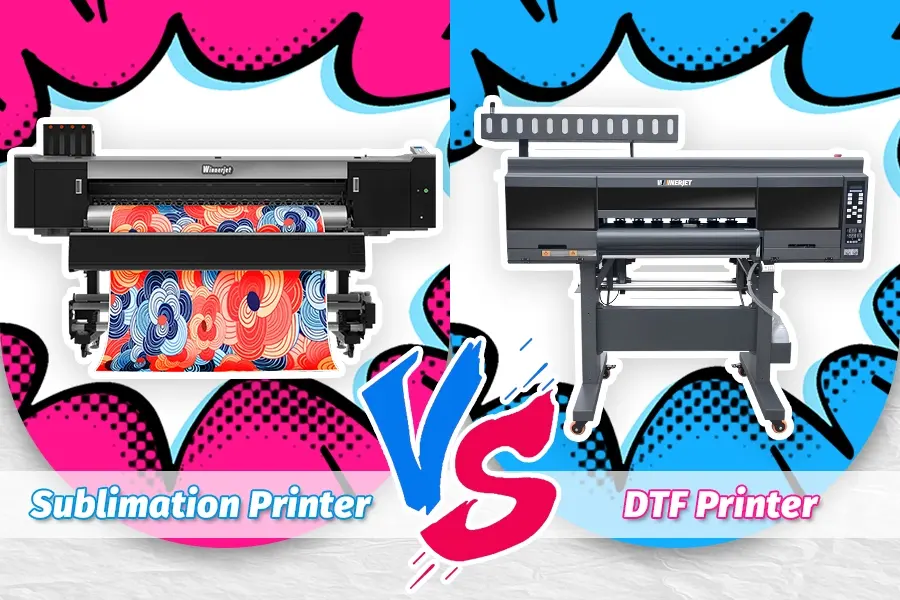
What’s the Difference Between Sublimation Ink and DTF Ink?
While both inks are industry standards for garment decoration, their underlying chemical compositions, carrier bases, and transfer mechanisms are completely different:
| Technical Feature | Sublimation Ink | DTF Ink |
|---|---|---|
| Chemical Base | Disperse dye solution (gaseous under heat) | Water-based textile resin pigment |
| White Ink Support | None (CMYK only) | High-opacity White (W+CMYK) |
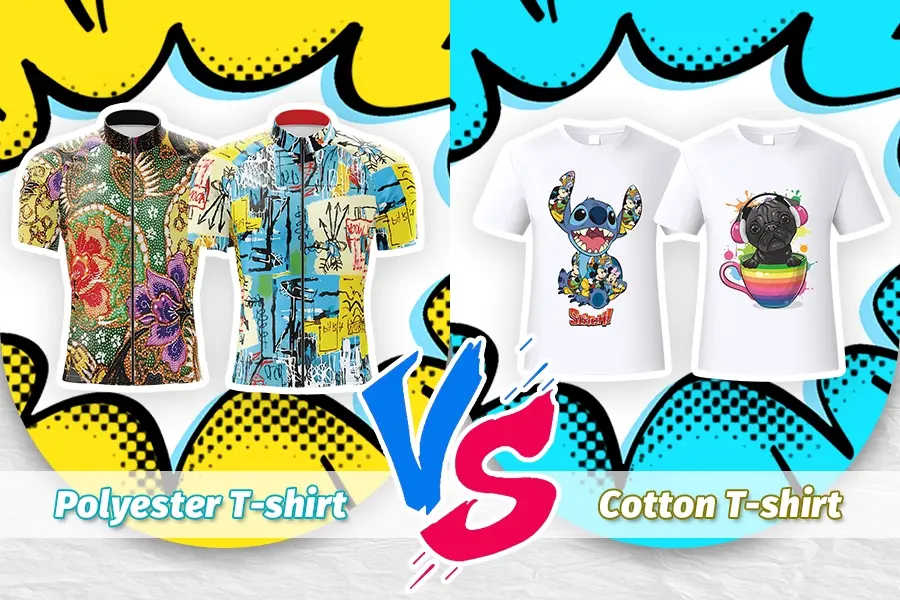
| Garment Colors | White and very light tones only | Any color (Dark, black, neon, white) |
| Substrate Scope | 100% polyester & poly-coated hard surfaces | 100% cotton, canvas, poly-blends, denim |
| Transfer Mechanism | Dyes gasify and infuse straight into synthetic fibers | Prints on PET film, fuses with TPU powder adhesive |
| Hand Feel & Wash | Zero hand feel; permanent on polyester | Soft stretch film touch; 50+ machine washes |
Why the “Subli-DTF Hack” Fails Commercial Standards
While you can physically coat wet sublimation prints with TPU powder to produce a casual transfer, this DIY method breaks down when tested against industrial print requirements:
- Zero White Underbase (Dark Garment Failure): Sublimation printers operate strictly in CMYK without an opaque white ink channel. Because dye sublimation ink is naturally translucent, any design transferred onto black, navy, or dark-colored fabrics will wash out, shift color, or turn completely invisible.
- Surface Bleeding & Ink Pooling: Commercial DTF films are formulated with silica-based coatings designed to capture viscous, resin-based textile pigment inks. Low-viscosity sublimation inks tend to bead up or pool on the film surface, resulting in fuzzy text, dot gain, and blurred vector edges before the powder can set.
- Premature Gassing & Ghosting: Disperse sublimation dyes begin to vaporize into gas at roughly 160°C (320°F). During the powder-curing step (either under a heat press or in a curing oven), the dye starts gassing off prematurely, leading to dull color saturation and faint ghosting halos around sharp contours.
- Severe Wash Migration on Cotton: In a true DTF transfer, textile pigments chemically cross-link with the melted TPU polyurethane matrix. Sublimated dyes, however, remain loose within the powder layer. After 10 to 15 standard wash cycles, the dye tends to migrate, fade dramatically, or bleed into the surrounding cotton fiber
The sublimation hack is an entertaining DIY experiment for white t-shirts, but it cannot deliver the opacity, edge precision, or ISO wash fastness required for commercial apparel businesses.
How to Do the Sublimation DTF Hack Step
If you want to experiment with your existing sublimation desktop setup on white or pastel cotton shirts, follow this standard community workflow:
Step 1: Mirror & Print on DTF Film
Load premium matte DTF transfer PET film into your sublimation printer. In your print driver settings, mirror your design and select high-quality matte paper mode. Print onto the coated side of the film.
Step 2: Apply TPU Hot-Melt Adhesive Powder
Because water-based sublimation ink dries quickly on film coatings, apply medium-particle TPU hot-melt powder immediately while the ink is wet. Coat the print evenly, then gently shake and tap off any excess powder.
Step 3: Cure the Adhesive Layer
Melt the adhesive powder by hovering your heat press roughly 1 inch (2.5 cm) above the transfer at 165°C (330°F) for 2 to 3 minutes (or bake inside a DTF curing oven). Stop as soon as the crystalline powder melts into a uniform, glossy “orange peel” finish.
Step 4: Heat-Press Transfer
Pre-press your cotton garment for 5 seconds to eliminate moisture. Position the transfer design face-down and press at 170°C (338°F) for 30–35 seconds under medium-to-firm pressure. Allow the film to cool down completely to room temperature before peeling (cold peel).
What Ink Should You Actually Use for Professional DTF?
To achieve true commercial wash fastness, deep color opacity, and the ability to print on dark and black fabrics, you must use dedicated DTF textile pigment ink.
Opaque White Underbase: Provides solid coverage so designs stay vibrant on dark and black garments.
High-Grade Textile Pigments: Resin-encapsulated nano-pigments bond tightly with TPU powder without clogging print heads.
50+ Wash Durability: Resists cracking and fading through dozens of commercial wash cycles.
💡 Pro Tip: Commercial garment decoration demands true DTF ink to prevent customer returns. Upgrade with Winnerjet DTF pigment inks and TPU powders for reliable, wash-tested results.
FAQs: What People Also Ask
Is DTF ink the same as sublimation ink?
No. Sublimation ink uses disperse dyes designed to vaporize under heat and bond directly with polyester fibers. DTF ink consists of water-based textile pigments (including an opaque white ink) engineered to adhere to hot-melt adhesive powder and transfer onto virtually any fabric.
Does DTF powder work with sublimation ink?
Yes, in a workaround known as the “Sublimation DTF Hack.” When you apply TPU hot-melt powder over wet sublimation ink on DTF film and melt it, the powder acts as a synthetic polymer bridge that glues the print to 100% cotton garments.
What lasts longer, DTF or sublimation?
Authentic sublimation is permanent on 100% polyester because the dye fuses into the fibers. True commercial DTF transfers last 50+ wash cycles without fading on cotton and blends. However, the DIY “Sublimation DTF hack” has poor wash longevity, often fading or cracking after only 10 to 15 washes.
Can a sublimation printer be used for DTF transfers?
You can use it strictly for the hack on white or light-colored garments. A sublimation printer cannot produce true commercial DTF prints because it lacks a white ink channel and RIP software control needed for dark-colored fabrics.
Can you do the sublimation DTF hack on black or dark shirts?
No. Sublimation ink is translucent and does not contain white ink. Without an opaque white underbase beneath the graphic, the design will be invisible or severely discolored on black and dark substrates.