Selecting the right inkjet ink suppliers is the most critical decision for high-volume textile printing in 2026. Substandard ink doesn’t just ruin colors; it destroys expensive printheads.
Faced with a global sea of inkjet ink suppliers, making decisions based solely on “price per liter” can lead your company into a death spiral of frequent clogging, maintenance downtime, and customer returns. This guide provides a deep dive into evaluating partners from a professional perspective and explains why choosing a true ink manufacturer is the cornerstone of maximizing your ROI.
Manufacturer vs Trader: Why Source Verification Matters
The global ink market is a mixed bag, crowded with third-party traders. While traders often offer seemingly flexible MOQs, they cannot provide the underlying safety net required for high-volume, high-stability textile production (such as DTG or DTF). Only ink manufacturing companies with deep technical expertise can offer that security.
3 Key Advantages of Partnering Directly with a Factory:
Cost Efficiency: Eliminate middleman markups. In industrial-scale production, every cent saved per liter translates directly into net profit.
Batch Consistency: A professional ink manufacturer maintains total control over production. This ensures the ink you buy today is identical in hue and viscosity to the ink you bought a year ago.
Technical Responsiveness: When color shifts or ink dropouts occur, a trader can only flip through a manual. A manufacturer’s R&D team can analyze the chemistry to provide a root-cause solution.
Reliable Textile Ink Manufacturing Companies
When searching for a reliable partner, it is essential to reference the industry’s top ink manufacturing companies. These facilities represent the highest R&D standards and production processes in digital ink today:
DuPont™ Artistri® (USA): As the pioneer of DTG inks, DuPont’s Artistri series defined the industry standard for textile pigment inks. Their facilities are renowned for extreme chemical stability and are the first choice for high-end printing enterprises.
Epson (Japan): Beyond being a giant among inkjet manufacturers, Epson’s ink plants in Japan and Southeast Asia produce UltraChrome DG inks that achieve near-perfect physical synergy with their proprietary printheads.
Kornit Digital (Israel): Kornit operates a closed-loop ecosystem in the digital textile space. Their ink plants focus on “Wet-on-Wet” technology, bonding pretreatment and ink at the molecular level.
Sensient Technologies (USA): A global leader in specialty pigments and chemicals, providing the foundational color technology for countless digital printing solutions worldwide.
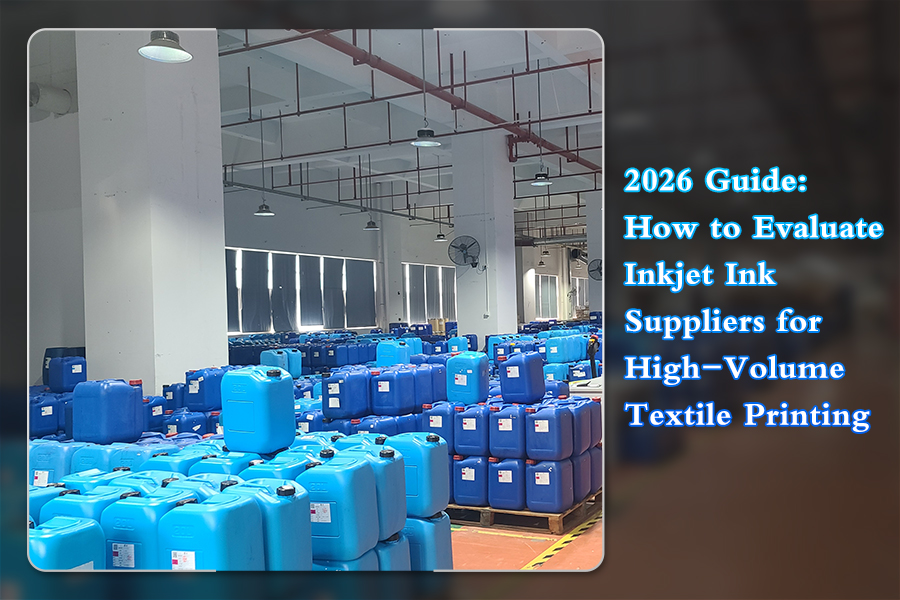
Winnerjet (China): As a leading ink manufacturer in China, we utilize milling equipment and raw material supply chains on par with the international giants mentioned above. We offer greater flexibility in cost control and technical service, while maintaining strategic partnerships with hundreds of manufacturers globally.
Why Use These Giants as Your Evaluation Benchmark?
When comparing candidates to these top-tier ink manufacturing companies, you will find that true manufacturers share common traits—essential metrics for evaluating any inkjet ink suppliers:
In-house Grinding Technology: Factories like DuPont (and Winnerjet) utilize multi-million dollar nano-grinding machines to ensure uniform pigment particle distribution. In contrast, cheap inks resold by traders are often secondary decants, which lead to catastrophic printhead failure.
Rigorous R&D Laboratories: True manufacturers (like Epson) conduct aging tests on every batch. In our labs, every new formulation undergoes 72 hours of continuous printing and 6 months of simulated environmental storage.
Environmental Compliance: These giants are certified by ZDHC (Zero Discharge of Hazardous Chemicals) and OEKO-TEX. For buyers fulfilling international garment orders, choosing a manufacturer with these certifications is the only way to mitigate legal and trade risks.
Factors In Evaluating Industrial Inkjet Ink Quality
When vetting inkjet ink suppliers, bypass the sales pitches and audit these three technical pillars:
1. Chemical Stability and Nano-Filtration
High-volume printing demands ink that never settles or clogs. Leading digital ink manufacturers use advanced nano-filtration to keep particles below 0.2 microns. This is vital for DTG white ink, where titanium dioxide sedimentation is the leading cause of “dead” printheads.
2. Printhead Compatibility and Waveform Matching
Ink must be “tuned” to the hardware. Whether using Epson i3200, Ricoh Gen5, or Kyocera heads, the ink’s viscosity and surface tension must precisely match the printhead’s pulse waveform. Demand detailed compatibility reports and lab test data from your supplier.
3. Global Compliance and Green Certification
In 2026, environmental standards are the “entry ticket,” not an optional extra. Top ink manufacturing companies invest heavily in OEKO-TEX Standard 100, GOTS, and REACH certifications. This ensures your finished goods can be exported to premium US and European markets without risk.
The Hidden Costs of Inferior Ink
Procurement departments often make the mistake of looking only at “unit price.” However, veteran factory owners look at Total Cost of Ownership (TCO).
1. The “Financial Trap” of Cheap Ink
Choosing ink from unverified ink manufacturing companies may lower raw material costs briefly, but the chain reaction is costly:
The Formula: Low purchase price + frequent printhead replacements ($1,500+ each) + downtime losses ($2,000+ per day) + high fabric reject rates = Shrinking profits and lost customers.
The Reality: Coarse, poorly dispersed pigments in cheap ink act like sandpaper on the precision piezo-ceramics of inkjet manufacturers’ printheads. A head designed to last 2-3 years may be destroyed in 3 months.
2. The “Profit Moat” of Premium Ink
Partnering with reputable digital ink manufacturers ensures production continuity.
The Formula: Fair purchase price + extended printhead life + 24/7 uptime + extreme color consistency = Superior ROI.
The Insurance Effect: High-quality ink is essentially a “long-term insurance policy” for your most expensive hardware assets.
Industry Observation
When evaluating global inkjet ink suppliers, companies like Winnerjet are frequently highlighted. This attention isn’t just about price-to-performance; it’s because these manufacturers integrate “closed-loop stress testing” into the R&D stage.
Example: A large-scale facility like Winnerjet conducts hundreds of hours of continuous printing in simulated industrial environments before any product leaves the factory. This obsession with chemical stability prevents crystallization inside the printhead caused by temperature shifts or physical shear.
The Result: Factories using these standards typically see a 40% reduction in unplanned downtime. For high-volume plants, the time saved more than covers the price difference of the ink itself.
Compliance Risk Management: How to Quickly Screen an SDS
In the 2026 global trade environment, environmental compliance is a lifeline. Many buyers are overwhelmed by hundreds of pages of SDS (Safety Data Sheets), but savvy buyers use three “Golden Indicators” to verify a supplier’s professionalism. A compliant SDS must strictly follow UN GHS (UNECE) classification requirements:
Ingredient Transparency (Section 3): This is the heart of the SDS. Verify the CAS numbers (chemical IDs). Unreliable inkjet ink suppliers often use vague language here to hide harmful additives. Professional ink manufacturers disclose core ingredients to ensure they are free of PFAS or other SVHCs (Substances of Very High Concern) banned by the ECHA (European Chemicals Agency).
Logistics and Cost Control (Section 14): This determines your shipping rates. Inferior inks are often classified as “Hazardous Goods” due to poor formulation, doubling air and sea freight costs. Manufacturers like Winnerjet optimize for chemical stability so that products meet standard non-hazardous shipping requirements, lowering costs at the source.
Market Access and Export Compliance (Section 15): This is the ink’s “Global Passport.” Check for compliance with the ZDHC Roadmap and OEKO-TEX® Standard 100 safety testing.
Warning: As of 2026, global import standards for textiles have tightened significantly. If your supplier cannot provide real-time, updated documents following the ECHA Safety Data Sheets Guide, your garment orders face high risks of being seized or destroyed by customs. In contrast, professional manufacturers like Winnerjet provide fully transparent compliance dossiers to ensure your products move freely in the global market.
Conclusion: Building a Scalable Partnership
In the rapidly evolving digital printing market of 2026, choosing from the myriad of inkjet ink suppliers is no longer just a procurement task—it is a strategic decision that affects your company’s survival.
As global trade demands for sustainability, speed, and color consistency grow more stringent, relying on the inconsistent supply of traders is no longer viable for high-volume growth. Prioritize partners with high transparency, proven technical mastery, and in-house manufacturing capabilities.
As a veteran ink manufacturer, Winnerjet is dedicated to providing “more than just ink” solutions. We understand that you don’t just need color—you need printhead safety, production stability, and the confidence to navigate shifting ECHA regulations.
Pro Tip: Is your printhead performing at its peak?
If you are unsure if your current ink is the right match for your equipment, we offer a Free Ink Compatibility Assessment. Simply tell us your printhead model and the challenges you are currently facing, and our engineers will provide professional optimization advice.