DTF and heat transfer vinyl (HTV) are both used to decorate apparel, but they differ in texture, design flexibility, production steps, and cost.
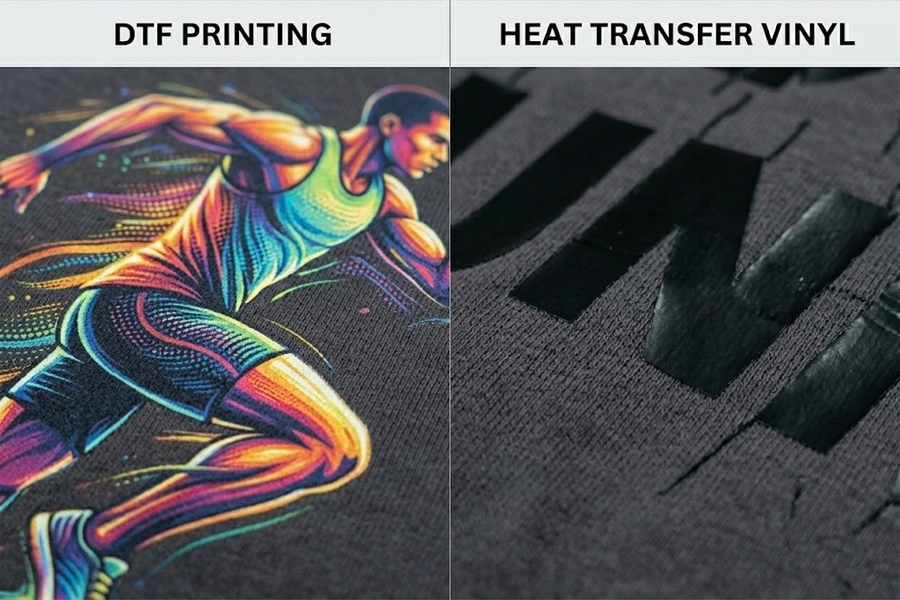
Does DTF feel like vinyl? Not exactly. DTF transfers can feel softer and more flexible than thick or large vinyl designs, while vinyl often has a more noticeable film-like surface. The final feel depends on the transfer material, design coverage, fabric, and application settings.
DTF vs Vinyl: They Feel, Last, and Compare
For Winnerjet’s clients, “weeding” is Vinyl’s biggest pain point. If a logo contains many small letters, manually tearing off the excess can take 5-10 minutes; DTF printing, however, bypasses this step entirely through digital technology. When processing orders of 100 or more pieces, DTF is more than 10 times more efficient than Vinyl.
| Feature | DTF Printing (Direct-to-Film) | Heat Transfer Vinyl (HTV) | Best For |
|---|---|---|---|
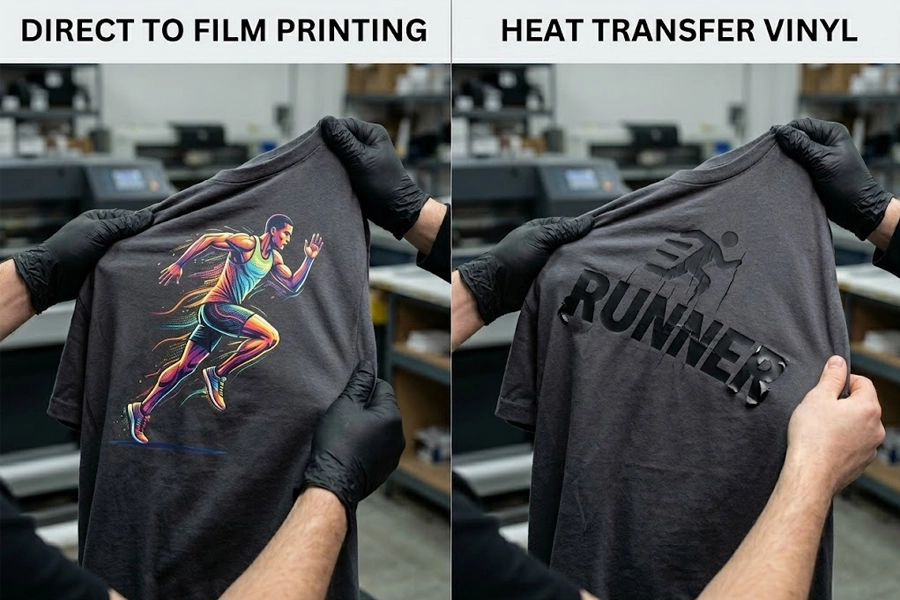
| Design Complexity | Unlimited. Supports full-color photos, gradients, and fine lines. | Limited. Best for solid colors, bold text, and simple shapes. | DTF |
| Production Speed | High-Speed. Print → Powder → Press. No weeding required. | Slow. Requires manual weeding, which is labor-intensive. | DTF |
| Hand Feel | Soft & Breathable. Inks integrate with fabric for a "retail" feel. | Thick & Rubbery. Feels like a plastic layer on top of the fabric. | DTF |
| Durability | Exceptional. High stretchability; resists cracking for 50+ washes. | High. Very durable, but prone to cracking if overstretched. | Tie |
| Versatility | Universal. Works on Cotton, Polyester, Nylon, Leather, etc. | Wide. Good on most fabrics, but struggles with high-stretch Lycra. | DTF |
| Cost Efficiency | Low (for Volume). Lower ink costs; higher ROI for scaling. | Low (Entry Level). Cheap equipment but high labor cost per unit. | DTF |
| Special Effects | Limited. Mostly Matte, Glossy, or Fluorescent. | Winner. Available in Glitter, Metallic, Reflective, and Puff. | Vinyl |
For businesses focused on apparel and garment production, especially those handling large orders, DTF is often the better choice for higher production efficiency, lower manual labor, and a soft, comfortable print feel. For businesses primarily serving the signage and advertising sticker markets, with apparel printing as a supplementary service, vinyl is often the more practical choice. For a more detailed comparison, read our guide to DTF printing vs heat transfer vinyl.
Is DTF the same as vinyl? Understanding the Technology
Many beginners ask, is DTF the same as vinyl? The short answer is no. While both are heat transfer methods, DTF printing is a digital process that uses eco-friendly pigment inks printed onto a PET film. In contrast, Vinyl (HTV) is a solid-colored material that is mechanically cut. DTF allows for complex, multi-color designs with zero weeding, whereas vinyl is limited to simpler, single-color graphics. If you are looking for “is dtf vinyl,” remember that DTF is a liquid-to-film technology, offering much more creative freedom than traditional plastic-based films.
DTF vs Vinyl Durability: Which Lasts Longer?
When comparing DTF vs vinyl durability, both offer impressive longevity, but they fail in different ways. High-quality DTF prints are known for their incredible stretchability; they integrate with the fabric fibers, meaning they won’t crack even after 50+ washes. Traditional vinyl, however, can sometimes peel at the edges or crack if the design is large and solid. For athletic wear or high-use garments, DTF printing generally provides a more reliable, “retail-grade” finish that stays vibrant and intact longer than standard HTV.
Cost Analysis: DTF Printing vs Vinyl Cutting
For business owners, the choice often comes down to the bottom line. Vinyl cutting has a lower entry cost but high labor costs due to the “weeding” process. On the other hand, DTF printing requires a higher initial investment in equipment and premium DTF ink, but it drastically reduces labor time for multi-color or bulk orders. In the long run, DTF is the more cost-effective solution for scaling a custom apparel brand, as it handles intricate details and unlimited colors at a fraction of the time required for multi-layered vinyl application.
When to Choose DTF or Vinyl
DTF prints full-color designs onto PET film, applies adhesive powder, and cures the transfer before heat pressing. HTV uses a cutting machine to cut colored vinyl, followed by manual weeding and heat pressing. The main cost difference often comes down to design complexity and the amount of hands-on labor required.
| Cost Factor | DTF (Direct-to-Film) | HTV (Heat Transfer Vinyl) |
|---|---|---|
| Initial Equipment | Requires a dedicated DTF printing setup or outsourcing ready-to-press transfers | Typically requires only a vinyl cutter/plotter and a heat press |
| Material Costs | CMYK + White pigment inks, PET transfer films, and TPU hot-melt adhesive powder | Vinyl rolls/sheets, carrier backing sheets, and transfer application tape |
| Labor Costs | Steps involve printing, powder application, oven curing, and heat pressing | Requires machine cutting, manual weeding (excess removal), and heat pressing |
| Multi-Color Designs | Full-color single-pass printing; easily handles intricate details and smooth gradients | Requires cutting and weeding per color; multi-layer registration adds significant labor time |
| Best For Orders | Complex artwork, photorealistic graphics, multi-color prints, and repeatable volume runs | Simple lettering, athletic numbers, solid vector logos, and small-batch single-color customization |
- Choose DTF for full-color artwork, gradients, fine details, and orders that require less manual weeding.
- Choose HTV for simple names, numbers, single-color logos, and specialty finishes such as glitter, reflective, or puff effects.
The best option depends on your design, order volume, fabric, and production requirements.
For apparel businesses, compare cost per finished garment, including material waste, labor, setup time, and failed transfers. DTF may offer better economics for complex designs, while Vinyl can remain competitive for simple, low-volume jobs.
Tips for the Softest DTF Prints
- Use good-quality PET film and DTF ink
- Apply the right heat and pressure when pressing
- Don’t use too much powder — it can make the print stiff
- Test on a small fabric sample before full production
💡 Winnerjet’s DTF inks are designed for smooth application and soft prints, so your t-shirts stay comfortable and professional-looking.

Choose the Right Transfer for Your Business
DTF gives a soft, natural feel, while vinyl is thicker and slightly stiffer. Choosing the right method affects how your t-shirts feel, look, and last.
For consistent softness and vibrant results, try Winnerjet DTF inks and films.
FAQs
Does DTF feel like vinyl?
DTF transfers can feel softer and more flexible than some vinyl designs, but they still create a transfer layer on the fabric. The final feel depends on the transfer materials, print coverage, and application process.
Is DTF the same as vinyl?
No. DTF uses printed ink and adhesive powder on a transfer film, while heat transfer vinyl is cut from a colored film and then applied to fabric.
Is DTF better than vinyl for T-shirts?
DTF is often better for full-color graphics, gradients, and detailed artwork. HTV is often a good choice for simple names, numbers, and specialty finishes. The right option depends on the design and production requirements.
Does DTF last longer than vinyl?
Neither method is always more durable. Wash performance depends on material quality, application settings, curing or pressing, and garment care. Test both methods under consistent conditions before large production runs.
Which is cheaper for custom apparel, DTF or vinyl?
HTV can be economical for simple, single-color designs. DTF can reduce labor for complex, multicolor artwork. Compare the total cost per finished garment, including materials, labor, waste, and equipment.