Many print shops and apparel brands love DTF printing for its versatility — but one question often comes up: Can you use DTF on 100% cotton?
Yes, DTF on 100 cotton can be used not only on pure cotton fabrics, but also to create vibrant DIY T-shirts right at home.
Unlike sublimation, which only works on polyester, DTF printing enables the decoration of a wider range of materials, including cotton, blends, canvas, and more.
In this guide, we’ll walk you through the step-by-step method, expert tips, and best practices for achieving bright, durable results on cotton garments.
🧰 Step-by-Step Guide to DTF Printing on 100% Cotton
🧼 Step 1 – Prepare the Cotton Fabric
Before printing, make sure your cotton T-shirt or garment is clean and ready.
- Wash it to remove any surface treatment, dust, or oil.
- Pre-press the shirt for 5 seconds at 150°C to remove moisture and wrinkles.
- This helps the DTF film bond better and prevents uneven transfers.
🖨️ Step 2 – Print the Design on DTF Film
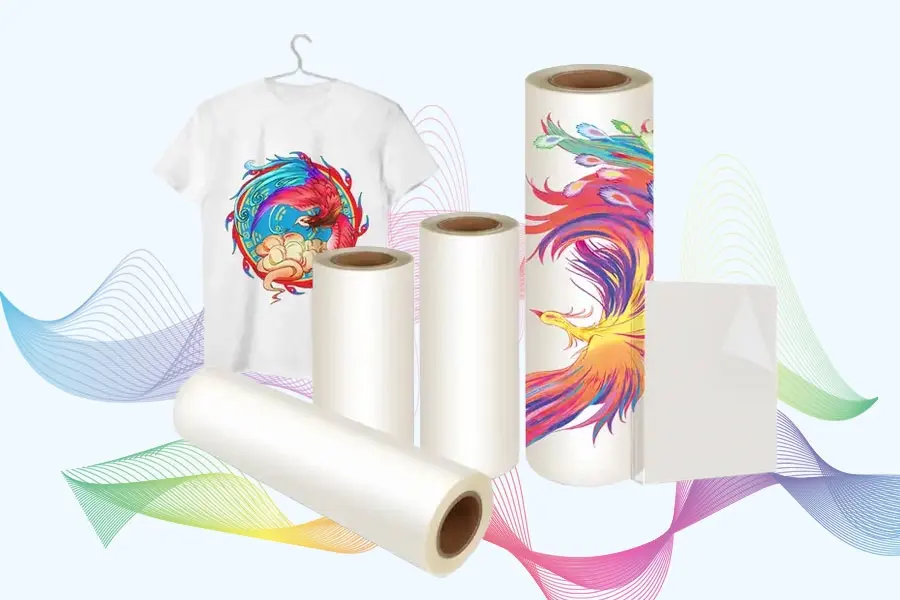
Use a high-quality PET DTF film and a printer loaded with DTF pigment ink.
- Set your printer to mirror mode and ensure white ink is printed as the underbase.
- Keep the film flat and dust-free during printing for smooth output.
- For consistent color results, Winnerjet DTF inks are highly recommended — they provide stable flow, strong adhesion, and vivid color saturation on cotton.

🌡️ Step 3 – Apply the Hot Melt Powder
After printing, immediately sprinkle DTF adhesive powder evenly over the wet ink.
Shake off the excess powder and make sure every detail is coated.
Cure the film at 110–120°C for 2–3 minutes, or until the surface becomes matte.
This step is crucial for building a durable bond between ink and fabric fibers.

👕 Step 4 – Transfer onto Cotton Fabric
Once cured, position the DTF film onto your cotton T-shirt.
- Press at 160°C for 15 seconds using medium pressure.
- Allow it to cool before peeling — this “cold peel” technique ensures smooth, long-lasting results.
- Gently remove the film, and your cotton shirt will reveal a soft, vibrant, and flexible print.

🎏 How to print DTF transfers at home?
Starting your own custom clothing business or taking it up as a hobby has never been easier. Whilst professional production setups can be rather complex, learning how to do DTF printing at home is a breeze, provided you have the right tools and a little patience.
Items Required to Get Started
Before you begin, please ensure you have a modified DTF printer, high-quality PET transfer film and dedicated heat-activated powder. Most importantly, the secret to creating a durable, custom T-shirt lies in the quality of the ink. To achieve vibrant colours and prevent printhead clogging, we strongly recommend using inks from an experienced supplier, such as the Winnerjet DTF series – we can customise professional, dedicated inks for you.
Step-by-Step Process
Prepare the design: Use RIP software to ‘mirror’ the image and configure the white ink layer accordingly.
Printing: Print the design onto the matte side of the PET transfer film. Many beginners often ask, “Is DTF technology suitable for cotton fabrics?” The answer is a resounding yes! And this is precisely where the magic begins.
Applying powder
Curing the transfer film
Heat Press Transfer
Peeling off the transfer film
If you’re feeling a bit overwhelmed, don’t worry! We’ve provided a more detailed step-by-step guide in our article DTF Printing at Home – A Simple Beginner’s Guide, which covers common troubleshooting methods and practical tips for equipment maintenance in depth.
💡 Expert Tips for Long-Lasting DTF Prints on Cotton
⚙️ Use the Right Ink and Film Combination
Not all inks and films are equal.
For cotton, select low-viscosity pigment inks that provide good stretchability and resistance to cracking.
Winnerjet’s DTF inks are formulated to work seamlessly with PET film and powder, producing high-opacity prints even on dark fabrics.

🌈 Optimize Heat and Pressure Settings
Every press machine differs slightly. If you notice dull colors or weak adhesion:
- Lower the curing temperature slightly if the colors look burnt.
- Increase pressure slightly if edges start to peel.
- Finding the perfect balance will help you achieve vivid, durable transfers.
💧 Store Materials Properly
Humidity, dust, and sunlight can damage DTF materials.
- Store your PET films flat, away from heat.
- Keep DTF inks sealed tightly to prevent oxidation.
- Keep adhesive powders dry to avoid clumping and poor bonding.
- Proper storage ensures consistent performance, especially for bulk production.
🧪 Common Problems and How to Avoid Them
| Issue | Likely Cause | Solution |
|---|---|---|
| Peeling edges | Too little pressure or peeling too early | Use medium pressure and peel cold |
| Dull colors | Over-curing or old ink | Reduce curing temperature, check ink date |
| Cracking | Excessive heat or incompatible powder | Use Winnerjet DTF powder and correct settings |
🏆 Why Choose Winnerjet for DTF Cotton Printing
DTF printing success depends on the right combination of ink, film, and powder.
Winnerjet offers a complete DTF solution designed for cotton, including:
- DTF pigment ink with high color density and smooth flow;
- Premium PET film with even coating for sharp edges;
- Strong hot-melt adhesive powder with excellent elasticity and wash fastness.
All materials are rigorously tested for durability and compatibility.
In internal tests, Winnerjet prints on 100% cotton have survived 30+ washes without peeling or fading — proving both reliability and color retention.
🎯 Conclusion & CTA
DTF printing on 100% cotton is not only possible but highly effective when done correctly.
With the right ink, film, and adhesive — plus controlled heat and pressure — you can produce vibrant, professional prints that stand the test of time.
📩 Request Free Samples to test on your 100% cotton garments today — and see how your prints can stay bright, flexible, and wash-resistant for the long haul.
❓ FAQs About DTF Printing on Cotton
Does DTF work better on cotton or polyester?
DTF printing performs well on both, but cotton requires careful curing and cold peeling for stronger adhesion.
Can DTF print on cotton?
Yes, absolutely. In fact, the ability to print on cotton is one of the main reasons Direct-to-Film (DTF) has become so popular compared to older methods like sublimation.
Can I wash cotton DTF prints in hot water?
It’s best to wash in warm or cold water and avoid harsh detergents to preserve color brightness.
Why is my cotton DTF print cracking after a few washes?
Over-pressing or incorrect powder type can cause cracking — check your pressure and powder quality.
What’s the best DTF powder for cotton?
Medium-grain white or black powder formulated for cotton provides optimal elasticity and bonding strength.
Can I use the same DTF film for cotton and polyester?
Yes — use a multi-purpose PET film like Winnerjet’s for excellent adhesion on both fabric types.