Sublimation printing is primarily used in the fabricating of polyester products and it is the process of transferring design onto the chosen fabric. The difference between sublimation and other methods is that with sublimation prints, they become part of the fabric, meaning that they can never crack, fade, or peel over time. This method is becoming popular for custom-made clothing because it provides endless possibilities for companies and fashion lovers.
This article aims to introduce the advantages and application scenarios of sublimation printing, highlighting why sublimation printers are an ideal choice for business operations.
What Is Sublimation Printing, And How Does It Work?
Sublimation printing is a digital transfer process where heat-sensitive disperse dyes bond directly with synthetic fibers at a molecular level. Rather than sitting as an ink layer on top of the garment, the pigment infuses into the substrate itself, creating a breathable, photo-quality finish that will never crack, peel, or fade.
The process operates through three essential phases:
Step 1: Printing the Mirror Image
Your custom digital graphic is printed in reverse onto coated transfer paper using formulated sublimation inks, holding the solid dye particles in place without bleeding.
Step 2: Heat & Pressure Activation
The transfer paper is placed flush against the garment in a commercial heat press, typically heated to 190°C–205°C (375°F–400°F) for 40 to 60 seconds. Under extreme temperature and uniform pressure, the solid dye transforms directly into a gas without passing through a liquid state, while the synthetic polymer chains open to receive the dye vapors.
Step 3: Molecular Bonding & Cooling
As soon as heat and pressure are released, the fabric fibers cool and close, permanently locking the dye inside the material. The resulting print exhibits unmatched durability and wash fastness, fully embedded within the weave of the apparel.
Benefits Of Sublimation Printing
With sublimation, one can expect soft prints that will not crack or fade, and as such are very durable. The frames do not interfere with comfort and feel while wearing the clothes. The main benefit is that the process is environmentally friendly. The lack of waste follows on from the lightness of the prints.
The primary benefits include:
Zero Hand Feel and Maximum Breathability
Because the dye infuses into the yarn rather than coating the exterior, the fabric weave remains open. Custom activewear, jerseys, and cycling kits retain their full moisture-wicking and quick-dry capabilities without heavy, rubbery patches on the chest or back.
Permanent, Crack-Proof Durability
Unlike heat transfer vinyl (HTV) or screen printing which inevitably degrade, peel, or crack after repeated laundering, sublimated prints bond permanently with the polymer chains. Apparel maintains Grade 4.5+ wash fastness and will not fade even under intense UV exposure and high-temperature washing cycles.
Photographic-Grade Color Fidelity & Smooth Gradients
Sublimation utilizes four-color or expanded ink systems that blend smoothly at high DPI, allowing intricate patterns, seamless gradient transitions, and photo-realistic vector graphics to transfer with razor-sharp edge definition.
All-Over Printing (AOP) Capabilities
Sublimation facilitates seam-to-seam and edge-to-edge printing without alignment limitations. Designers can print full rolls of polyester yardage or cut panels prior to sewing, creating true bespoke fashion apparel.
Cost-Efficient for Short Runs and Prototyping
Without the costly screen-making setup fees of traditional silk screening, sublimation allows print shops to run single-piece samples, personalized teamwear with individual player names, and on-demand batches without minimum order quantity (MOQ) penalties.
Best Fabrics for Sublimation Printing
Polyester and its blends are the best materials for sublimation printing since they enable easier bonding of the fibers with dyes. Nevertheless, sublimation does not work effectively on cotton because the dye does not have a way to bond with the fabric, though there are special coatings that can be applied to cotton fabrics to make it work.
Because sublimation preserves yarn permeability and produces zero hand feel, it dominates specialized sportswear and commercial fashion sectors:
High-Performance Sportswear & Team Jerseys
Cycling kits, soccer jerseys, basketball uniforms, and running shirts that require uncompromising sweat-wicking and active airflow.
All-Over Print (AOP) Casual Fashion
Edge-to-edge graphic tees, seamless hoodies, and statement streetwear cut and sewn from printed polyester yardage.
Activewear & Athleisure
Yoga leggings, compression rash guards, swimsuits, and sports bras that demand four-way fabric stretch without cracking the printed graphics.
Custom Promotional Garments & Workwear
Branded event polo shirts, high-visibility reflective safety vests, corporate uniforms, and customized exhibition aprons.
Apparel Accessories
Sublimated bucket hats, bandanas, tubular neck gaiters, custom socks, and poly-satin scarves.
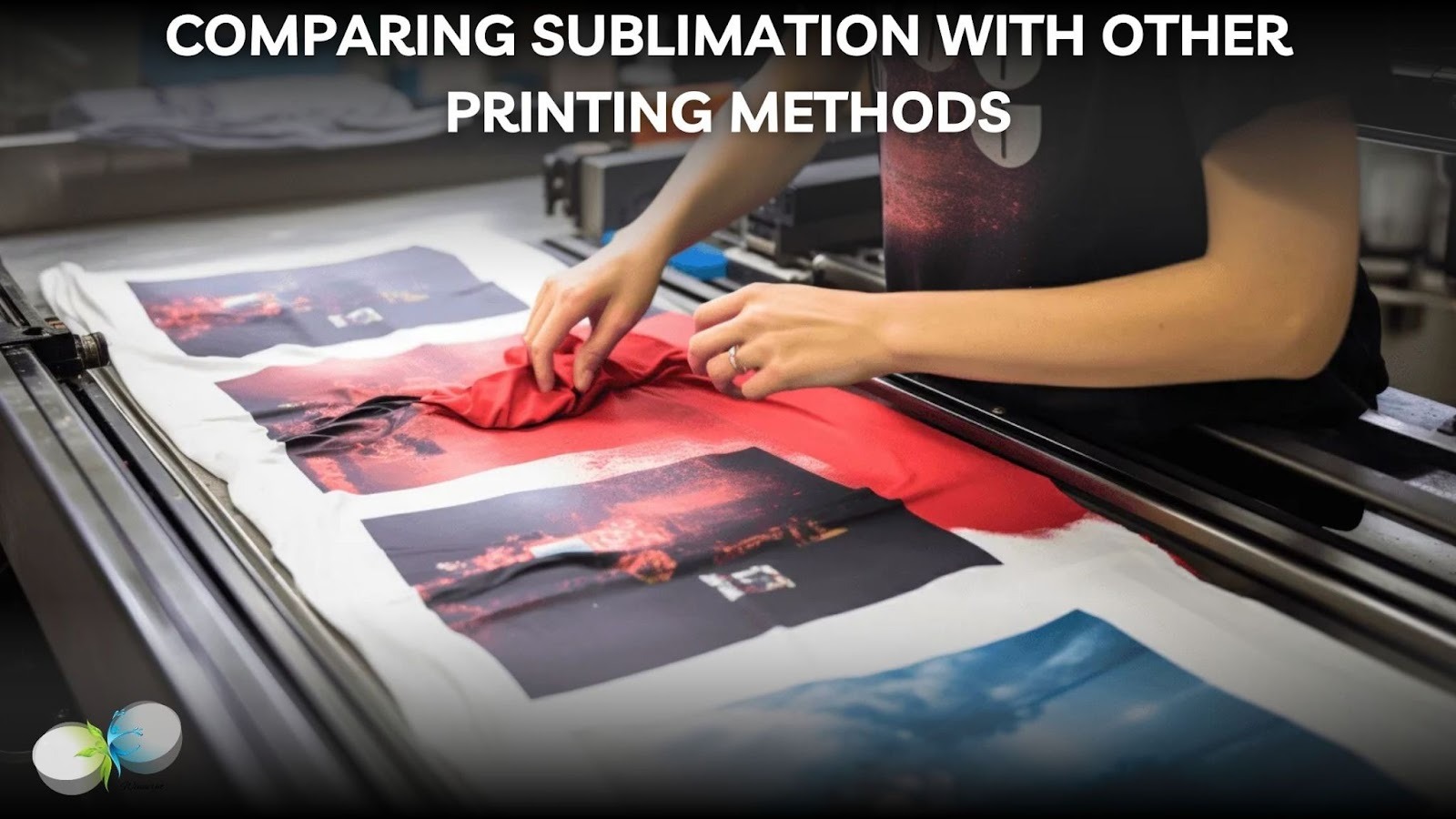
Comparing Sublimation with Other Printing Methods
Sublimation differs from screen printing, DTG, DTF, and HTV in several aspects. Unlike screen printing, it uses photo-quality infusion instead of layering inks, which makes sublimation ideal for intricate designs. Unlike DTG or DTF, sublimation also excels in color vibrancy and, unlike HTV, it provides better durability, where the print does not peel or crack with time.
Choosing the right digital apparel decoration technology depends on your target fabric, required hand feel, and run size. Below is a head-to-head comparison between Dye Sublimation, Direct-to-Film (DTF), and Direct-to-Garment (DTG):
| Feature / Metric | Sublimation Printing | Direct-to-Film (DTF) | Direct-to-Garment (DTG) |
|---|---|---|---|
| Hand Feel & Breathability | Zero hand feel; 100% breathable with unrestricted airflow | Slight adhesive/film feel on large solid coverage areas | Very soft hand feel on light fabrics; slight texture with white underbase |
| Fabric Compatibility | White & light-colored polyester or poly-blends (≥60% poly) | Universal: 100% cotton, polyester, nylon, canvas, blended fabrics | Best on 100% cotton and high-cotton ringspun blends |
| Color Base Limitations | Light backgrounds only (no white ink capability) | Any color fabric (uses high-opacity white backing ink) | Any color fabric (requires white ink underbase & pre-treatment) |
| Durability & Wash Fastness | Permanent; never cracks, peels, or degrades under hot wash | High (50+ standard washes); can micro-crack over heavy thermal wear | Good (40+ washes); can fade gradually over frequent laundering |
| Color Vibrancy & Gradients | Photo-realistic continuous tones and seamless gradients | Vibrant, dense colors; excellent opacity on dark garments | Rich, high-detail prints; softer photographic blends on pure cotton |
| Pre-Treatment Required | None (direct transfer onto untreated polyester) | None (powder adhesive replaces fabric liquid pretreat) | Yes (required for dark garments to hold white ink) |
| Minimum Order Quantity (MOQ) | 1 piece (no plate or setup charges) | 1 piece (highly flexible gang-sheet production) | 1 piece (ideal for bespoke one-off cotton shirts) |
| Ideal Apparel Application | Team jerseys, activewear, cycling kits, performance rash guards | Custom streetwear, hoodies, workwear, caps, and jackets | Premium graphic t-shirts, boutique cotton apparel, art merchandise |
Limitations of Sublimation Printing
Sublimation printing is limited in several aspects, such as the type of fabric it can be applied to—performs best on light-colored polyester while poorly on dark cotton. It also requires a steep investment upfront to buy the necessary equipment. Sublimation is not the best option for some applications, such as dark cotton garments, so other printing techniques will need to be used.
Scaling Up: Turning Sublimation Printing into a Business
To start a business in the sublimation printing industry, one must determine both initial costs and profit margins. While a store can be set up to sell custom sublimated apparel, the focus must remain on sports, corporate branding, or unique fashion niches. Any effort towards marketing will be beneficial and will promote the business on social media and aid in reaching clients.
Troubleshooting Common Sublimation Issues
Most sublimation issues encountered are faded colors, ghosting, or blurry prints. These problems can be avoided by adjusting the temperature and pressure controls of the heat press. Employing quality materials will prevent ink bleeding and overheating tendencies while ensuring sharp printed designs are produced.
Eco-Friendly Aspects of Sublimation Printing
Compared to other methods, sublimation printing is considered to be more environmentally friendly because it saves on water and the use of chemicals. It also consumes less ink than screen printing does, which lessens the negative impact on the environment. Using sustainable fabrics such as recycled polyester, and properly disposing of sublimation paper and ink waste further enhances one’s approach to preserving the environment.
Future Trends in Sublimation Printing
With the development of new inks, the new age of sublimation printing is upon us, with improvements in the quality and durability of prints. The use of sublimation for other materials like ceramics and metals makes it possible to use sublimation for more than just fabrics. Such developed regions and business Opportunities like selling custom souvenirs are very appealing for expansion in the sublimation market.
Why Sublimation Printing is a Game Changer
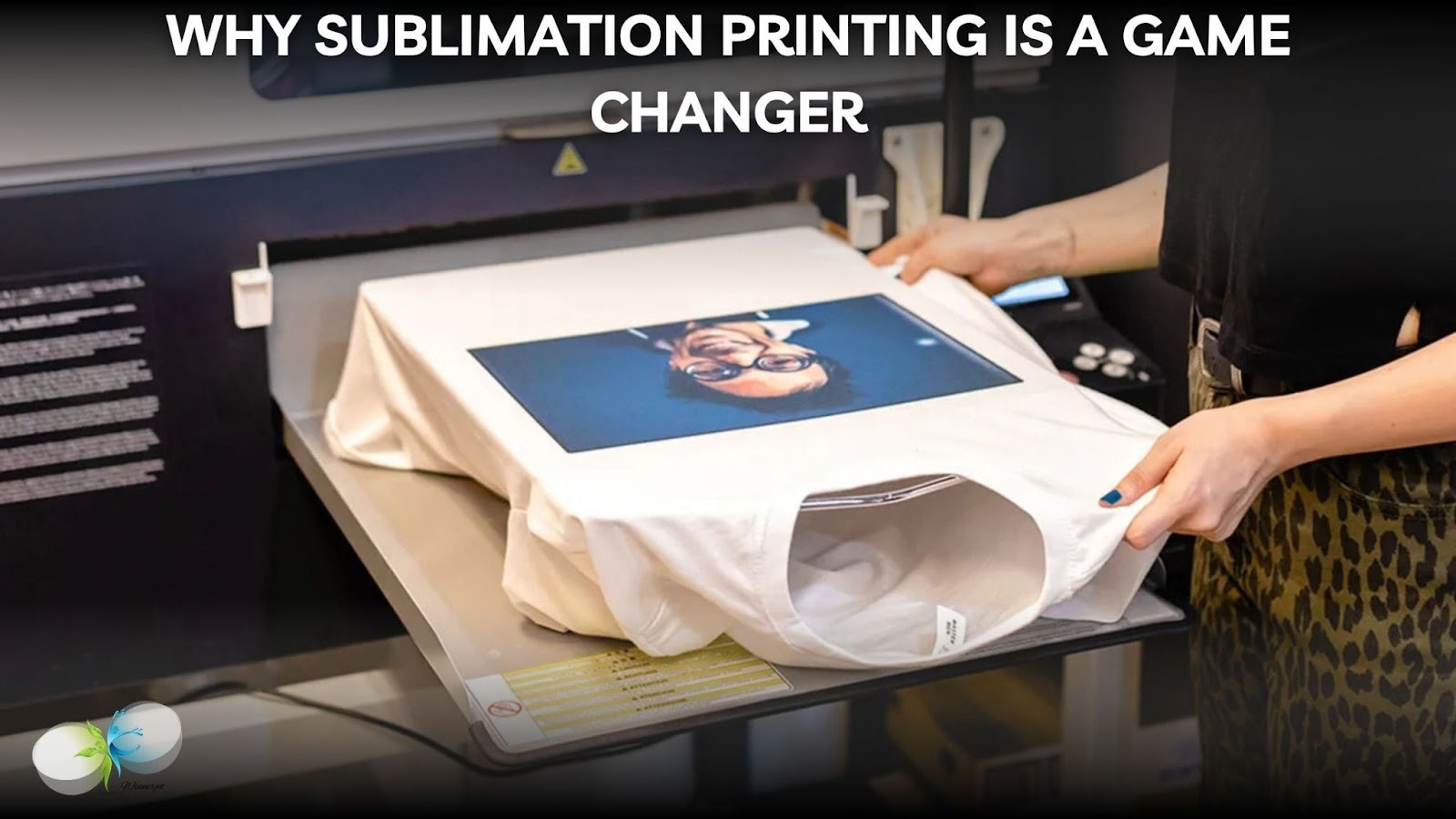
With great enhancements in quality, sublimation printing makes custom apparel more appealing with stunning prints that will last a long time without damaging the environment. For sports, clothing entrepreneurship, and businesses that need high-quality apparel, building up multi-color logos into fabrics without worrying about subsequent damages is a must. And the glory of such technology rests on the head of sublimation. It surely has a verity of applications in this industry.
WINNERJET is an industry leader in the supply of eco-friendly digital printing sublimation solutions by providing superior sublimation ink to improve your projects. WINNERJET has close to 20 years of experience providing superior quality and reliable inks that guarantee sharp and long-lasting prints. Browse the different solutions offered by the company on their website.
FAQs About Sublimation Printing
What are the downsides of sublimation printing?
The main downside of sublimation printing is its strict material limitation: it works only on polyester or high-polyester blend fabrics (≥60%) and cannot print on dark substrates due to the absence of white ink. Additionally, it requires high heat equipment (190°C–205°C) and cannot bond with 100% untreated cotton fibers.
Which one is better, DTF or sublimation?
Sublimation is better for athletic wear, cycling jerseys, and light polyester apparel because the ink molecularly infuses into the yarn, delivering 100% breathability with zero hand feel. In contrast, Direct-to-Film (DTF) is better for dark fabrics, pure cotton streetwear, caps, and blended textiles where opaque white underbases and universal fabric compatibility are required.
How long do sublimation prints last?
Sublimation prints last for the lifetime of the garment. Because the dye undergoes a molecular bond with the synthetic polyester fibers rather than sitting as a layer on the surface, the design will never crack, peel, blister, or wash out, easily exceeding 50+ commercial laundry cycles.
To ensure long-term color vibrancy and prevent head clogs before transfer, it is equally important to use fresh, high-stability inks; learn more about how long sublimation ink can stay in a printer to maintain optimal production quality.
Can you sublimate on 100% cotton?
No, direct sublimation does not work on 100% cotton because natural cellulose fibers lack the synthetic polymer chains required to trap gaseous disperse dyes. While liquid polymer coatings or polyester sub-transfer films exist to enable temporary printing, they often wash out quickly and diminish fabric softness.
Is it worth having a sublimation printer for custom apparel?
Yes, investing in a sublimation printer is highly cost-effective for sportswear manufacturers, team apparel providers, and personalized print-on-demand businesses. With zero setup fees, single-piece prototype capabilities, and low consumable costs per print, it offers exceptional profit margins on custom activewear and polyester promotional products.