Quick Overview of DTF Ink vs. Sublimation Ink
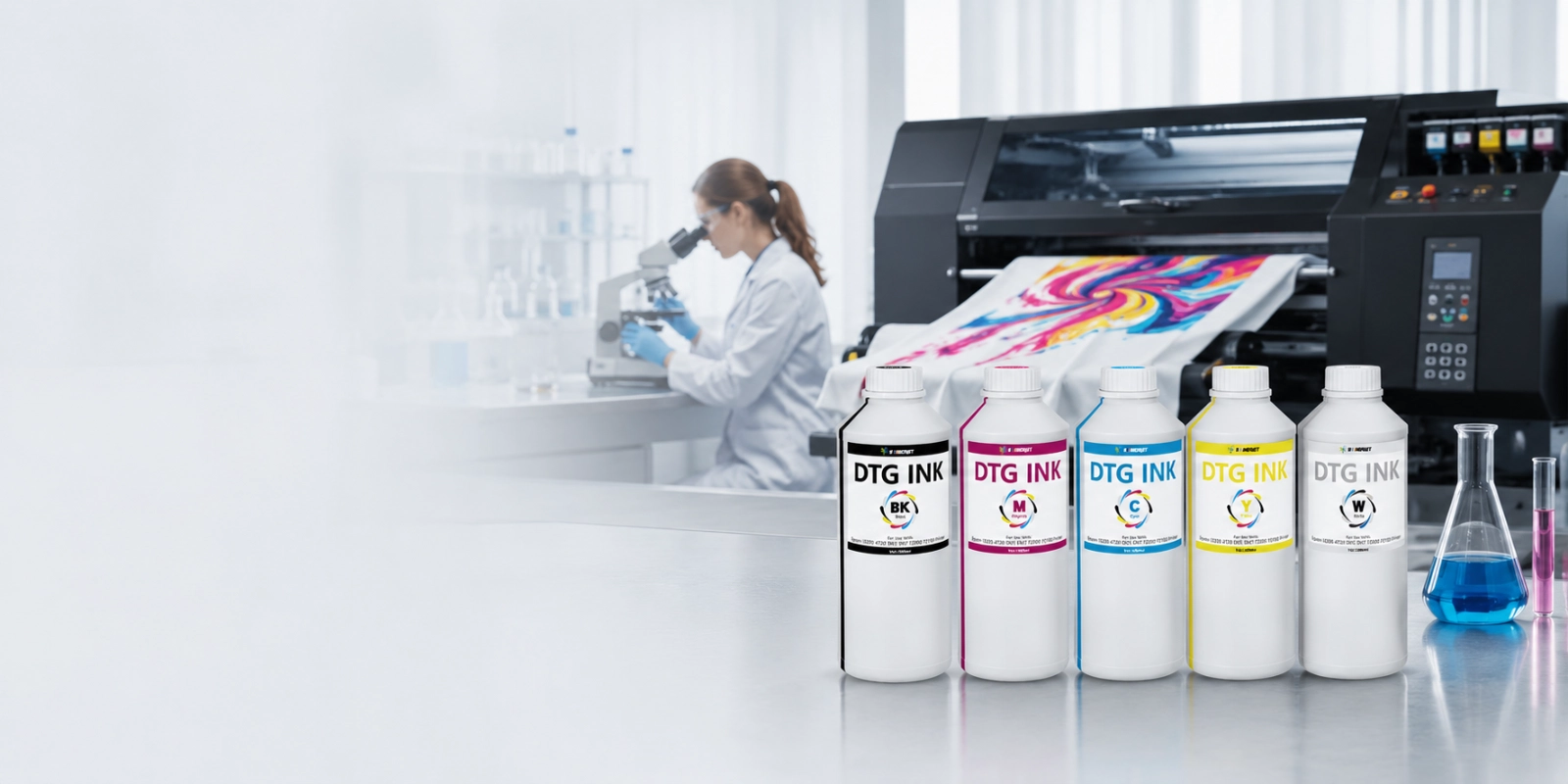
DTF (Direct-to-Film) ink and sublimation ink are both popular in textile printing, but they work very differently. DTF ink prints onto a PET film and is heat-transferred onto fabrics, while sublimation ink turns into gas under heat and bonds directly with polyester or polymer-coated surfaces.
Comparison Table:
| Feature | DTF Ink | Sublimation Ink |
|---|---|---|
| Printing Process | Direct-to-Film + heat press | Heat sublimation directly into polyester |
| Compatible Materials | Cotton, polyester, blends | Polyester, polymer-coated items |
| Color Vibrancy | High, opaque on dark/light fabrics | Bright on light polyester, limited on dark fabrics |
| Equipment Needed | DTF printer, PET film, powder, heat press | Sublimation printer, sublimation paper, heat press |
| Durability | High, flexible, washable | Durable on polyester, less flexible on blends |
| Production Scale | Small to large runs | Small to medium, polyester-focused |
Material Compatibility: Which Ink Works for What
- DTF Ink: Works on almost any fabric, including cotton, polyester, and blends.
- Sublimation Ink: Best suited for 100% polyester or polymer-coated surfaces. Not suitable for cotton or dark fabrics.
- Business Tip: If your B2B printing orders involve mixed fabrics, dark garments, or custom apparel lines, DTF ink offers the flexibility you need.
Printing Workflow Differences
DTF Ink Workflow:
- Print your design on a PET film using a DTF printer.
- Apply hot-melt adhesive powder evenly.
- Transfer the design onto the garment with a heat press.
- Pro Tip: Using Winnerjet DTF ink ensures vibrant colors and consistent adhesion across fabrics.

Sublimation Ink Workflow:
- Print the design onto sublimation paper.
- Transfer the design with a heat press onto polyester garments or coated surfaces.
- Works only with compatible materials.
Visual Suggestion: A side-by-side workflow diagram helps readers quickly understand the process differences.

Color, Durability, and Print Quality Comparison
- DTF Ink:
- Vibrant on both dark and light fabrics.
- Highly durable and flexible for washing and stretching.
- Sublimation Ink:
- Extremely bright on polyester.
- Not visible on dark fabrics.
- Excellent wash fastness on polyester but less versatile for blends.
Recommendation: For B2B orders with mixed fabrics or dark-colored garments, DTF ink provides more consistent results.
Cost Considerations
- DTF Ink: Slightly higher initial setup cost due to PET film and adhesive powder but more cost-effective for diverse fabric orders.
- Sublimation Ink: Lower upfront cost, but limited material compatibility can lead to extra expenses if you need coated surfaces or polyester-only production.
Business Insight: For small factories or wholesale printing businesses, investing in DTF ink may save time and money on varied orders in the long run.
Which Ink Should You Choose for Your Business?
- Choose DTF Ink if:
- Your orders include cotton, blends, or dark garments.
- You need flexible, durable prints suitable for small or large-scale production.
- You want consistent results across multiple fabric types.
- Choose Sublimation Ink if:
- You print only on 100% polyester or polymer-coated items.
- Bright, vibrant prints on light-colored polyester are your priority.
Need High-Quality DTF Ink for Your Prints?
Please request a free sample of Winnerjet DTF ink today and see how it performs on your fabrics.
FAQs
Can I use sublimation ink on cotton?
No, sublimation ink requires polyester or polymer-coated surfaces. For cotton or mixed fabrics, DTF ink is the better choice.
Do DTF and sublimation inks require different printers?
Yes. DTF ink requires a DTF printer, while sublimation ink needs a sublimation printer. Mixing inks can damage the equipment.
Which ink is more durable after washing?
Both are durable, but DTF ink maintains vibrancy and flexibility across a wider range of fabrics.
Is DTF ink more expensive than sublimation ink?
Initial setup cost is higher due to film and powder, but DTF is often more cost-efficient for mixed-fabric production.
Can I switch between DTF and sublimation ink in the same printer?
No. Printers are designed for one ink type only. Switching may cause damage and void warranties.