In the world of digital inkjet, rotary printing is widely recognized as the most challenging application for any supplier. Many print shops fall into the trap of repeatedly dismantling mechanical structures when faced with image stretching, ghosting, or poor adhesion.
Research from Winnerjet Technical Laboratory reveals a critical insight: 90% of printing defects do not stem from mechanical wear, but rather from a mismatch between the Spin Set (rotary motion control settings) and Ink Fluid Dynamics. This white paper is designed to help you bridge the gap between hardware parameters and chemical consumables, providing a quantifiable standard for high-volume production.
Part I: The Core Logic of Spin Set Calibration
1. Redefining “Displacement” in Rotary Printing
In flatbed printing, stepping is linear; however, in rotary printing, stepping is the conversion of angular displacement into linear displacement.
What is Pulse Equivalent? It is the micron-level arc length generated on the object’s surface when a single electrical pulse signal from the controller drives the rotary axis via a stepper or servo motor.
Sources of Error: Many operators overlook compensation for Gear Ratio (R) wear and the measurement accuracy of the Media Diameter (D). Even a minor measurement error of 0.5mm in diameter can accumulate into a noticeable Gap or overlap in a 360-degree wrap-around print.
2. Core Calibration Formula and Dynamic Compensation
To achieve perfect alignment, you must master the following foundational formula:
Step = (F*R)/(π*D)
(Where P = pulses per motor revolution, R = reduction gear ratio, and D = object diameter)
In Winnerjet’s field service experience, we recommend introducing a “Stretch Compensation Factor (S)”:
When the printed image appears shorter along the circumference than the original design, the adjusted pulse value should be Step’ = Step *S. This software-level logic adjustment is the most efficient way to resolve “image distortion” while avoiding expensive hardware replacements.
Pro Tip: Every time you switch to a different bottle diameter, the D value must be re-entered. Winnerjet recommends establishing a “Product Diameter Preset Library” within your control system (e.g., Hoson).
3. Synchronization: The “Tango” Between Line Speed and Firing Frequency
The firing frequency (Hz) of the printhead must be perfectly synced with the surface line speed of the rotating object.
If the rotation is too fast: Ink droplets experience diagonal drag during flight, causing “trailing” or “misting.”
If the rotation is too slow: Overlapping droplets on the curved surface lead to ink bleeding and edge blurring.
Winnerjet inks are engineered with optimized dynamic surface tension to significantly broaden the tolerance window for this synchronization.
Part II: Parameter + Ink Matching for Leading Printheads
Solution A: Epson i3200 — Pursuing High Resolution and Fine Texture
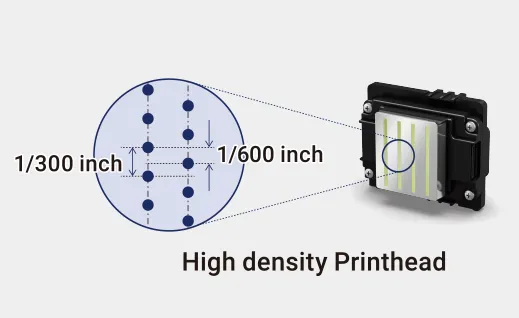
The i3200 features ultra-fine 3.5pl droplets, ideal for art-grade printing, yet it is extremely sensitive to fluid stability.
Applications: Luxury perfume bottles, custom phone cases, high-end giftware.
Recommended Parameters:
Pass Count: We strongly recommend 8-pass or 12-pass. High pass counts effectively mask “Banding” caused by minor rotary axis micro-vibrations.
Rotation Frequency: Set to low-to-medium speed to match the flight inertia of the tiny $3.5pl$ droplets.
Winnerjet Expert Advice: The Epson i3200 utilizes PrecisionCore technology, featuring extremely fine nozzles. Winnerjet WR Series Inks are developed specifically for this, utilizing triple nano-filtration to ensure viscosity stays stable at approximately 4.2 mPa.s at the recommended 42-45℃. This completely eliminates “clogging” or “dropout” risks associated with high-sensitivity inks.
Solution B: Ricoh G5 — Pursuing Industrial Efficiency and Extreme Adhesion
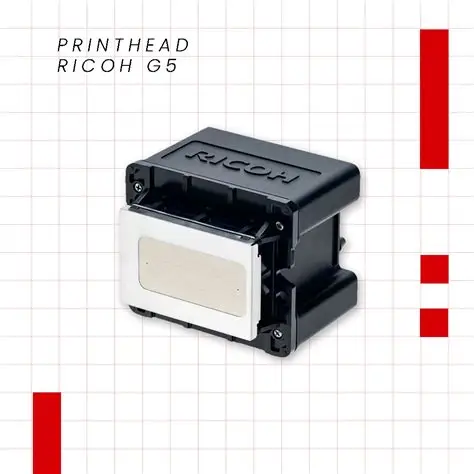
The Ricoh G5 is the workhorse of industrial rotary production, offering incredible chemical compatibility.
Applications: Stainless steel tumblers, ceramic wine bottles, industrial plastic piping.
Recommended Parameters:
Bi-directional Printing: This requires extremely precise Spin Timing compensation; otherwise, vertical ghosting will occur. We recommend a calibration check every 500 production hours.
UV Curing Strategy: Industrial materials dissipate heat quickly. We recommend at least 80% UV power to achieve “instant pinning,” preventing ink shrinkage on smooth surfaces.
Winnerjet Expert Advice: According to Ricoh official technical specifications, internal circulation systems are demanding on ink stability. The Winnerjet WG5 Strong Adhesion Series utilizes specialized functional monomers to achieve a 5B Rating under ASTM D3359 standards on untreated metal surfaces. This is a win for both chemistry and hardware synergy.
Part III: Troubleshooting Common Technical Issues
In production, micro-fluctuations in the environment are often the culprits behind high scrap rates. Use this Winnerjet “Cheat Sheet” for troubleshooting:
| Symptom | Potential Root Cause | Advanced Solution |
|---|---|---|
|
Mechanical/Logic Horizontal Stretching / Compression |
Mismatch between Spin Set pulse and object diameter. | Refer to the [Winnerjet Pulse Calculator] to re-verify the Step value (ensure accuracy within 0.01mm). |
|
Fluid Dynamics Blurred Edges / Ink Misting |
Excessive printhead gap or static electricity interference. | Check if the ionizer bar is active. Ensure the physical gap between the head and object is strictly 2—3mm. |
|
Stability Color Banding |
Stepper motor losing steps or viscosity fluctuation. | Check belt tension and motor coupling. Confirm secondary ink tank temperature is holding steady at the 42°C standard. |
⚠️ Critical Maintenance Tips:
Temperature Control: Ink viscosity changes roughly 3% for every 1℃ change in temperature. Winnerjet recommends a constant temperature of 42-45℃..
Static Interference: Rotary friction generates significant static, causing droplets to scatter. We strongly advise installing an ionizer bar on the rotary jig.
Part IV: Winnerjet’s Technical Commitment and Value Proposition
We understand that our customers don’t just need ink; they need a stable, profitable production system. With nearly 20 years of experience, Winnerjet provides the following value-added services:
- Full-Spectrum Solution Customization: We provide preset Spin Set parameter tables for various diameters—from thin pen barrels to large-diameter canisters—to shorten your setup time.
- Professional Color Management: We offer free ICC Profile creation for i3200/G5 setups, ensuring color consistency regardless of rotation speed changes.
- Hardware-Software Synergy: Our engineers are experts in Hoson, MainTop, and other leading Chinese control systems. We offer 24-hour remote technical support for complex parameter issues.
Part V: Conclusion
Rotary printing should not be a “game of luck”; it is a precise science. By combining accurate Spin Set configurations with Winnerjet’s high-performance inks, you can reduce trial-and-error costs by up to 40%.
Ready to get the “Parameter Reference Table for Different Bottle Diameters” or apply for a FREE ink sample?
Contact a Winnerjet technical consultant today and let us help you optimize your Spin Set configuration.
Official Website:www.winnerjet.com