In the inkjet printing industry, Japanese manufacturers hold the reins of the global supply chain through their relentless pursuit of pigment particle control (nano-dispersion) and advanced chemical additives. Authored by the Winnerjet team, this report leverages the latest 2026 equipment compatibility tests and market compliance standards to provide an authoritative procurement reference for corporate decision-makers.
Deep Dive: The Top 10 Titans of Japanese Inkjet Ink
In digital printing, Japanese manufacturers define global quality standards through their profound expertise in fine chemicals. Based on our testing and analysis, here are the top ten industry leaders and their core competitive advantages.
1. DIC Corporation (Sun Chemical)
Company Overview: The world’s largest ink conglomerate, maintaining a service network across more than 60 countries by integrating Sun Chemical’s global channels.
Main Products: SunJet industrial series, Food-grade Low Migration inks.
Advantages: Exceptional vertical integration; in-house production of high-quality pigments ensures unparalleled batch-to-batch color consistency.
Expert Insight: For the food safety packaging market, DIC’s aqueous UV solution is one of the few globally to pass rigorous Swiss Ordinance testing, making it the premier choice for export-oriented printing enterprises.
2. artience (formerly Toyo Ink)
Company Overview: Rebranded as artience in 2024, signaling a pivot from traditional inks to high-performance fine materials, with a strong footprint in electronics and photovoltaics.
Main Products: Liojet series, LED-UV curable inks, functional conductive inks.
Advantages: World-class nano-dispersion technology resulting in superior ink stability.
Expert Insight: Our real-world testing shows that artience inks maintain extremely stable dynamic surface tension when paired with high-frequency piezo printheads (such as the Ricoh Gen6), significantly reducing “misting” risks during high-speed production.
3. Sakata Inx
Company Overview: The world’s third-largest ink manufacturer with over 30 years of deep
Main Products: BoniJet eco-friendly aqueous series, high-speed digital packaging inks.
Advantages: High-precision matching with printhead Waveforms, significantly extending printhead service life.
Expert Insight: Sakata dominates the digital corrugated packaging sector. As of 2026, their Bio-based inks have achieved over 30% biomass content, striking a perfect balance between environmental sustainability and cost-efficiency.
4. Fujifilm Ink Solutions
Company Overview: The only entity globally possessing both top-tier printhead manufacturing (Dimatix) and elite chemical R&D capabilities.
Main Products: Uvijet series, textile pigment inks.
Advantages: Integrated “Printhead + Ink” synergistic R&D, offering one-stop technical support.
Expert Insight: Fujifilm’s Uvijet technology is the industry benchmark for outdoor UV resistance. Empirical data indicates that its color fading rate (Delta E) remains below 5% even after three years of high-intensity solar exposure.
5. Seiko Epson
Company Overview: The definitive architect of Micro Piezo technology, controlling the entire value chain from consumer to industrial grades.
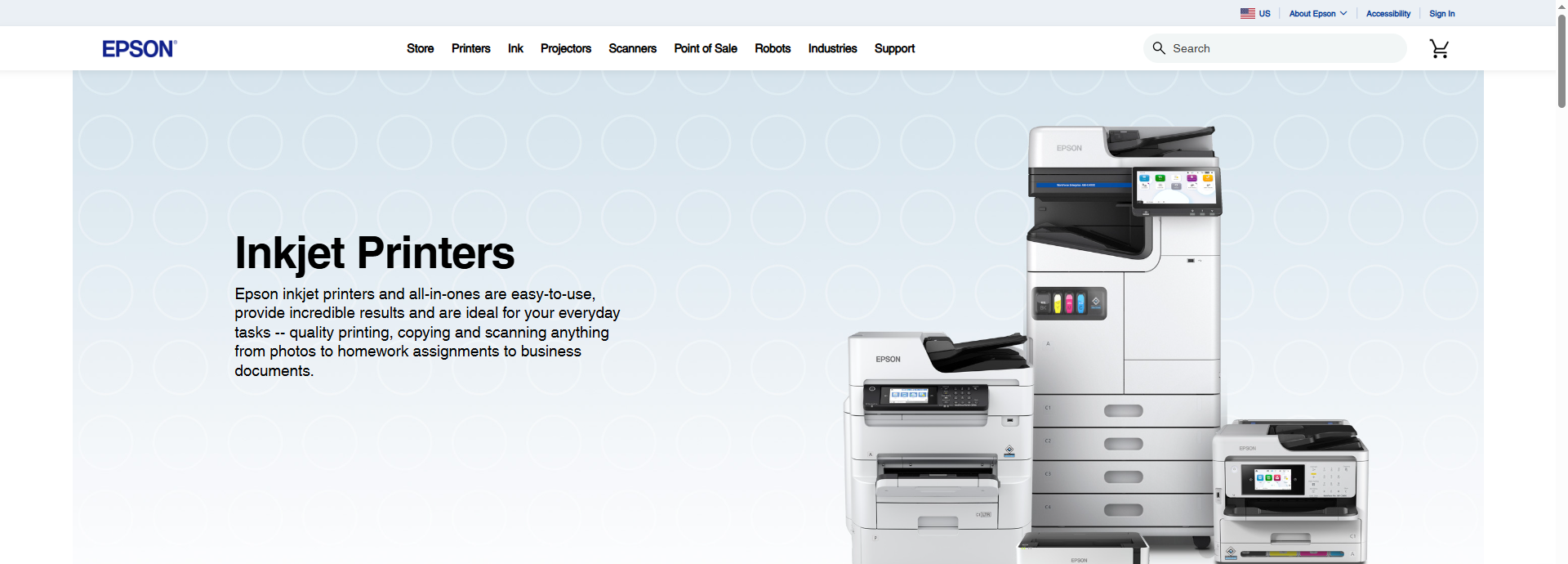
Main Products: UltraChrome professional imaging inks, Monna Lisa industrial textile inks.
Advantages: Masterful application of Color Science with an ultra-wide color gamut.
Expert Insight: For high-end Giclée and fine art markets, Epson’s genuine inks offer irreplaceable color consistency. Their latest 10/12-color ink systems are the gold standard for achieving DCI-P3 wide gamut output.
6. Kyocera Corporation
Company Overview: A leader in ceramic technology and piezo elements; their printheads hold a massive share of the global high-speed digital press market.
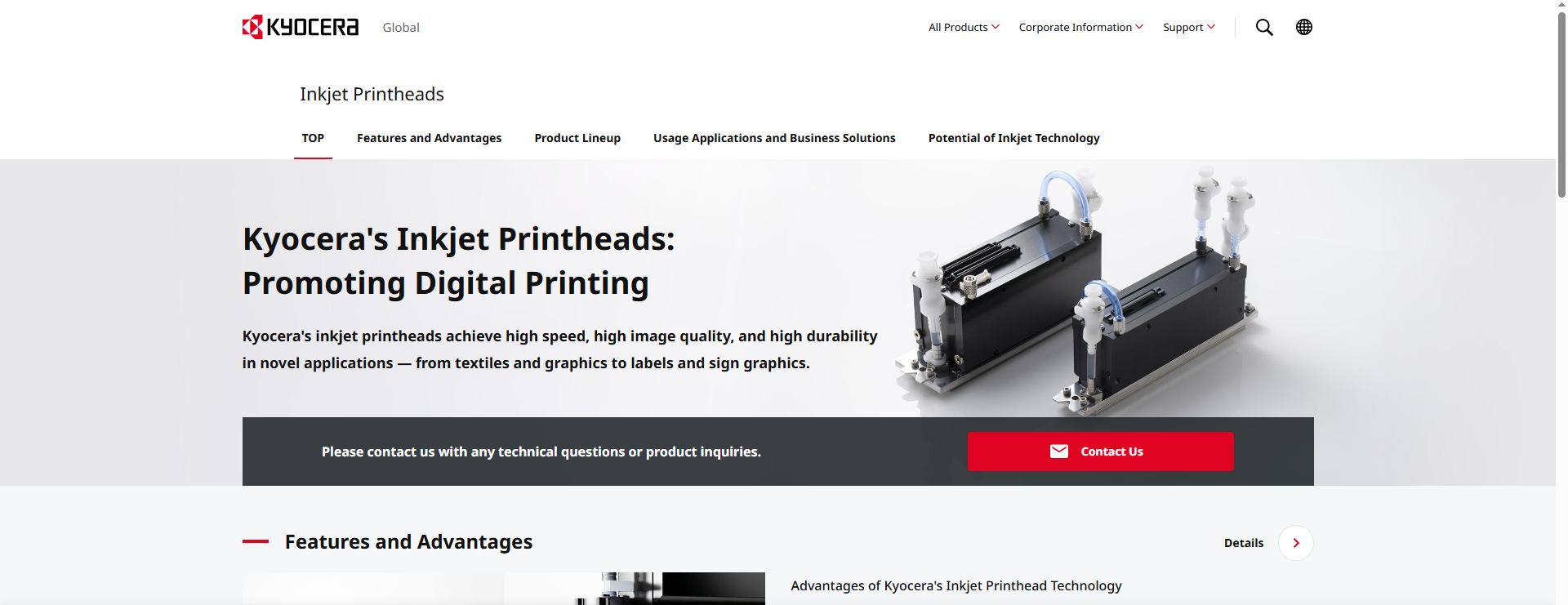
Main Products: High-speed recirculating aqueous inks, specialized ceramic inks.
Advantages: Optimized for high-speed, high-flow recirculation systems, reducing clogging risks caused by ink sedimentation.
Expert Insight: Kyocera inks are engineered specifically for Single-pass systems. At production speeds exceeding 100m/min, their ink droplet “break-off” control is flawless, effectively eliminating satellite droplets.
7. Ricoh Company, Ltd.
Company Overview: By consolidating industrial printing resources, Ricoh has emerged as a core solution provider for flexible packaging and textiles.
Main Products: Latex inks, plant-based eco-friendly inks.
Advantages: Outstanding environmental performance; Latex inks offer excellent media versatility without the need for specialized coatings.
Expert Insight: Ricoh’s 2026 plant-based inks have earned the highest OEKO-TEX® certifications. For textile firms targeting premium US and European markets, Ricoh’s solutions significantly shorten compliance cycles.
8. Canon (Océ)
Company Overview: Leveraging a century of expertise in optics and imaging, Canon has redefined production efficiency in wide-format printing.
Main Products:UVgel technology inks (e.g., for the Colorado series).
Advantages: Combines the durability of UV with the ultra-thin profile of solvent inks, featuring unique self-leveling properties.
Expert Insight: UVgel remains one of the most disruptive technologies in the sector. By “gelling” instantly upon contact with the media, it reduces ink consumption by 40% while eliminating ink bleed on dark-colored blocks.
9. Mimaki Engineering
Company Overview: A pioneer in the sign and creative industries, renowned for rapid market response and innovative applications.
Main Products: High-elongation UV inks, full-color 3D printing inks.
Advantages: Ink coatings feature extreme elasticity (up to 350% elongation), ideal for vehicle wraps and thermoforming.
Expert Insight: Mimaki’s LUS series is the benchmark for vehicle wraps and leather printing. Even in sub-zero temperatures (-10°C), the ink layer retains flexibility without cracking.
10. Roland DG Corporation
Company Overview: Specializes in small-scale personalization, prototyping, and professional-grade label printing.
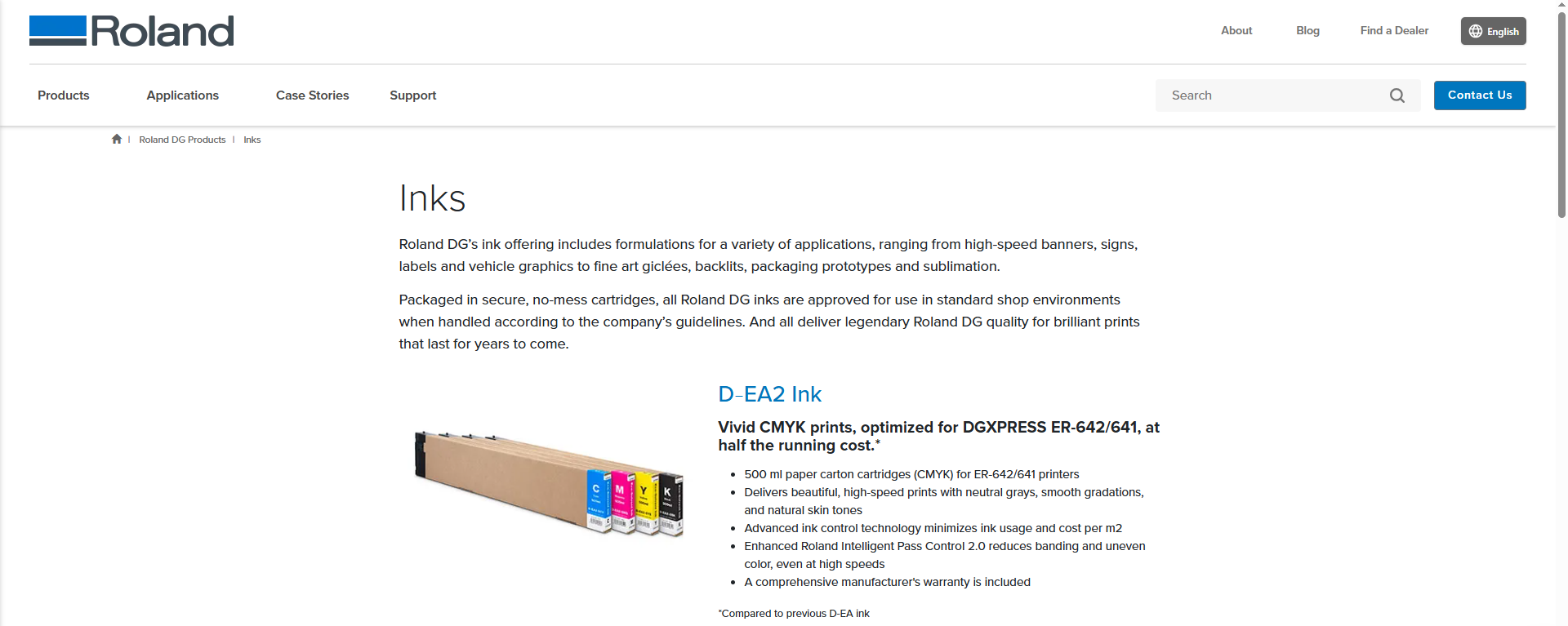
Main Products: ECO-SOL MAX series, metallic and spot-gloss inks.
Advantages: World-class opacity in white inks and superior brilliance in metallic silver.
Expert Insight: Roland’s incremental printing solutions (White + Gloss) are unrivaled in high-end packaging prototypes. Their inks allow for layered printing to create tactile, embossed effects, significantly increasing product value.
2026 Industry Outlook: How to Source the Right Ink
In the 2026 digital printing landscape, choosing a Japanese ink manufacturer goes beyond “quality comparison.” It is an investment in compliance premiums, hardware-level optimization, and supply chain resilience. To maintain a competitive edge, we recommend evaluating suppliers through three critical lenses:
1. Compliance and Global Market Access (Trustworthiness)
As global green trade barriers intensify, compliance is now a core competency. Prioritizing manufacturers with textile safety or ultra-low VOC certifications ensures seamless entry into premium retail markets. This is more than a mark of quality—it is an “entry ticket” to medical and educational decor sectors, mitigating global trade risks.
Regulatory References:CBAM Carbon Tax | OEKO-TEX® | GOTS 7.0 | UL GREENGUARD Gold
2. Hardware Optimization and Printhead Longevity (Expertise)
Ink performance must synchronize with the printhead on a “microsecond” level. Buyers must verify that the ink is optimized for specific industrial printheads via Waveform Tuning. Precise matching eliminates satellite droplets and sharpens image quality. High-compatibility inks can extend printhead life by over 30%, drastically lowering the Total Cost of Ownership (TCO).
Technical References:Ricoh Gen6 | Kyocera KJ4B | Epson I3200 | Fogra 51/52
3. Sustainability and Energy Management (Experience)
The selection logic for 2026 focuses heavily on Low Energy Curing performance. Leading manufacturers have achieved over 20% biomass content. These inks cross-link instantly under lower UV power, cutting electricity consumption by up to 25%. Furthermore, inks with high “de-inkability” support circular economy packaging, helping firms build a “green” competitive advantage while fulfilling CSR goals.
Sustainability References: Sustainable Packaging Coalition (SPC) | INGEDE
Position Your Partnership in the Global Supply Chain
The 2026 inkjet market is undergoing a dual revolution of “efficiency” and “sustainability.” While Japanese manufacturers maintain a lead in fundamental chemistry and printhead synergy, a diversified global supply chain has become essential for risk mitigation. Whether you are an industrial printer seeking peak performance or a system integrator looking for cost-effective solutions, understanding regional supply chain strengths is vital.
💡 Recommended Reading
Optimize your global supply strategy with our in-depth industry reports:
[Global Perspective] A Comparative Analysis of Global Competitiveness: Top Ink Manufacturers in China
Deep Dive: Discover how leading Chinese factories like Winnerjet utilize nano-filtration and economies of scale to rival Western brands and redefine global value.
[Technical Guide] How to Choose the Best Ink Factory for Your Needs?
Procurement Guide: From waveform matching to ICC profiling and environmental certs, we reveal the core standards for modern ink procurement.
📚 Series: 2026 Global Digital Printing Consumables Map
Explore the global landscape of digital printing consumables: