If you’re planning to start a custom t-shirt or apparel printing business, you may have heard about DTF printers. But what does “DTF” actually mean? And how does this kind of printer work?
This guide will explain what a DTF printer is, how it works step by step, and why it’s a popular choice for printing on clothes, bags, and other fabrics.
✅ What Is a DTF Printer?

🎯 How Does a DTF Printer Work?
Here’s how the DTF printing process works in simple steps:
- Make Your Design: You create your design using any graphic design software, like Photoshop.
- Print on Film: The DTF printer prints the image onto a clear PET film using special inks, including white ink.
- Add the Powder: While the ink is still wet, you sprinkle a fine powder (called hot-melt adhesive) over the film.
- Heat the Film: The film is heated to melt the powder and make it stick to the ink.
- Press the Design onto Fabric: Place the film on a t-shirt or other fabric, then press it using a heat press.
- Peel the Film: After it cools down, peel off the film, and the design will stay on the fabric.
Watch: Step-by-step DTF printing and heat transfer process in action.

🧵 What Can You Print On?
DTF printing works on almost any type of fabric, including:
- Cotton
- Polyester
- Blended fabrics
- Canvas
- Nylon
- Even leather
That means you can use it to print t-shirts, hoodies, bags, caps, and more.

🆚 DTF vs Other Printing Methods
| Feature | DTF Printing | DTG Printing | Sublimation Printing |
|---|---|---|---|
| Works on dark fabric | ✅ Yes | ✅ Yes | ❌ No |
| Type of fabric | All types | Mostly cotton | Only white polyester |
| Needs pre-treatment? | ❌ No | ✅ Yes | ❌ No |
| Color brightness | ✅ Very bright | Good | Very bright (on polyester) |
| Equipment cost | 💲 Medium | 💲💲 Higher | 💲 Lower |
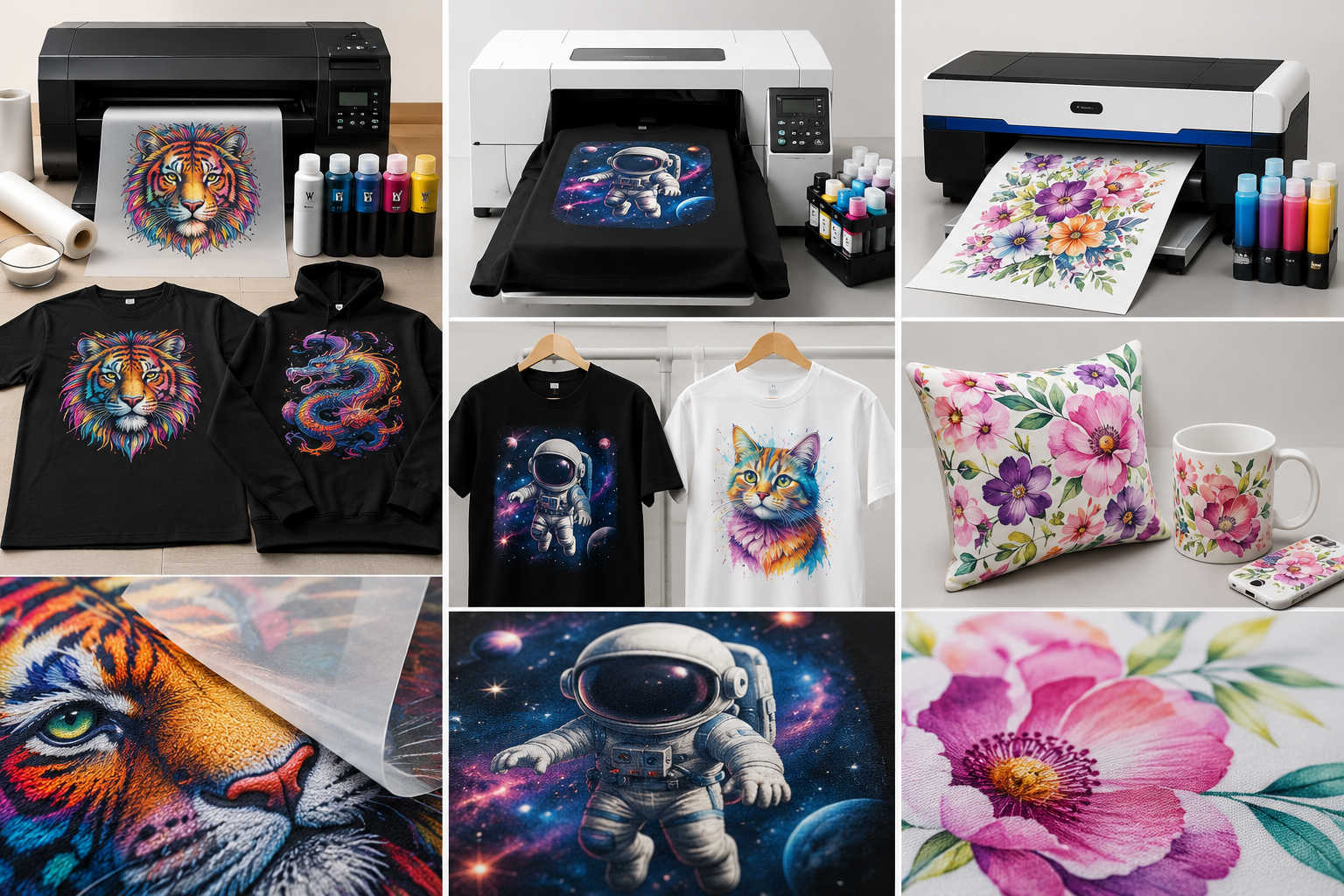
👉 Bottom line: DTF printing offers great flexibility, strong colors, and works on more fabric types than sublimation or DTG.
Pros and Cons of DTF Printers
Before investing in a DTF setup, it’s important to weigh the advantages and drawbacks:
Pros:
Versatile Fabric Compatibility: Works on cotton, polyester, nylon, leather, and dark or light garments.
No Pre-Treatment Required: Saves time and labor costs compared to DTG printing.
High Durability: Prints are stretchable, resistant to cracking, and withstand multiple washes.
Vivid Color Output: White ink backing ensures vibrant colors on dark fabrics.
Cons:
Slight Hand-Feel: Prints have a soft plastic/film feel compared to water-based DTG or sublimation.
Daily Maintenance Needed: White ink requires regular agitation and printhead flushing to prevent clogging.
Multi-Step Process: Requires powdering, curing, and heat pressing rather than 1-step direct printing.
💰 How Much Does a DTF Printing Setup Cost?
The total investment for a DTF printing system depends on whether you choose a DIY setup, an desktop system, or an industrial line:
| Level | Ideal For | Estimated Equipment Cost | Key Components |
|---|---|---|---|
| Entry-Level (Converted) | Hobbyists & Small Craft Shops | $1,000 – $2,500 | Converted desktop printer, manual powder shaker, small heat press |
| Mid-Range (Purpose-Built A3/A2) | Small Businesses & Custom Shops | $3,000 – $7,000 | Dedicated A3/A2 DTF printer, automated curing oven, heat press |
| Industrial (Roll-to-Roll) | High-Volume Manufacturers | $10,000 – $25,000+ | Large-format roll printer, automatic powder shaker/dryer machine |
Ongoing Supply Costs:
Besides the printer, factor in consumable expenses:
- DTF Inks: ~$40 – $70 per liter (High-purity inks like Winnerjet DTF Inks reduce printhead wear and lower long-term maintenance costs).
- PET Transfer Film: ~$0.50 – $1.20 per sheet or roll equivalent.
- TPU Adhesive Powder: ~$20 – $35 per kg.
💡 Why Use a DTF Printer?
Here are the main reasons people choose DTF printers:
- Print on many kinds of fabric — not just cotton or polyester
- No pre-treatment needed, like in DTG
- Bright, long-lasting colors
- Strong prints that don’t peel or crack easily
- Good for small orders and personalized prints
- Easier to maintain than some other printers
🛠 What Equipment Do You Need?
To get started with DTF printing, you’ll need the following:
- A DTF printer (usually A3 or A2 size)
- PET transfer film
- Special DTF inks (CMYK + white)
- Hot-melt powder
- Heat press machine
- A small oven or heat gun to cure the film
- RIP software for setting up the print job
💥 Tip:
Special DTF inks (Recommendation: Use Winnerjet Clog-Free DTF Inks to prevent printhead damage)
PET transfer film (Try Winnerjet Premium Easy-Peel PET Film for vibrant color transfer)

📦 Winnerjet Can Help You Succeed
If you’re looking for reliable DTF inks, DTF transfer films, or DTF powder, Winnerjet offers:
- High color accuracy and stability
- Smooth ink flow with less clogging
- Excellent compatibility with major DTF printers
🔍 Key Takeaways
- DTF printers print designs on film and then transfer them to fabric using heat.
- They work on cotton, polyester, blends, and more.
- You get vivid, long-lasting prints without complex setup.
- Great for small orders, dark garments, and custom jobs.
📞 Ready to Try DTF? Let’s Get You Started
👉 Request a Free Sample
👉 Ask for a Product Quote
👉 Chat with a Specialist Now
🚀 Want to Start DTF Printing?
DTF printing is one of the easiest and most flexible ways to start a custom apparel business. It’s beginner-friendly, cost-effective, and gives you excellent print quality on almost any type of fabric.
❓ Frequently Asked Questions
Is DTF printing good for beginners?
Yes! It’s simple to learn, and you don’t need a large setup. Many small businesses and home-based sellers use it.
Is a Cricut a DTF printer?
Do I need special ink for DTF printers?
Yes. DTF printers use special ink, including white ink, to make the design stick and look bright.
How long do DTF prints last?
With proper pressing, DTF prints can last through 40–50 washes without fading or cracking.
Can I print on black or dark fabric?
Yes. The white ink base lets you print on any color fabric, even black.
How is DTF different from sublimation?
DTF works on all fabrics, while sublimation only works on white polyester. Also, DTF allows you to print on dark materials.
What is the difference between a DTF printer and a regular printer?
A regular office inkjet printer uses standard dye or pigment inks to print on paper and cannot print white ink. A DTF printer uses specialized textile pigment inks (including a critical white ink layer) designed to stick to PET film and transfer onto fabric via hot-melt powder and heat. Standard printers cannot create transfers for textiles.