DTF transfer film is an important material used in Direct-to-Film (DTF) printing, a fast-growing way to print colorful designs on fabric. If you’re starting a T-shirt business, customizing apparel, or supplying printing materials, this guide will help you understand what DTF film is, how it works, and how to choose the right one.
Let’s go through:
✅ What DTF transfer film is
✅ What it’s made of
✅ How it’s used
✅ The types of film available
✅ How to pick the right film for your needs
🧾 What Is DTF Transfer Film?
You can think of it like a temporary sticker for your print: first, you print onto the film, then move that design onto a shirt or bag.

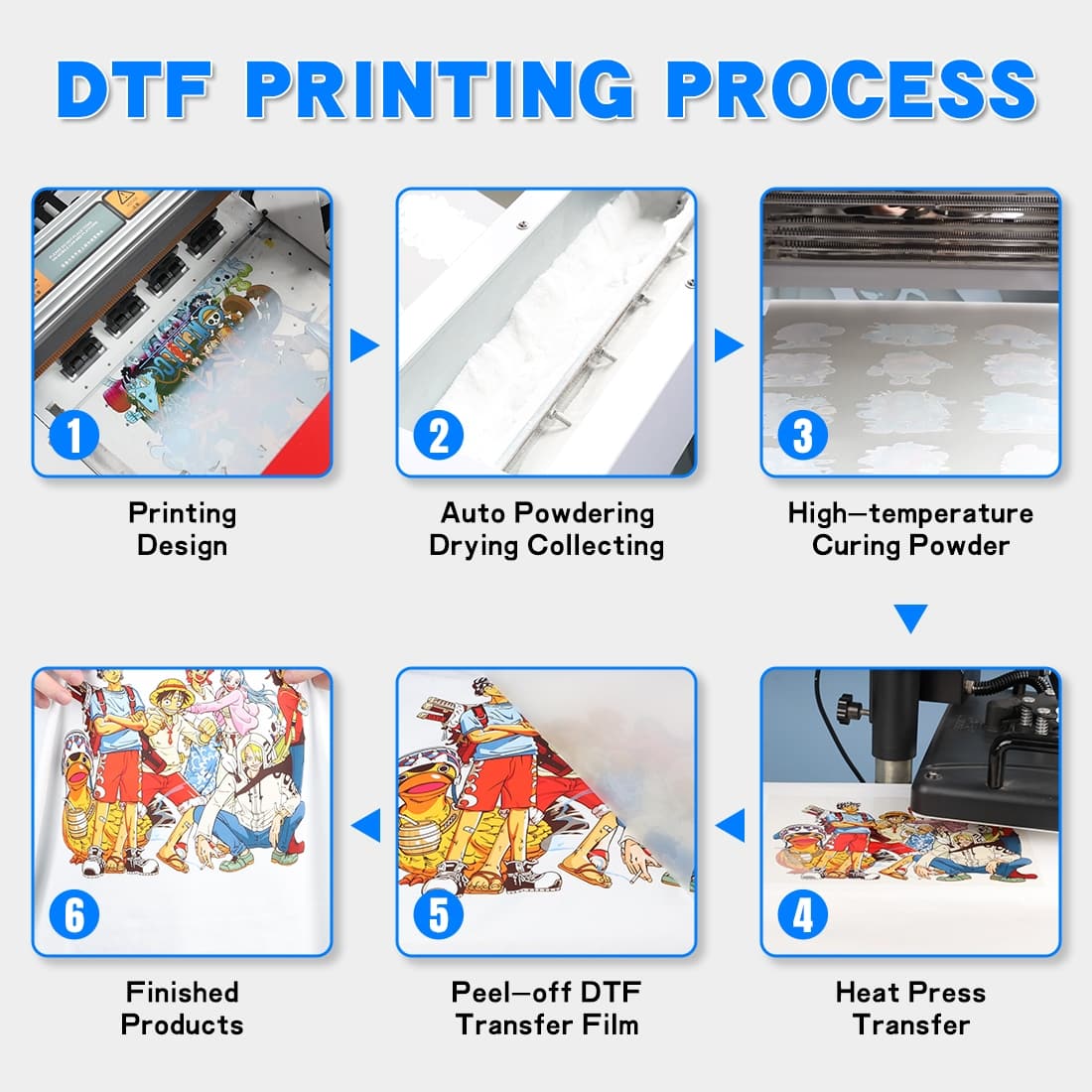
🛠️ How Does DTF Transfer Film Work? (5-Step Process)
Here’s a quick look at how DTF film fits into the full DTF printing workflow:
- Print the Design: A DTF printer prints the design on the film using colorful ink, then prints a white layer on top.
- Apply DTF Powder: Before the ink dries, you sprinkle a fine powder on the printed design. This helps it stick to fabric later.
- Heat-cure the Film: Use a heat press or oven to melt the powder and dry the ink.
- Transfer to Fabric: Place the film on your fabric and press it using heat. The design sticks to the fabric.
- Peel Off the Film: Peel the film away, leaving the printed image on the fabric.
🔥 What Is the Difference Between Hot Peel and Cold Peel DTF Film?
There are two types of DTF transfer films, based on how you peel the film after pressing:
| 🧩 Type | 🔍 Description | ✅ Best For |
|---|---|---|
| Hot Peel | Peel off the film right after pressing | Fast-paced printing businesses |
| Cold Peel | Let the film cool before peeling it off | Designs with fine details |
👉 Winnerjet offers both types of films. They’re tested for strong sticking power and long-lasting prints after many washes.
Watch our step-by-step video guide demonstrating the complete industrial DTF printing workflow—from artwork design to final heat transfer:
🎯 How to Choose the Right DTF Film
When buying DTF film, check for these features:
- Thickness: Around 75–100 microns is strong but easy to handle.
- Good Coating: Makes sure colors are bright and don’t blur.
- Peeling Type: Choose hot peel for speed or cold peel for better detail.
- Wash Resistance: Prints should stay on after many washes.
💡 Tip: Not sure what works best? Ask your supplier for free test samples. At Winnerjet, we help you test film with your printer and ink.

✅ Why Use DTF Transfer Film?
DTF film has several advantages:
- Prints well on cotton, polyester, and mixed fabrics
- Makes bright, colorful designs
- No need to cut or weed like vinyl
- You can print now and transfer later
- Great for small orders or mass production
🚀 Final Thoughts: Is DTF Film Right for You?
If you’re printing custom designs on fabric and want a simple, flexible method that works on many materials, DTF transfer film is a smart choice. It’s great for both beginners and businesses, and it’s much easier than traditional screen printing or vinyl cutting.
Use this guide to choose the right type of film, test your materials, and get the best results.
📦 Need Reliable DTF Transfer Film for Your Business?
Winnerjet provides easy-to-use, high-quality DTF transfer films trusted by printers around the world.
👉 [Request a Free Sample] today to test before you buy!
❓Frequently Asked Questions
Can I reuse DTF film?
No. Each piece is used once. After you press it, throw it away.
What printer do I need?
A DTF printer that supports white ink. Many people use modified Epson printers.
Is the film waterproof?
Yes, but keep it dry after printing until you’re ready to press.
Can I use it on dark fabrics?
Yes. The white ink base lets designs show clearly on black and dark clothes.
Where can I buy DTF film?
Winnerjet supplies hot peel and cold peel DTF films that work with most printers and inks.