When comparing dtf vs dtg printing, it can be hard to decide which technology is right for your shop. Both Direct-to-Garment and Direct-to-Film offer incredible results, but for most entrepreneurs, the ultimate question remains: which is better dtg or dtf? To help you decide, we’ll dive deep into the differences, pros, and cons, providing a clear verdict to help you scale your custom apparel business effectively.
🖨 What Is DTG Printing?
DTG (Direct-to-Garment) printing sprays ink directly onto fabric, just like an inkjet printer works on paper.
- How it works: Pretreat the shirt → print the design directly onto the garment → cure the print.
- Best fabrics: Works best on 100% cotton or high-cotton blends.
- Pros:
- Super soft, “in-fabric” feel.
- High detail and smooth color gradients.
- Great for small batches or one-off designs.
- Cons:
- Limited to cotton fabrics.
- Expensive pretreatment step.
- Machines require frequent cleaning and maintenance.
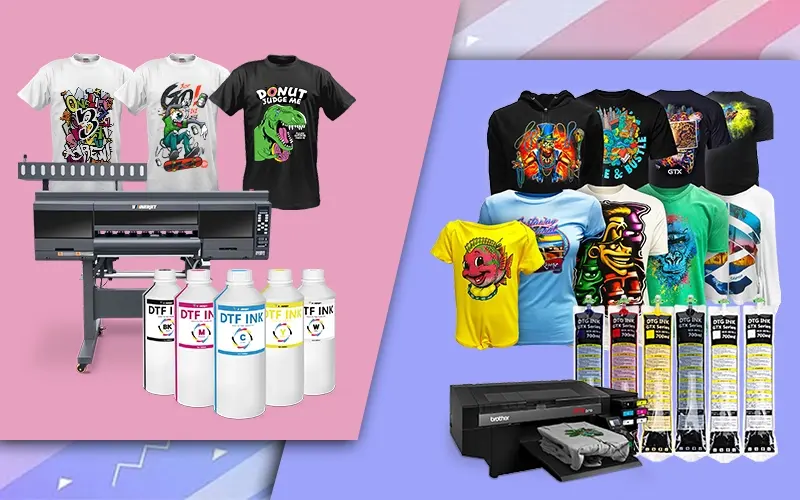
🎨 What Is DTF Printing?
DTF (Direct-to-Film) printing uses a special film, adhesive powder, and a heat press to transfer designs onto fabric.
- How it works: Print design on film → apply powder → cure → press onto garment.
- Best fabrics: Works on cotton, polyester, blends, leather, nylon, and more.
- Pros:
- Versatile—works on many fabrics and colors.
- Durable prints that withstand washing.
- Lower startup cost compared to DTG.
- Cons:
- Slightly raised texture compared to DTG.
- Not as soft as direct cotton prints.
📊 DTG vs DTF Printing: Side-by-Side Comparison
Not sure whether to invest in DTG or DTF printing? The table below offers a quick DTF vs DTG printing breakdown, comparing everything from print quality to maintenance requirements at a glance.
| Factor | DTG Printing | DTF Printing |
|---|---|---|
| Fabric Compatibility | Best on cotton | Works on many fabrics (cotton, polyester, blends, leather) |
| Print Durability | Softer feel but less durable | Long-lasting, more resistant to washing |
| Print Quality | High detail, smooth gradients | Bright, bold colors, slightly textured |
| Setup Cost | Higher (pretreatment + machine) | Lower entry cost (converted Epson + film + powder) |
| Maintenance | Frequent cleaning, pretreatment | Easier with good inks and films |
| Best For | Premium cotton t-shirt businesses | Small to medium shops needing versatility |
✅ DTG Bottlenecks & Operational Pain Points
Strict Pretreatment: Dark garments require flawless pretreatment spraying to prevent peeling, blotchy ink, or visible liquid marks(see our DTG Preprocessing Step-by-Step Guide).
Two-Step Heat Pressing: Requires two separate presses—one to dry pretreatment liquid and another to cure the final ink.
High Nozzle Maintenance: Heavy white pigment settles fast, demanding daily cleaning to avoid clogged printheads.
✅ DTF Bottlenecks & Operational Pain Points
Powder Handling & Ventilation: Curing TPU adhesive powder generates fumes, requiring dedicated exhaust or air filtration (see our checklist on What Do You Need for DTF Printing).
Reduced Breathability: The continuous hot-melt adhesive layer leaves a slightly raised, sticker-like hand feel on large, solid graphics.
🏆 Is DTG or DTF Better for Your Business?
The short answer: it depends on your business goals.
- Choose DTG if…
- You specialize in premium cotton shirts.
- You want the softest possible print feel.
- You’re focused on high-detail, small runs.
- Choose DTF if…
- You want to print on different fabrics (polyester, blends, dark garments).
- You’re starting a business with lower startup costs.
- You need long-lasting, durable prints that customers love.
💡 Winnerjet Expert Tip: For most startups and growing small businesses, DTF is the more versatile and cost-effective choice. It gives you flexibility across fabrics and reduces setup complexity, making it easier to scale your business.
🎯 Conclusion & CTA
So, which is better, DTG or DTF?
- DTG: Best if you only print cotton shirts and want a premium soft finish.
- DTF: Best if you need versatility, durability, and lower startup costs.
At Winnerjet, we help businesses get started with reliable DTF inks, DTF powders, and DTF films that deliver consistent quality.
👉 📩 Request Free Winnerjet DTF Ink & Film Samples
FAQ ABout DTF vs DTG Printing
Does DTF feel like DTG?
No. DTG feels softer because the ink soaks into cotton fibers. DTF has a slight “film-like” texture on top of the fabric.
Which lasts longer, DTG or DTF?
DTF prints are usually more durable and resist fading better after multiple washes.(read our in-depth wash test: DTF vs DTG: Which Print Lasts Longer?)
Is DTG more expensive than DTF?
Yes. DTG printers are costly and need pretreatment. DTF has a lower entry cost, especially if you start with a converted Epson printer.
Can I use both DTG and DTF in my shop?
Yes! Some print shops use DTG for premium cotton jobs and DTF for versatile, everyday printing.
Do Winnerjet inks work for both DTG and DTF?
Winnerjet focuses on high-quality DTF inks, powders, and films. Our solutions are designed for smooth runs on Epson printers and deliver vibrant, long-lasting prints.