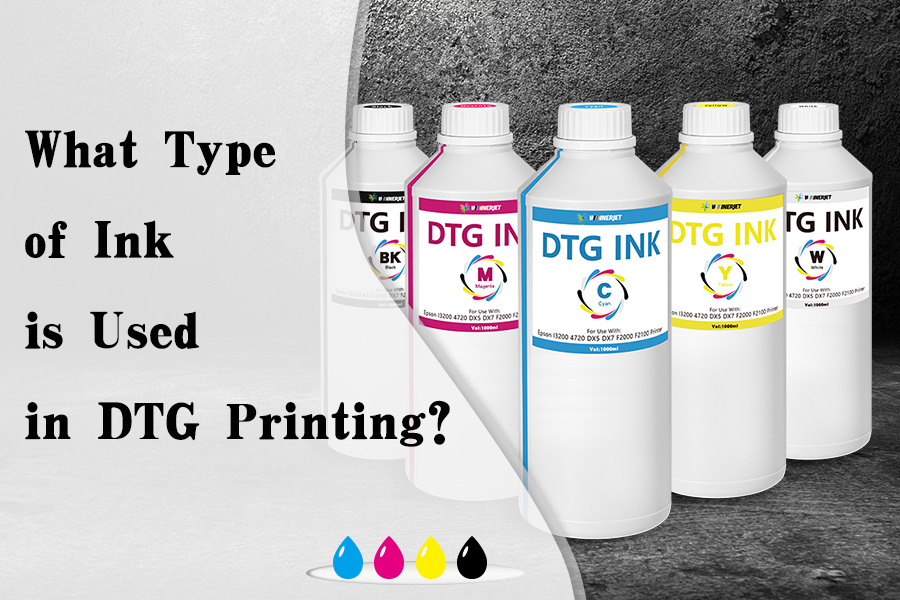
The core of DTG printing lies in the ink—pigment-based, water-based ink, commonly referred to as DTG ink(pigment Ink). This ink can be printed directly onto cotton, blended fabrics, and even certain polyester textiles, delivering vivid colors, rich detail, and excellent wash durability.
For commercial buyers, choosing the right ink affects far more than print quality. It directly impacts production efficiency, machine stability, reject rates, and overall operating costs. Different business scales demand different levels of ink performance, printer compatibility, environmental certification, and cost efficiency.
This article provides a comprehensive guide to DTG ink usage—from ink types and characteristics to production efficiency, printer compatibility, storage and environmental requirements, practical operating tips, and decision models based on business scale and ROI analysis. With the right ink strategy, businesses can ensure consistent print quality, improve productivity, reduce operational risks, and maximize long-term ROI.
Types of DTG Printing Inks and Their Characteristics
The core ink used in DTG printing is pigment-based, water-based ink, specifically engineered for direct garment printing. It delivers high-quality results on cotton and blended fabrics.
1. Water-Based Pigment Ink (DTG Ink)
Application:
Suitable for cotton and cotton-blend fabrics. This is the standard ink type for all DTG printers and the foundation of most DTG printing operations.
Key Features:
- Eco-friendly and non-toxic: Meets export and environmental standards, suitable for mass production and international trade.
- Smooth printing with vivid colors: Produces high color saturation and sharp details on cotton fabrics.
- Low clogging risk and reduced maintenance: Good ink flow helps minimize nozzle blockages, reducing downtime and maintenance costs.
Recommended Use:
Ideal for small studios and mid-sized factories handling customized or batch DTG orders.
💡 Insight: Water-based pigment ink is DTG ink. Commercial buyers should always confirm they are sourcing this ink type to ensure printer compatibility and consistent print results.
2. White Ink
Application:
Primarily used for printing on dark-colored garments, serving as a base layer to enhance color brightness.
Key Features:
White ink significantly improves color vibrancy and image depth. Without a white base, CMYK colors printed directly on dark fabrics appear dull or distorted.
Important Notes:
White ink is prone to sedimentation and must be thoroughly shaken or mechanically stirred before use. Printers must be compatible with white ink systems to avoid clogging or print defects.
Recommended Use:
Dark T-shirts, hoodies, caps, and other dark textiles.
| Ink Type | Best For | Durability | Ease of Cleaning |
|---|---|---|---|
| Pigment Ink | Cotton, Polyesters, Blends | High | Easy |
| Reactive Ink | Silk, Wool, Nylon | Very High | Complex |
| Acid Ink | Silk, Wool, Polyamide | Very High | Complex |
| Disperse Ink | 100% Polyester | Medium-High | Moderate |
At Winnerjet, our DTG inks undergo rigorous multi-stage testing to ensure vibrant color reproduction and zero-clogging performance. As a leading ink manufacturer, we don’t just supply—we innovate. Whether you need specialized formulations or custom OEM ink solutions, our team is here to help your business scale with precision and reliability.
3. CMYK Color Inks
Application:
Used for full-color printing on light-colored garments, supporting complex graphics and gradients.
Key Features:
High resolution, accurate color reproduction, and excellent detail rendering.
Usage Tip:
When printing on dark garments, CMYK inks must be applied over a white ink base layer to ensure brightness and color accuracy.
4. High-Adhesion Polyester-Specific Ink
Application:
Designed for polyester and high-blend fabrics.
Key Features:
Enhanced adhesion on smooth synthetic fibers, excellent wash and light fastness, and long-lasting print durability.
Usage Method:
Often used with fabric pretreatment solutions to improve bonding and durability. Suitable for export orders or products requiring high performance standards.
💡 Insight: Properly matching ink type to fabric significantly reduces rework and waste while improving production efficiency.
Maintenance & Cleaning: Which DTG Inks are Easiest to Manage?
Generally, high-quality water-based pigment inks are the easiest to manage. Unlike reactive or acid inks, they don’t require complex post-processing like steaming. To minimize maintenance, choose inks with superior dispersion technology—this prevents pigment settling and nozzle clogging. Using premium inks with built-in humectants (like those from Winnerjet) significantly reduces the need for frequent head cleanings and chemical flushes, extending your printer’s lifespan.
Eco-friendly Options: Leading Low-VOC Inks for Garment Printers
For businesses prioritizing safety, aqueous-based pigment inks are the top low-VOC (Volatile Organic Compounds) choice. These eco-friendly formulas replace harsh solvents with purified water, meeting standards like OEKO-TEX®. They are odorless, safe for baby clothing, and perfect for the US/EU markets. Switching to low-VOC inks not only protects your workshop’s air quality but also serves as a powerful “green” selling point for your brand.
2026 DTG Ink Core Technologies and Business Trends
By 2026, DTG printing has evolved beyond simple color competition into a focus on performance optimization and intelligent production. For profit-driven commercial buyers, understanding ink performance metrics and application scenarios is key to risk control and premium delivery.
Core Ink Performance Comparison
Different business scenarios require different technical standards. The table below highlights performance differences among mainstream DTG ink solutions:
| Performance Aspect | Standard Pigment Ink | High-Adhesion Polyester Ink | Hybrid Ink |
|---|---|---|---|
| Application | Cotton tees / premium custom | Sportswear / synthetics | Cross-material designs |
| Stretchability | 100–150% (crack risk) | 200%+ (anti-cracking) | 120–180% |
| Curing Efficiency | 160°C / 90–120 sec | 140°C (fabric protection) | 150°C / 80 sec |
| Color Gamut | Standard CMYK | Optimized for dark fabrics | Wide gamut incl. neon |
How to Improve DTG Ink Adhesion on Blended Fabrics?
Achieving excellent dtg ink adhesion on blended fabrics (such as 50/50 cotton/polyester blends) has always been a major challenge for garment printers. Unlike 100% pure cotton, synthetic polyester fibers do not naturally absorb water-based pigment inks, which often leads to ink bleeding, poor wash fastness, or color fading after a few washes. To solve this, specialized pretreatments and high-specification ink formulations are mandatory.
As a professional manufacturer, we address this issue right at the molecular level. Our premium DTG inks utilize triple nano-grade filtration to ensure ultra-fine pigment dispersion, which drastically enhances physical anchoring on stubborn blended fibers while protecting your industrial printheads (like Epson i3200). For optimal wash fastness, we highly recommend applying a dedicated polyester-blended pretreatment liquid, increasing the heat press curing time slightly, and lowering the temperature to prevent dye migration from the polyester base.
Intelligent and Eco-Friendly Trends in 2026
Modern DTG ink development now emphasizes cost optimization and environmental compliance:
- AI-controlled ink usage: AI algorithms optimize droplet size, reducing ink consumption by 15–25% without compromising color quality.
- Bio-based formulations: Plant-based alternatives to petroleum solvents support OEKO-TEX and GOTS 7.0 certifications, enabling access to high-end export markets.
- Advanced white ink circulation: Fully automated circulation systems minimize sediment-related clogging and ensure consistent output from the first print to the thousandth.
💡 Commercial Insight: Smart buyers focus on cost per printed piece, not ink price per liter. High-stretch, intelligent, and certified inks reduce waste, extend printhead life, and can boost annual ROI by over 30%.
DTG Printing Production Efficiency and Printer Compatibility
In commercial DTG production, ink choice directly affects output efficiency, machine stability, and cost control.
Printer Compatibility
Common DTG inks include water-based pigment ink, white ink, and high-adhesion polyester ink. Buyers must ensure full compatibility with printer brands such as Epson and Brother. Mixing incompatible inks can lead to clogging, print defects, and costly downtime.
Choosing fully compatible inks ensures stable production, lower maintenance costs, and long-term operational reliability.
Production Scale Considerations
- Small-batch or custom operations: Water-based pigment inks with easy maintenance and fast setup offer flexibility and reduced downtime.
- High-volume factories: Focus on ink flow stability, wash durability, and extended maintenance cycles to ensure consistent output and high throughput.
Small studios prioritize flexibility, while large factories require stability, durability, and efficiency.
Balancing Cost and Efficiency
Although premium inks may cost more per bottle, they significantly reduce reject rates, rework, and maintenance frequency. Over time, this leads to higher consistency, improved customer satisfaction, and long-term cost savings.
💡 Key Takeaway: Printer compatibility, scale-appropriate ink selection, and cost-efficiency balance are critical to successful commercial DTG operations.
Ink Selection by Business Scale and ROI Analysis
Different business models require different ink strategies:
- Startup studios: High-stability, low-maintenance inks compatible with Winnerjet, Kodak, or Firebird systems help avoid downtime and ensure smooth delivery of small custom orders.
- Export-oriented factories: Inks must meet SGS and international environmental certifications, with dry/wet rub fastness ≥3.5 for shipping and washing durability.
- Sportswear brands:Anti-sublimation inks prevent dye migration during heat pressing on polyester fabrics.
Cost-per-Piece Formula
Unit Cost = (Ink Price × Ink Consumption) ÷ Yield Rate + (Printhead Depreciation + Maintenance Labor) ÷ Total Output
This formula shows why higher-quality DTG ink, although more expensive per liter, often results in lower unit cost due to higher yield rates and reduced maintenance downtime.
Even if premium ink costs 20% more per liter, reducing defect rates from 5% to 1% often results in higher profit per piece and stronger long-term ROI.
Ink Storage, Shelf Life, and Environmental Standards
Proper storage is essential for print quality and equipment longevity. DTG inks should be stored in a cool, dry, and shaded environment. High temperatures or direct sunlight degrade ink performance and increase clogging risks.
Before use, inks—especially white ink—must be thoroughly shaken or stirred to ensure uniform pigment distribution. For heavy sedimentation, mechanical mixers are recommended. Typical shelf life is 12 months, subject to manufacturer guidelines.
For export markets, inks must be eco-certified, non-toxic, and compliant with international standards. Certified DTG inks ensure safety, durability, and smooth customs clearance.
Winnerjet, with nearly 20 years of ink R&D experience, provides eco-certified DTG inks suitable for export orders, balancing performance, stability, and environmental compliance.
💡 Professional Tip: Proper storage, correct handling, and certified inks reduce downtime, extend printhead life, and enhance brand credibility in global markets.
Practical DTG Printing Tips and Precautions
- White ink management: Always stir or shake before printing; use mixers for extended downtime.
- Polyester pretreatment: Improves adhesion and wash durability.
- Temperature & speed control: Avoid excessive drying speed that may cause clogging or uneven edges.
- Avoid ink mixing: Mixing brands or ink types risks clogging, color deviation, and machine damage.
💡 Applying these practices minimizes failures, reduces waste, and ensures stable, high-quality DTG production.
Conclusion and Actionable Advice
DTG ink—water-based pigment ink—is the dedicated textile ink for DTG printers. Dark garments require white ink plus CMYK, while polyester fabrics benefit from high-adhesion formulations. The right ink combination ensures vivid colors, wash durability, high efficiency, and lower maintenance costs.
Choose ink solutions that balance stability, environmental compliance, and productivity. For testing or selecting suitable ink options, professional suppliers such as Winnerjet offer reference solutions and sample support.