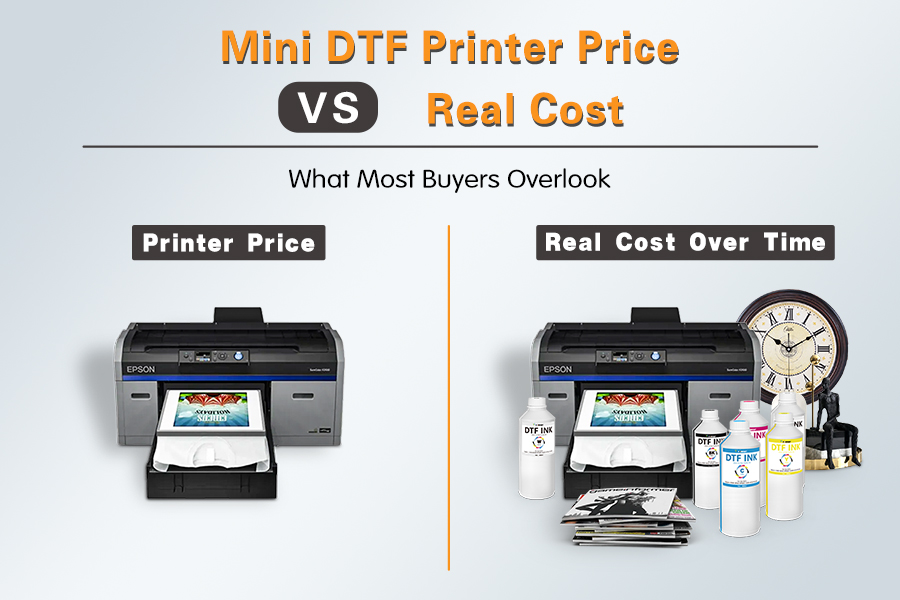
A mini DTF printer price may look inexpensive on the sales page—sometimes only a few hundred to one or two thousand US dollars. However, many users only realize after purchasing that the initial mini dtf printer price is just the beginning; the real operational costs are only starting to appear.
For beginners who are unprepared for white ink clogging, frequent cleaning, or failed reprints, the real source of anxiety is often not the “sticker price,” but losing time and confidence every single day. If you are currently researching a mini dtf printer price and conducting a thorough dtf printer cost comparison, this article aims to help you see a frequently overlooked but decisive fact: In a mini DTF system, what truly determines your long-term ROI is never just the machine itself.
1. Why Is There Such a Big Price Gap Between Mini DTF Printers?
In the market, mini DTF printer prices vary widely. To make these differences easier to understand, let’s first look at several common types of mini DTF solutions currently available. These are models often mentioned in the desktop / small-format DTF category and commonly considered by beginners or small studios, covering different budgets and use cases.
They include both relatively professional devices and entry-level options worth considering.
① Ultra-Low Budget / Exploration Level
Typical examples include the Temu Small DTF Printer (around US$200) and some ultra-low-price DTF bundles on AliExpress. The defining feature of this category is the extremely low price, but most are simplified or incomplete DTF solutions, with highly uncertain white ink systems and overall stability.
These machines are more suitable for users who simply want to understand the basic DTF process, print very occasionally, and have no commercial goals. Print quality, consistency, and reliability are unpredictable, and hidden costs from maintenance and failed prints are relatively high. They function more like experimental tools than true production equipment.
👉 Suitable for “learning what DTF is,” not for “starting a business.”
② Low-Budget Entry Level (Beginner / Entry-Level)
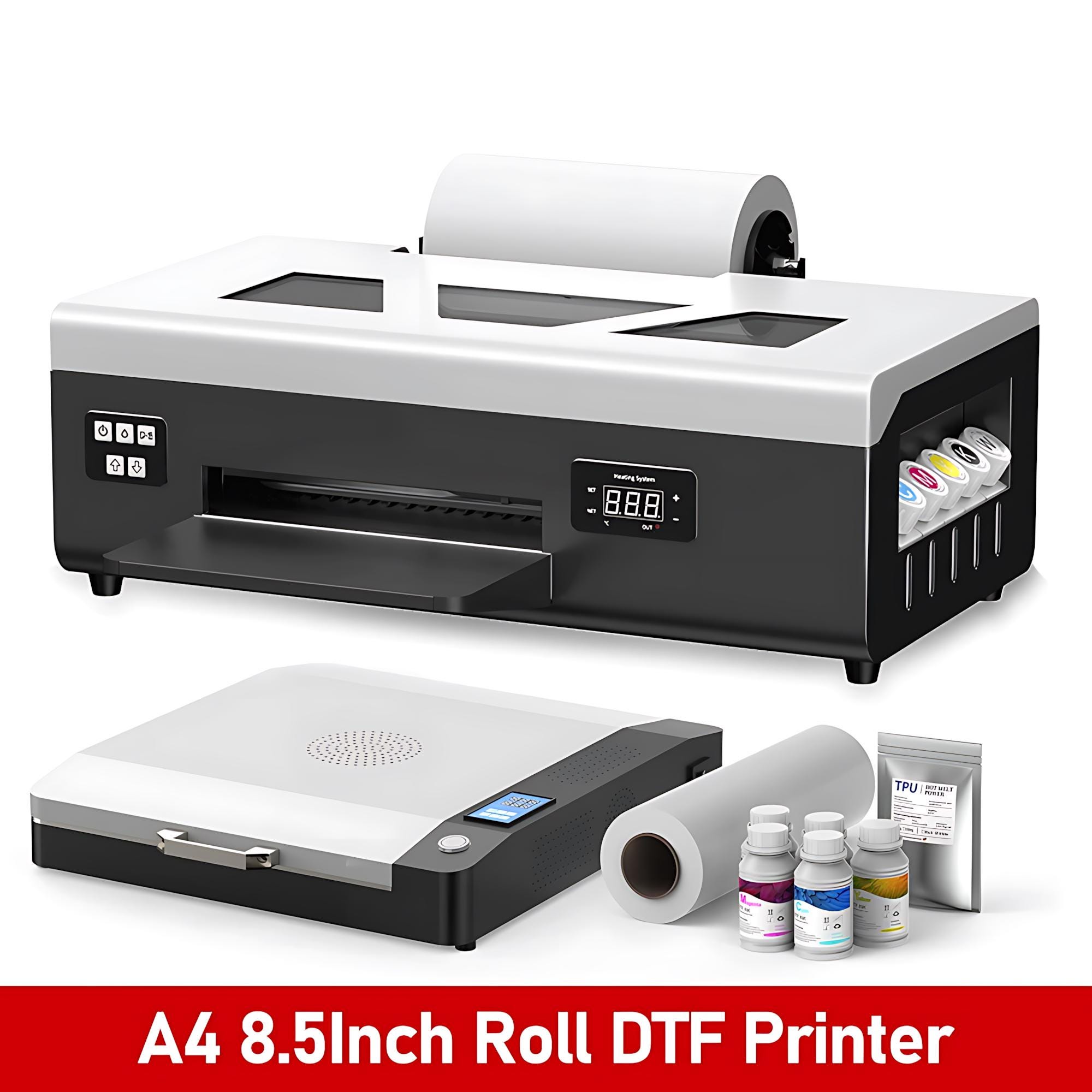
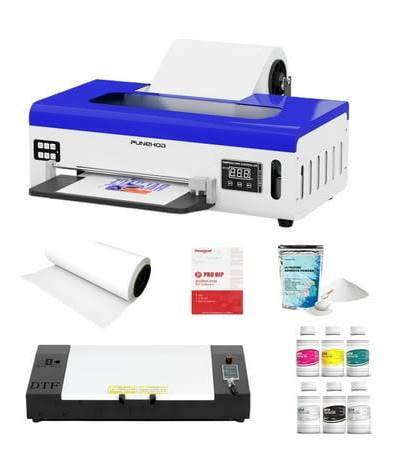
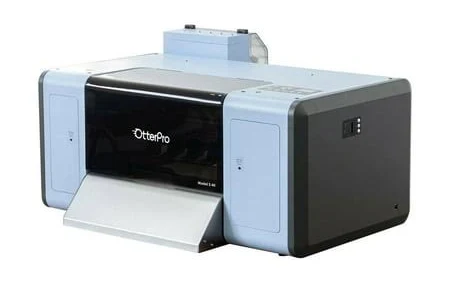
Represented by models such as the Punehod A4 L800 DTF Printer (around US$1,399), Epson XP-15000 DTF printer bundles (around US$1,000), and compact desktop models like the OtterPro M30.
These are typically modified Epson consumer printers with A4 print width and usually require additional RIP software and consumables to complete the full DTF workflow. They are suitable for individual sellers, small-scale apparel customization attempts, and users with some hands-on ability and maintenance patience.
Their advantage lies in relatively manageable entry costs and abundant user experiences available online. However, they are limited in continuous printing capability and stability, and are highly sensitive to ink performance. Output quality depends heavily on system matching and daily maintenance habits.
👉 Budget-friendly, but highly demanding in system compatibility and user skills.
③ Desktop-Level Stable Output (Small Studio Use)
Examples include the Prestige A4 Direct to Film Printer (around US$1,995) and A4 DTF printers with white ink systems priced around US$3,600.
These machines are designed specifically for DTF printing rather than being simple modifications of consumer printers. Their white ink systems are more complete, and the overall structure prioritizes output stability. While still desktop-sized, the user experience is closer to that of a small production tool.
They are suitable for small studios with steady orders and users who want to reduce failure rates, minimize maintenance time, and avoid constantly troubleshooting equipment. Although the machine price is not the lowest, output consistency and user feedback are relatively mature, making long-term operating costs more predictable.
👉 Slightly more expensive, but more like a “tool” than a “project.”
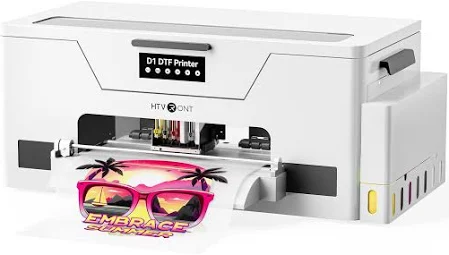
④ Small-Format Upgrade (17″ Compact Commercial)
Represented by 17″ small DTF print machines priced roughly between US$650 and US$1,200.
These models increase print width to around 17 inches while remaining relatively compact, positioning them between mini desktop machines and traditional commercial DTF equipment. They are suitable for users who need larger print sizes and higher per-run efficiency but are limited by space—especially those upgrading from A4 desktop systems.
However, a wider format does not automatically mean better stability. These machines place higher demands on ink and overall system matching, and stability varies significantly across price levels.
👉 Bigger width ≠ higher stability. System choice matters more.
⑤ Professional but Requires Careful Evaluation
A typical example is the Procolored F8 DTF Printer (around US$1,899). These machines often have high brand visibility, but market feedback is clearly polarized. Some users approve of their features and configurations, while others report issues with stability or long-term reliability.
Such machines are not necessarily bad choices, but decisions should be based on up-to-date user feedback—especially regarding white ink system design, after-sales support, and long-term operational stability—rather than specifications or brand recognition alone.
👉 Not unselectable, but never “buy based on specs alone.”
On the surface, this may seem like a simple budget choice. In reality, users who buy machines at similar prices often end up with completely different long-term costs. The reason is simple: mini DTF is not a “single-machine” setup—it is a complete system.
That system includes the printer’s structure and stability, ink performance (especially white ink), PET film and hot melt powder, drying and transfer methods, daily maintenance routines, and operating frequency. Any mismatch in one link will eventually translate into cost.
Mini DTF Printer Category Comparison (2026)
| Category | Typical Models / Price Range | Core Positioning | Stability |
|---|---|---|---|
| ① Ultra-Low Budget | Temu / AliExpress DIY Kits ~$200 |
Learning the basics / Non-commercial | ★☆☆☆ |
| ② Entry-Level Modified | Punehod A4 / Epson XP-15000 ~$1,000 - $1,400 |
Individual sellers / Small-scale testing | ★★☆☆ |
| ③ Stable Desktop Pro | Prestige A4 / Dedicated Systems ~$1,995 - $3,600 |
Small studios / Continuous production | ★★★★ |
| ④ 17″ Compact Commercial | 17″ Small-format printers ~$650 - $1,200 |
Limited space / Larger print size | ★★★☆ |
| ⑤ Professional Brands | Procolored F8 / Well-known brands ~$1,899 |
High visibility / Requires careful review | ★★★☆ |
2. Mini DTF Printer Cost Comparison: Where are the Hidden Expenses?
When comparing mini DTF printer prices, most buyers focus only on the machine itself. But what truly determines your long-term costs is not the quotation—it is stability, downtime, and daily consumption after the machine is put into use.
Especially in mini DTF systems, the following hidden costs are often severely underestimated.
1️⃣ Downtime and Maintenance Costs
Although mini DTF printers are small, their white ink circulation capacity is limited, and system tolerance is actually lower.
White ink clogging, frequent cleaning, print interruptions, and troubleshooting time all directly increase ink consumption, shorten printhead lifespan, and reduce delivery reliability. These costs are invisible on a price list, yet accumulate continuously during use.
2️⃣ Ink Stability Costs (Especially White Ink)
Many beginners assume that “DTF inks are all similar,” but this assumption is particularly risky in mini DTF systems.
Unstable white ink tends to settle faster, flow unevenly, and produce inconsistent white layers—forcing higher cleaning frequency. Due to short ink paths and weak circulation, ink-related problems are amplified rather than diluted.
This is why many small-format DTF users prefer more stable ink systems, such as Winnerjet DTF ink, whose white ink sedimentation control and batch consistency are better suited for mini DTF environments, helping reduce downtime and maintenance frequency.
3️⃣ Reprints and Consumable Waste
Failed prints waste not only ink, but also PET film, hot melt powder, heat press time, and labor. Over time, these hidden losses often exceed the initial price difference you saved on the machine.
Mini DTF printer price ≠ real operating cost.
In mini DTF scenarios, stability and system compatibility are often more important than the lowest upfront price. In many cases, a slightly higher equipment budget combined with stable ink actually results in lower overall costs and better sustainability.
3. Why Is Mini DTF Actually More “Sensitive” to Use?
Many first-time users assume: “Smaller machine, simpler structure—should be easier to use.” In reality, mini DTF systems are often more sensitive and expose problems more quickly.
Mini DTF ink paths are shorter, with almost no buffering space. Any instability in ink flow, uneven white ink sedimentation, or minor air bubbles immediately affect printhead performance and output quality—unlike large-format systems where issues can sometimes be partially absorbed.
White ink tanks are also smaller, and white ink naturally settles faster. In small-capacity environments, sedimentation happens more quickly, placing higher demands on circulation, agitation, and ink stability. Even slight mismatches can lead to frequent cleaning or uneven white layers. In addition, mini DTF circulation systems are generally weaker, with limited pump capacity and structural tolerance.
As a result, configurations or inks that can “barely run” on larger machines often turn into real failures in mini systems. Mini DTF is not a simplified commercial device—it is a working environment with higher system-matching requirements.
The smaller the machine, the higher the demands on ink stability, maintenance habits, and overall system coordination.
4. Ink Is the Biggest Cost Factor in Mini DTF Use
Once you understand the logic of “smaller machine, higher requirements,” one conclusion becomes clear:
In mini DTF printing, ink often determines success or failure before the machine does.
In a system with minimal tolerance, any instability is amplified immediately—and ink is the most constantly active variable.
Ink directly affects:
- Long-term printhead health
- Cleaning frequency
- White layer density and consistency
- Predictability of finished output
Large-format commercial systems can sometimes rely on strong circulation and large capacity as a buffer. Mini DTF systems cannot. That’s why many users only realize after extended use that frequent clogging, repeated cleaning, and unstable output are often not machine issues—but system-matching issues.
For this reason, experienced mini DTF users often focus more on ink selection after choosing their equipment. Many desktop and small DTF users frequently mention inks like Winnerjet, not because they are the cheapest, but because:
- White ink sedimentation is well controlled
- Batch-to-batch consistency is higher
- Ink is more compatible with common mini DTF ink path designs
- Works across a wide range of printer types
In mini DTF environments, this stability does not show up as “spec advantages,” but as fewer stoppages, lower maintenance stress, and more predictable daily output.
5. Same Mini DTF, Very Different Long-Term Cost Outcomes
In mini DTF printing, the real question is not “which machine,” but where you place your attention from the beginning.
User A: Price-First Approach
- Chooses the cheapest mini DTF printer
- Uses the lowest-cost ink
- Experiences frequent white ink clogs and unstable output
- Can only accept low-risk, sporadic orders
Long-term result:
Lowest upfront cost, but time is consumed by maintenance, output is unpredictable, and confidence drops. The system stays in a “barely usable” state.
User B: System-Stability-First Approach
- Chooses a more balanced mid-range mini DTF printer
- Prioritizes proven stable ink systems
- Maintenance routines are clear and manageable
- Output is stable enough for continuous and recurring orders
Long-term result:
Slightly higher initial investment, but less downtime, fewer reprints, predictable maintenance, and lower overall operating costs.
The gap doesn’t appear at checkout—it grows with every clog, cleaning cycle, and failed reprint.
👉 You buy similar machines, but walk completely different usage paths.
6. What Kind of Mini DTF Is Actually More Cost-Effective Long Term?
The most common—and most misleading—question is: “Which mini DTF is the cheapest?” What truly determines cost is how you live with the system over months or years.
A better approach is shifting focus from purchase price to cost of use. Before deciding, ask yourself honestly:
- How often and how long will I print continuously?
- How much uncertainty and maintenance disruption can I tolerate?
- What is the impact of a failed print on delivery, customer trust, and stress?
- Is my ink truly matched to mini DTF system characteristics?
Once these questions are answered, you’ll realize that your ideal mini DTF price range is already defined—and it is rarely the lowest price.
Conclusion: Cheap Mini DTF ≠ Truly Cost-Effective
If you just want to “try it out,” almost any mini DTF that can print may look similar in price.
But if you want mini DTF to support your business long term, you’ll quickly learn that cost is determined not by the machine alone, but by whether the entire system is properly matched.
DTF is a system project, not a single device.
Machines matter—but in mini DTF systems, ink stability often determines how far you can go.
If you are seriously evaluating mini DTF printer prices, the real comparison is not who is cheaper by a few hundred dollars, but who allows your system to run stably, predictably, and sustainably over time.